 US Stock Futures Slide as AI Safety Warnings Shake Tech Stocks and Oil Prices Rise
  Ferry sinks in Java Sea; 6 dead, over 120 missing
  Bengaluru faces mobility crisis as commute times average 90 minutes
  Trump increases social media output using AI tools
  Kamala Harris’s California home targeted by trespasser, officials say
 Bengaluru faces mobility crisis as commute times average 90 minutes
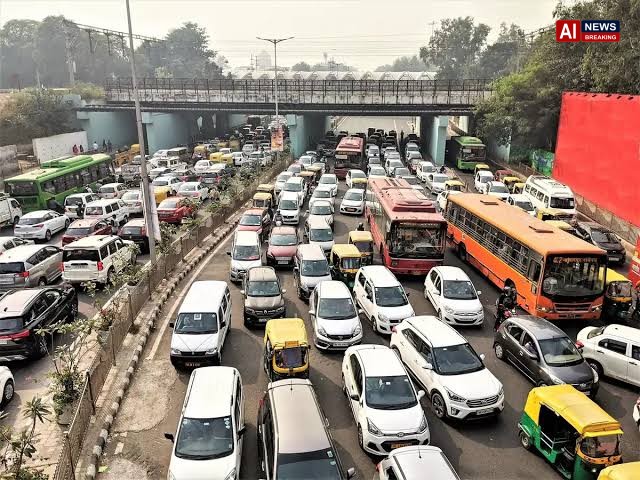
Bengaluru faces mobility crisis as commute times average 90 minutes - AI News Breaking
Bengaluru has long been celebrated as India’s silicon valley, attracting talent with a vibrant tech ecosystem, a pleasant climate and a steady stream of high‑paying jobs. Yet beneath this prosperity lies a growing crisis: the city’s mobility infrastructure is struggling to keep pace with its rapid expansion. Residents now spend an average of 90 minutes commuting each day, a figure that has risen sharply over the past decade, eroding work‑life balance and dampening productivity..
As businesses scale up and new campuses sprout on the city’s periphery, the pressure on roads, public transport and last‑mile solutions intensifies, prompting city planners to confront a problem that could undermine Bengaluru’s economic momentum. The core of Bengaluru’s mobility woes is its notorious traffic congestion, a symptom of decades‑long urban sprawl and inadequate road planning. Main arteries such as Outer Ring Road and Hosur Road regularly crawl at speeds below 20 kilometres per hour during peak hours, forcing commuters into lengthy queues that shift unpredictably with minor incidents or weather changes..
This volatility makes journey times difficult to predict, compelling many workers to leave home earlier or stay later at the office, a habit that contributes to rising stress levels and diminished overall well‑being. Moreover, the congestion imposes a hidden cost on businesses through delayed deliveries, missed meetings and increased fuel consumption. In response, the Karnataka government has heavily invested in the Namma Metro, expanding the network to over 70 kilometres of track and adding new lines that reach previously underserved suburbs..
The metro’s ridership has climbed steadily, now serving more than a million passengers daily, and it is lauded for offering a reliable alternative to road traffic. However, despite these gains, the system still faces a critical shortfall: last‑mile connectivity. Many stations sit far from residential clusters or office parks, and the lack of seamless feeder services forces commuters to rely on costly auto‑rickshaws or private vehicles to bridge the gap, eroding the time‑saving advantage the metro promises..
The city’s bus network, operated by the Bengaluru Metropolitan Transport Corporation (BMTC), remains the backbone of public transport, moving millions of passengers each day across a sprawling web of routes. BMTC has introduced air‑conditioned ‘Vajra’ services and launched a mobile app for real‑time tracking, yet integration with other modes remains patchy. Buses often compete with private cars for road space, leading to slower journeys and discouraging potential riders..
Moreover, the lack of synchronized timetables between buses and metro services creates missed connections, compelling commuters to endure long waiting periods that diminish the attractiveness of public transport as a cohesive system. A further complication arises from the city’s burgeoning ride‑hailing sector, which, while offering flexibility, adds to traffic density and contributes to pollution. Platforms such as Uber and Ola have proliferated, especially in areas where public transport is sparse, effectively filling the last‑mile void but at a higher cost to users and the environment..
The surge in app‑based vehicles has also prompted debates over regulation, with authorities attempting to balance consumer convenience against the need to curb congestion and emissions through measures like caps on fleet size and the promotion of shared rides. Urban planners argue that the solution lies in creating an integrated, multimodal mobility framework that treats the metro, bus, auto‑rickshaw, and ride‑hailing services as complementary components rather than competitors. Such a framework would entail coordinated scheduling, unified ticketing systems and shared data platforms to enable seamless transfers..
Pilot projects in zones like Whitefield have experimented with ‘mobility hubs’ where commuters can switch between metro, buses and shared bikes under a single payment umbrella, demonstrating modest reductions in overall travel time and a modest shift away from private car use. The concept of mobility hubs also dovetails with Bengaluru’s push towards sustainable transport options. The city has rolled out a public bicycle‑sharing scheme, but uptake remains low due to insufficient docking stations near high‑density areas and concerns over safety on congested roads..
By integrating bike‑share docks within metro stations and major bus stops, planners hope to encourage short trips that complement longer journeys on mass transit, thereby reducing reliance on motorised vehicles for the final leg of commutes. Financing these ambitious integration projects poses another hurdle. While the state government allocates significant budgetary resources to metro expansion, funding for bus fleet upgrades, intelligent traffic management systems and the creation of mobility hubs often relies on public‑private partnerships..
Critics point out that private investors seek returns that may not align with public service objectives, potentially leading to fare hikes or reduced service quality in less profitable corridors. Transparent governance and clear performance metrics are therefore essential to ensure that mobility improvements serve the broader public interest. Technology also offers promising tools to alleviate Bengaluru’s transport challenges..
Real‑time traffic monitoring, predictive analytics and AI‑driven route optimisation can help authorities manage congestion dynamically, adjusting signal timings and rerouting buses in response to incidents. The BMTC’s recent trial of a cloud‑based fleet management system has shown reductions in bus idle time and improved adherence to schedules. However, scaling such solutions requires robust data sharing agreements among multiple stakeholders, including private ride‑hailing firms, which have traditionally guarded their operational data..
The social dimension of mobility cannot be overlooked. Many lower‑income residents depend on informal transport modes, such as shared auto‑rickshaws and mini‑buses, which operate outside formal regulatory frameworks. These services fill critical gaps in areas where formal transit is absent,.
Updated: September 14, 2026
Insight: Bengaluru’s talent magnetism is being eroded by a commute that trades productivity for stress.
Without solving the last-mile disconnect, infrastructure investments remain fragmented fixes rather than a cohesive system.