 Australia probes AI‑driven breach of My Health Record portal
  Engineering student’s ‘suicide’ turns out to be murder; two arrested
  Canada’s Capital Bids Good Riddance to Trump Avenue as Tensions With U.S. Rise
  Pentagon investigates after China obtains parts from F-35 stealth fighter jet
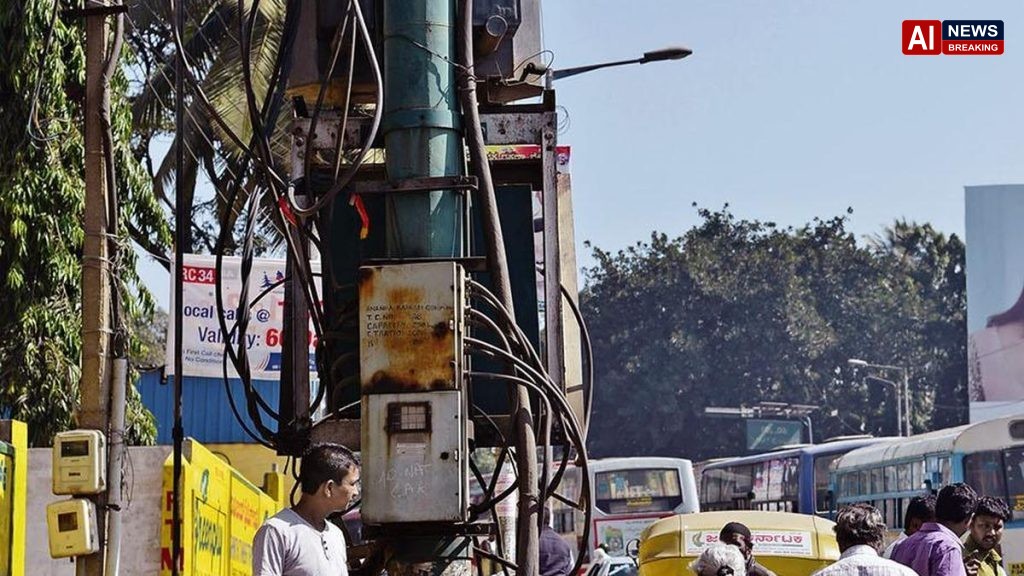
 Bescom loses 16,749 transformers in first seven months of 2024.
**
Bescom loses 16,749 transformers in seven months - AI News Breaking
bescom loses 16749 transformers:
Bescom loses 16,749 transformers in seven months Bangalore’s electricity board, the Bangalore Electricity Supply Company (Bescom), has reported the loss of 16,749 power transformers between January and July 2024 – a figure that brings the total annual shortfall close to 40,000 units, officials said on Monday. The staggering number has reignited concerns about the reliability of the city’s ageing grid, prompting the state government to order an urgent audit of the utility’s assets. Industry experts warn that, without swift remedial action, frequent outages could become a regular feature of life for millions of residents in the fast‑growing metropolis..
The utility’s latest data shows that the bulk of transformer failures stem from a combination of overload, lightning strikes, ageing equipment, short circuits and manufacturing defects. Bescom’s chief engineer, Anil Kumar, explained that many of the older units were designed for lower load profiles and have struggled to cope with the surge in demand caused by electric‑vehicle charging stations, data centres and new residential complexes. “We are seeing a perfect storm of factors that push these assets beyond their design limits,” he told reporters, adding that the board is already procuring higher‑capacity models to replace the most vulnerable installations..
Bescom’s loss rate is not unique in India’s power sector, where utilities across the country have grappled with transformer fatigue as demand spikes. According to the Central Electricity Authority, transformer failures nationwide rose by 27 % in the 2023‑24 financial year, with similar causes cited. However, the Bangalore utility’s figures are among the highest in the nation, reflecting the city’s rapid urbanisation and the pressure it places on an infrastructure that was largely built for a smaller population..
The financial implications of the missing transformers are significant. Each medium‑voltage unit costs between ₹1.5 million and ₹3 million, meaning the cumulative loss could amount to more than ₹50 billion (approximately £530 million) over the next twelve months. Bescom’s board has warned that these unplanned expenditures could force a hike in tariffs for domestic and commercial customers, a move that would be politically sensitive in a state where electricity bills have already been a flashpoint for public protests..
In response to the crisis, the Karnataka state government has commissioned a joint task force comprising officials from the electricity department, the state disaster management authority and independent engineers. The panel’s mandate is to assess the root causes of transformer failures, recommend upgrades to the grid, and propose a financing model to accelerate replacement. Yediyurappa announced that the task force would submit its report within six weeks, stressing that “the safety and continuity of power supply is non‑negotiable”..
While the task force works on a long‑term solution, Bescom is deploying short‑term measures to stem further losses. Crews have been dispatched to high‑risk zones to install surge protectors, lightning arrestors and remote monitoring sensors that can detect overload conditions in real time. The utility also plans to retire a tranche of the most vulnerable transformers before the monsoon season, a period traditionally associated with higher failure rates due to increased humidity and lightning activity..
Consumer groups, however, remain sceptical about the efficacy of these interim steps. The Karnataka Electricity Consumers’ Forum (KECF) issued a statement urging the utility to publish a transparent list of the affected substations and to provide regular updates on restoration timelines. “Without clear communication, residents are left in the dark – literally and figuratively,” said KECF spokesperson Meera Joshi, adding that the forum will seek judicial intervention if the board fails to meet its service commitments..
The transformer shortage has already manifested in localized blackouts across several Bengaluru neighbourhoods, most notably in Whitefield and Electronic City, where tech parks and start‑ups reported sudden voltage drops that disrupted operations. Companies have resorted to installing private diesel generators, a costly stopgap that raises concerns about air quality and carbon emissions. “We’re paying for power twice – once to the grid and again for backup,” complained Rajesh Nair, CTO of a fintech firm operating in the area..
Environmental NGOs have also voiced alarm, noting that the increased reliance on diesel generators undermines Karnataka’s climate targets. The state’s renewable‑energy policy aims to achieve 50 % clean power by 2030, but frequent transformer failures risk slowing the integration of solar and wind farms into the grid. “A resilient grid is the backbone of a green transition,” said Dr..
Aruna Sharma, director of the Centre for Sustainable Energy, warning that infrastructure gaps could erode investor confidence in the state’s renewable projects. To address the manufacturing defect component, Bescom has initiated a review of its procurement practices. The utility’s procurement head, Sunil Rao, confirmed that a third‑party audit will be carried out on all transformer suppliers who have delivered equipment since 2020..
Preliminary findings suggest that a small percentage of units did not meet the Indian Standards (IS) specifications for insulation and thermal performance, possibly accelerating premature failures. Bescom has pledged to seek compensation from vendors where contractual breaches are proven. The broader industry is watching Bangalore’s handling of the crisis as a potential blueprint for other megacities..
Experts at the International Energy Agency (IEA) have highlighted the importance of predictive maintenance and digital twins – virtual replicas of physical assets – in pre‑empting such large‑scale failures. “If Bescom can integrate real‑time data analytics into its.
Updated: September 15, 2026
Bescom has lost 16,749 transformers between January and July, pushing its annual shortfall toward 40,000 units and sparking fears of chronic outages as the city’s grid struggles with overloaded, aging equipment. The state has ordered an urgent asset audit and a task force to fast‑track replacements, while the utility rolls out surge protectors and monitoring sensors to curb further losses.