Europe warns of Russia’s hybrid attacks but struggles to counter them
  Former chief election commissioner calls SIR scheme illegal.
  A Corruption Scandal Is Reshaping Brazil’s Presidential Election
  US citizen injured in Illinois after ICE agents mistook him for fugitive, tried to arrest him
  At 10 years old, Smithsonian’s Black museum is undaunted amid pressure from Trump administration
 BJP’s Eastern Victory Boosts India’s Act East Policy, Unlocking New Regional Trade and Strategic Opportunities
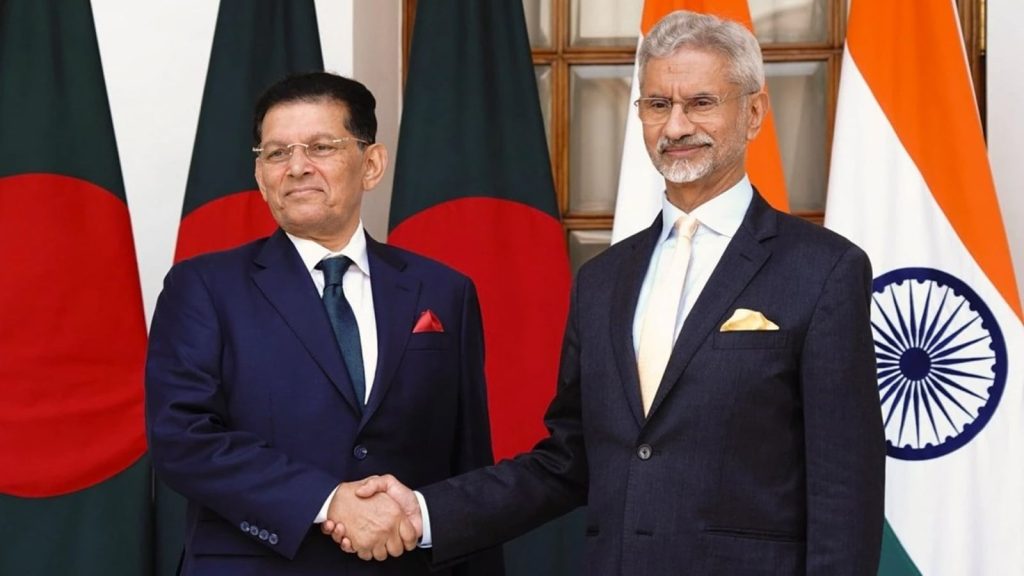
bjps eastern victory boosts:
The Bharatiya Janata Party’s (BJP) expanding political footprint in eastern India is poised to do more than reshape domestic power equations—it could significantly recalibrate New Delhi’s foreign policy outreach across South and Southeast Asia. With stronger electoral legitimacy in strategically located states such as West Bengal, Assam, Odisha, and parts of the Northeast, the central government now has an opportunity to accelerate long-pending regional connectivity projects, deepen cross-border trade, and reinforce India’s geopolitical influence in its eastern neighbourhood.
A Political Mandate with Strategic Geography
Eastern India is not just electorally significant—it is geopolitically pivotal. The region borders Bangladesh, Bhutan, Myanmar, and sits close to the Bay of Bengal, making it a natural gateway to Southeast Asia. For years, New Delhi’s “Act East Policy” has aimed to leverage this geography to boost economic integration and strategic partnerships. However, uneven political alignment between the Centre and some eastern state governments often slowed coordination on infrastructure, border management, and trade initiatives.
A stronger BJP mandate in the East could reduce these frictions. Policy alignment between state and central governments tends to accelerate project clearances, land acquisition, and security coordination—key bottlenecks in cross-border initiatives.
Boost to Connectivity and Trade Corridors
One of the most immediate impacts of a consolidated political base could be faster execution of connectivity projects that link India to Southeast Asia.
Key projects likely to gain momentum:
- India–Myanmar–Thailand Trilateral Highway
- Kaladan Multi-Modal Transit Transport Project connecting Kolkata to Myanmar’s Sittwe port
- BBIN (Bangladesh, Bhutan, India, Nepal) Motor Vehicles Agreement
- Expansion of border haats (markets) with Bangladesh
These projects are crucial for transforming eastern India into a logistics hub, reducing transport costs, and enhancing trade flows with ASEAN countries.
Improved infrastructure—roads, railways, inland waterways, and ports—can also integrate India’s landlocked Northeast with global supply chains.
Strengthening Ties with Bangladesh
Bangladesh is arguably the biggest beneficiary of India’s eastern outreach. Enhanced political stability in bordering Indian states could facilitate:
- Smoother border management and security cooperation
- Expansion of energy trade, including electricity exports
- Increased cross-border investment and industrial collaboration
New Delhi and Dhaka have already built strong ties in recent years, but faster project implementation could elevate the partnership into a more comprehensive economic corridor.
Gateway to ASEAN and Indo-Pacific Strategy
The eastern mandate also strengthens India’s broader Indo-Pacific ambitions. The Bay of Bengal region is increasingly central to maritime security and trade competition involving major powers, including China.
With better-developed eastern states, India can:
- Expand port infrastructure and maritime connectivity
- Increase participation in regional groupings like BIMSTEC
- Offer an alternative development model to China’s Belt and Road Initiative (BRI)
The Northeast, once seen as a peripheral region, is now being reframed as a strategic bridge to ASEAN markets.
Security and Border Management Advantages
Political alignment can also improve coordination on sensitive security issues:
- Tackling cross-border insurgency and smuggling
- Enhancing intelligence sharing between state and central agencies
- Strengthening infrastructure in border areas for both civilian and military use
This is particularly relevant in states like Assam and regions bordering Myanmar, where stability is essential for both domestic governance and foreign policy credibility.
Economic Diplomacy and Regional Development
A politically stable eastern belt enables India to pursue “economic diplomacy” more effectively:
- Creation of special economic zones (SEZs) near borders
- Promotion of export-oriented industries
- Development of energy and digital connectivity corridors
Such initiatives not only boost local economies but also position India as a reliable economic partner in the region.
Challenges That Remain
Despite the opportunities, several structural challenges persist:
- Complex terrain in the Northeast complicates infrastructure development
- Local political sensitivities and ethnic dynamics require careful handling
- Bureaucratic delays and funding constraints can still slow execution
- Regional instability, particularly in Myanmar, continues to pose risks
A political mandate alone cannot resolve these issues, but it can create the conditions for more decisive policymaking.
Strategic Implications
The BJP’s eastern gains could mark a shift from a largely declarative “Act East” approach to a more execution-driven strategy. If leveraged effectively, this mandate can:
- Turn eastern India into a trade and connectivity hub
- Strengthen India’s regional influence
- Counterbalance competing geopolitical forces
- Deliver tangible economic benefits to border regions
AI Insights
The BJP’s growing influence in eastern India is not just a domestic political story—it carries significant foreign policy implications. By aligning state and central priorities, New Delhi is better positioned to unlock the strategic potential of its eastern frontier.
Whether this translates into lasting geopolitical gains will depend on execution, regional stability, and India’s ability to convert political capital into concrete infrastructure, trade, and diplomatic outcomes.