Indonesia denies foreign claim to rescued orangutans
 Turkey hosts COP31 climate talks in Antalya.
 Pope meets Argentine bishops.
 APOD: 2026 November 8 – Major Fireball Meteor
 Indonesian Horror Hit ‘Pabrik Gula’ Gets 2028 Sequel as MD Entertainment Lines Up Three Imax Films
Bomb Threats Disrupt Several Flights Across Europe
**
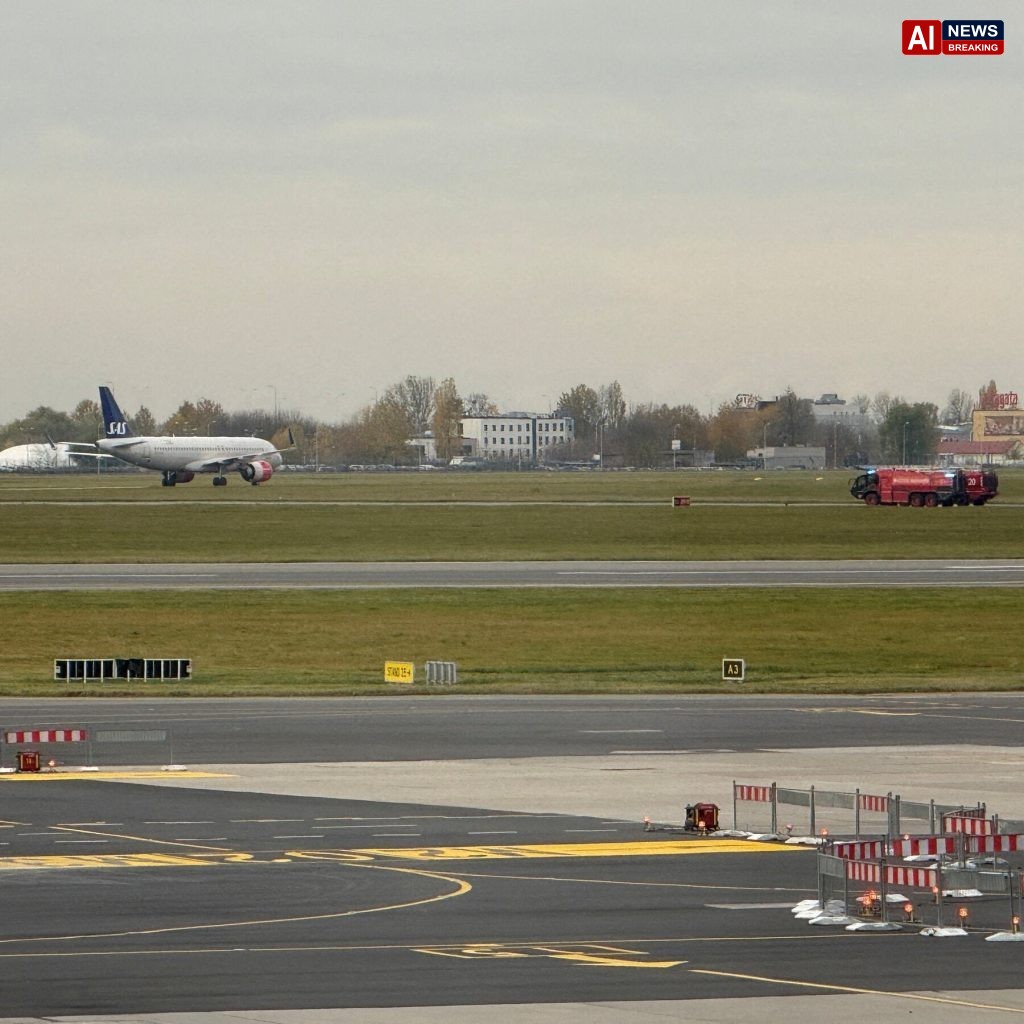
Bomb Threats Disrupt Several Flights Across Europe - AI News Breaking
Bomb threats have thrown a shadow over European skies this week, prompting the grounding of flights, extensive security sweeps and a concerted investigative effort by authorities across several jurisdictions. At least seven aircraft were reportedly targeted by anonymous callers who claimed that explosive devices had been placed on board. All of the planes in question were forced to make emergency landings or were diverted to alternative airports as a precautionary measure, and none of the threats turned out to be credible; subsequent searches found no bombs or suspicious materials..
The incidents have sparked a broader debate about the adequacy of current aviation security protocols and the resources required to counter an increasingly sophisticated threat landscape.The first alert was raised on Monday morning when a passenger on a flight from Barcelona to Frankfurt reported that a fellow traveller had whispered a warning about a bomb hidden in the cabin luggage. The pilot, following standard operating procedures, declared an emergency and turned the aircraft around, landing safely at Barcelona’s El Prat airport after a 30‑minute diversion. Police and bomb squads from the Spanish Civil Guard, in coordination with the airline’s security team, conducted a thorough sweep of the aircraft and its cargo hold..
No explosive device was found, and the passenger who had made the claim was later identified and questioned. The airline subsequently resumed the flight after a brief delay, but the incident set in motion a chain reaction that would affect flights across the continent.Within hours, similar reports began to surface at other airports. A low‑cost carrier operating a route from Milan to London received a threatening phone call while the aircraft was still on the tarmac..
The crew, acting on the advice of ground staff, aborted the departure and returned to the gate, where bomb disposal units from the Italian Carabinieri and the UK’s Metropolitan Police Service conducted a joint inspection. The aircraft was cleared after a two‑hour search, and passengers were offered re‑booking on later services. In Paris, a domestic flight destined for Nice was forced to land at Charles de Gaulle after a passenger reported a suspicious package in the overhead bin..
French gendarmes opened the aircraft and found only a misplaced water bottle, but the episode prompted the airport to temporarily suspend several outbound flights while security teams conducted a broader sweep of the terminal.By the end of Tuesday, the tally of affected flights had risen to seven, with incidents reported in Spain, Italy, France, Germany, the Netherlands, Poland and the United Kingdom. The European Union Aviation Safety Agency (EASA) issued an urgent reminder to all member states, urging airlines to heighten vigilance, review passenger screening procedures and ensure that staff are fully briefed on how to respond to bomb threats. In a press briefing, EASA’s director‑general, Lucienne Vandenberg, stressed that “the safety of passengers and crew remains our paramount concern, and we are working closely with national authorities to coordinate a swift and proportionate response.”National governments have launched parallel investigations to determine the source of the threats..
In Spain, the Ministry of the Interior has opened a criminal case under the country’s anti‑terrorism legislation, while in Italy, the Ministry of the Interior’s Department for Public Safety has activated a special task force that includes members of the Carabinieri’s anti‑terrorism unit and cybercrime experts. Both agencies are analysing call‑record logs, tracing the origin of the telephone numbers used and examining any possible links to known extremist groups or organised criminal networks. Preliminary findings suggest that the calls may have been made using disposable “burner” phones and that the threats could have been orchestrated to cause maximum disruption rather than to inflict physical harm.Airlines, for their part, have been forced to adapt rapidly to the evolving situation..
Several carriers have temporarily suspended flights on routes that were directly affected, while others have rerouted aircraft to secondary airports to reduce the risk of further interruptions. In a statement, the International Air Transport Association (IATA) warned that “the cumulative effect of repeated threats can erode passenger confidence, strain airline operations and increase costs for the entire industry.” The association called for a coordinated European response, including the sharing of intelligence on threat patterns and the development of a unified protocol for handling bomb threats that would minimise unnecessary delays while preserving safety.Passenger reaction has been mixed, with some travellers expressing frustration at the inconvenience and others praising the swift response of crew and security personnel. Social media platforms have been awash with posts ranging from calls for tougher security checks to criticism of what some perceive as an over‑reaction to unverified threats..
Consumer rights groups have urged airlines to provide clear communication and appropriate compensation for passengers whose journeys have been disrupted. In the United Kingdom, the Civil Aviation Authority (CAA) reminded passengers that they are entitled to a full refund or re‑booking under EU Regulation 261/2004 if a flight is cancelled or delayed due to safety concerns, and that airlines must also provide assistance such as meals and accommodation when required.The financial implications for airlines and airports are not insignificant. The cost of diverting aircraft, conducting bomb sweeps, and compensating passengers can quickly add up, especially for low‑cost carriers that operate on thin margins..
A recent estimate by the European Aviation Safety Agency suggests that each incident could cost an airline anywhere between €50,000 and €150,000, depending on the length of the diversion, the number of passengers affected and the resources deployed for security checks. Airports, meanwhile, have incurred additional expenses for extra staffing, deployment of specialised equipment and the temporary closure of gates and terminals to accommodate security operations.Security experts note that bomb threats have become a preferred tactic for individuals or groups seeking to cause disruption without possessing the means to carry out an actual attack. Elena Rossi, a senior fellow at the European Institute for Security Studies, explained that “the psychological impact of a bomb threat can be disproportionate to its physical threat..
It forces airlines to suspend operations, creates chaos in air traffic control and erodes public confidence, all of which can be leveraged for political or financial gain.” She added that the increasing availability of encrypted messaging apps and the anonymity of internet‑based communication channels make it more difficult for law enforcement to trace the origins of such threats in real time.In response to the growing concern, several European capitals have announced plans to bolster their counter‑terrorism capabilities. Berlin’s interior ministry disclosed that it will allocate an additional €10 million to its federal police for the acquisition of advanced detection equipment and the training of bomb disposal units. Meanwhile, the Dutch Ministry of Justice has launched a pilot programme that integrates artificial intelligence tools to analyse threat calls and flag patterns that may indicate coordinated campaigns..
If successful, the technology could be rolled out across the EU, providing a faster means of identifying and neutralising false threats before.
Updated: November 4, 2026
A spate of bogus bomb threats forced seven flights across Spain, Italy, France, Germany, the Netherlands, Poland and the UK to land or be diverted, prompting extensive security sweeps and costly disruptions. Authorities are probing the burner‑phone calls while EU regulators call for tighter screening and coordinated response protocols to curb the growing threat of false alarms.
Insight: The wave of bogus bomb calls is exposing how a single hoax can cripple an already strained aviation ecosystem, forcing carriers to treat disruption as a security threat.
If Europe can fuse real‑time AI analytics with cross‑border intel sharing, the cost of false alarms may shrink faster than the fear they generate.