Europe warns of Russia’s hybrid attacks but struggles to counter them
  Former chief election commissioner calls SIR scheme illegal.
  A Corruption Scandal Is Reshaping Brazil’s Presidential Election
  US citizen injured in Illinois after ICE agents mistook him for fugitive, tried to arrest him
  At 10 years old, Smithsonian’s Black museum is undaunted amid pressure from Trump administration
 Centre Notifies Rollout of VBG RAM G, Replacing MGNREGA From July 1
centre notifies rollout replacing:
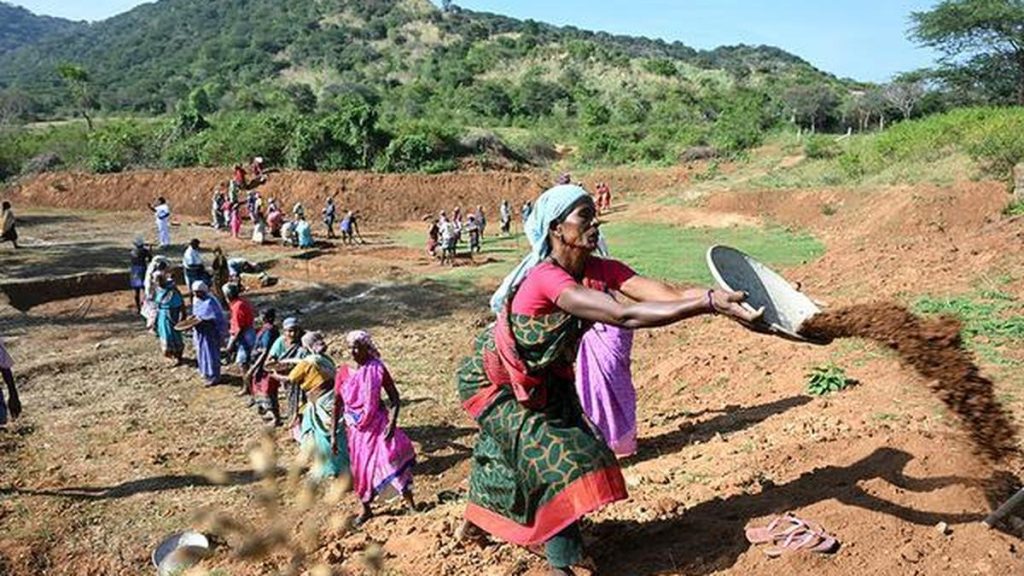
The Centre has officially notified the rollout of the new VB–G RAM G programme, which will replace the Mahatma Gandhi National Rural Employment Guarantee Act (MGNREGA) beginning July 1. The transition marks one of the biggest shifts in India’s rural employment and welfare architecture in nearly two decades.
Replacing MGNREGA is not merely an administrative reform — it signals a major ideological and policy shift in how the government views rural welfare, employment generation, and state spending. The new framework appears aimed at moving from an entitlement-based employment guarantee model toward a more targeted, productivity-linked rural development structure.
The political implications could be enormous. MGNREGA became deeply embedded in India’s rural economy, especially during economic crises and the pandemic. Any replacement programme will be judged not only on efficiency and fiscal management, but on whether it can maintain income security for millions of vulnerable rural households.
In a major policy transition with far-reaching economic and political implications, the Centre has officially notified the rollout of the new VB–G RAM G scheme, which will replace the Mahatma Gandhi National Rural Employment Guarantee Act (MGNREGA) starting July 1.
The move marks the end of one of India’s most influential rural welfare programmes, introduced in 2005 as a rights-based employment guarantee initiative designed to provide at least 100 days of wage employment annually to rural households.
For nearly two decades, MGNREGA served as:
- a rural employment safety net,
- a poverty alleviation mechanism,
- and a major source of income support during economic distress.
Now, with the government formally transitioning toward VB–G RAM G, policymakers, economists, opposition parties, and rural communities are closely examining what the new system will mean for India’s vast rural population.
What Was MGNREGA?
The Mahatma Gandhi National Rural Employment Guarantee Act was among India’s most ambitious social welfare programmes.
It legally guaranteed wage employment to rural households willing to undertake unskilled manual work.
The programme aimed to:
- reduce rural distress,
- create local infrastructure,
- improve purchasing power,
- and prevent migration during economic hardship.
MGNREGA projects typically included:
- pond construction,
- road work,
- irrigation channels,
- water conservation,
- land development,
- and rural infrastructure creation.
Over time, the scheme evolved into a critical economic stabilizer, especially during:
- droughts,
- agricultural slowdowns,
- economic crises,
- and the COVID-19 pandemic.
Why the Government Is Replacing MGNREGA
The government’s decision to replace MGNREGA appears rooted in several policy and fiscal considerations.
Shift Toward Productivity-Oriented Spending
Officials have increasingly argued that welfare programmes should focus more directly on:
- asset creation,
- productivity enhancement,
- skill integration,
- and long-term rural economic transformation.
The new framework reportedly aims to link employment generation more closely with measurable rural development outcomes.
Fiscal Pressure
MGNREGA involved enormous recurring expenditure obligations.
Critics within policy circles often argued that:
- the programme created fiscal strain,
- generated inefficiencies,
- and sometimes led to leakages or politically driven implementation.
A replacement programme may allow the Centre greater flexibility in controlling spending structures.
Technology and Monitoring
The government has increasingly emphasized:
- digital tracking,
- biometric systems,
- direct benefit transfers,
- and centralized monitoring.
VB–G RAM G is expected to incorporate tighter digital oversight and performance-linked mechanisms.
Political Repositioning
Replacing a flagship programme strongly associated with previous governments also carries political symbolism.
The transition may allow the ruling establishment to reshape the narrative around rural welfare under a new branding and policy architecture.
What Is VB–G RAM G?
Although full operational details are still emerging, the newly notified VB–G RAM G programme reportedly seeks to combine:
- rural employment,
- infrastructure development,
- local productivity enhancement,
- digital governance,
- and targeted welfare delivery.
The government appears to be positioning the scheme as:
- more efficient,
- more outcome-driven,
- and better aligned with modern rural development priorities.
Reports suggest the programme could place stronger emphasis on:
- durable rural assets,
- agricultural support infrastructure,
- local economic clusters,
- and skill-linked rural work opportunities.
Key Differences Expected Between MGNREGA and VB–G RAM G
While implementation details remain under scrutiny, several broad differences are expected.
From Legal Guarantee to Structured Programme
MGNREGA was rights-based, meaning eligible households could legally demand work.
If VB–G RAM G operates more as a scheme than a legal entitlement, this would represent a fundamental shift in rural welfare philosophy.
Greater Centralized Oversight
The new framework is expected to rely more heavily on:
- digital verification,
- centralized monitoring,
- and performance-based implementation metrics.
Focus on Productivity
The government appears keen to ensure rural labour contributes toward economically measurable outputs rather than temporary wage support alone.
Reduced Scope for Leakages
Officials have repeatedly emphasized improving accountability and reducing corruption through technology-based systems.
Political Reactions Emerging
The transition is likely to trigger major political debate.
Opposition Criticism
Opposition parties are expected to argue that dismantling MGNREGA weakens rural protections for vulnerable populations.
Critics may claim:
- employment guarantees are being diluted,
- rural workers could lose bargaining power,
- and welfare support may become more conditional.
Several opposition leaders have historically described MGNREGA as one of India’s most important anti-poverty interventions.
Government’s Defense
The government is likely to present VB–G RAM G as:
- a modernization effort,
- a reform-oriented restructuring,
- and a more sustainable development model.
Officials may argue that rural welfare should move beyond temporary employment toward durable economic transformation.
Why Rural India Will Watch Closely
The success or failure of the transition will depend heavily on implementation at the grassroots level.
For millions of rural households, employment schemes are not abstract policy debates — they are survival mechanisms during:
- crop failures,
- unemployment periods,
- seasonal distress,
- and economic shocks.
MGNREGA often functioned as:
- a fallback income source,
- a bargaining tool against exploitative wages,
- and a buffer against migration.
Any disruption during transition phases could create anxiety in vulnerable regions.
Economic Implications
The replacement could significantly affect India’s rural economy.
Wage Dynamics
MGNREGA indirectly influenced rural wage structures by establishing minimum wage benchmarks in many regions.
Changes in programme design could affect labour markets.
Consumption Patterns
Rural employment programmes support local consumption by injecting money into village economies.
Reduced income flows could impact:
- local businesses,
- agricultural purchasing,
- and rural demand.
Infrastructure Creation
If the new programme improves asset quality and productivity, it could strengthen long-term rural development outcomes.
Fiscal Management
The government may gain greater flexibility in controlling expenditure patterns under the new system.
Why MGNREGA Was Politically Powerful
MGNREGA became more than a welfare programme.
It represented:
- state-backed employment security,
- rural economic rights,
- and visible government presence in villages.
The scheme gained especially strong support during crises because it provided immediate income support when private-sector opportunities collapsed.
Even governments initially skeptical of MGNREGA eventually expanded or defended it during periods of economic stress.
That history makes its replacement politically significant.
Administrative Challenges Ahead
Transitioning from such a large programme will not be simple.
Authorities will need to manage:
- worker registration transfers,
- payment systems,
- local administrative coordination,
- technological integration,
- and public communication.
Any delays in wage payments or confusion around eligibility could create political backlash.
Implementation quality may ultimately determine public acceptance far more than policy design alone.
Larger Debate: Welfare vs Development
The replacement also reflects a broader ideological debate in Indian policymaking.
One side argues:
- welfare guarantees are essential for social protection,
- especially in unequal economies with large informal sectors.
The other argues:
- welfare should increasingly focus on productivity,
- economic participation,
- and infrastructure-led growth.
VB–G RAM G appears to align more closely with the second approach.
However, balancing development goals with social protection will remain politically and economically sensitive.
What Happens Next?
Several developments will now be closely monitored.
July 1 Rollout
The initial implementation phase will shape public perception.
State-Level Coordination
States will play a major role in operational success.
Rural Response
Worker participation and satisfaction levels will become key indicators.
Opposition Mobilization
Political parties may use implementation gaps to attack the government.
Economic Outcomes
Analysts will track whether the new programme sustains rural demand and employment levels.
The Centre’s notification of VB–G RAM G as the replacement for MGNREGA marks the beginning of a major transformation in India’s rural welfare and employment landscape. Ending a programme that shaped rural economic policy for nearly two decades is both politically symbolic and administratively consequential.
The government presents the new framework as a more modern, productivity-driven rural development model. Critics, however, fear that weakening employment guarantees could expose vulnerable populations to greater economic insecurity.
Ultimately, the success of VB–G RAM G will depend not on official announcements, but on whether rural workers experience it as a genuine improvement in livelihoods, stability, and opportunity.
AI Insight
Replacing MGNREGA represents one of the most consequential welfare-policy shifts in modern India because the programme functioned as both an economic stabilizer and a political safety net. Any new system will face immediate comparison not just on efficiency, but on trust, accessibility, and reliability during times of distress.
The deeper political question is whether India is entering a new phase where welfare programmes are increasingly tied to productivity and infrastructure outcomes rather than universal employment guarantees. How rural voters respond to that transition could shape future national political narratives as much as economic policy itself.