 Don Palathara’s ‘Ekadesham’ to premiere at Filmfest Aachen 2026 in Germany
  Chinese bulk carrier completes maiden Arctic voyage to Rotterdam
  India’s 7.8 GDP Growth Sparks a Data War: What the Numbers Really Tell Us
  U.K. recognises India’s carbon credit scheme under its carbon tax mechanism: official
  PH Marcos close ally Senator Jun Marcos charged in flood control graft case
 Chinese bulk carrier completes maiden Arctic voyage to Rotterdam
**
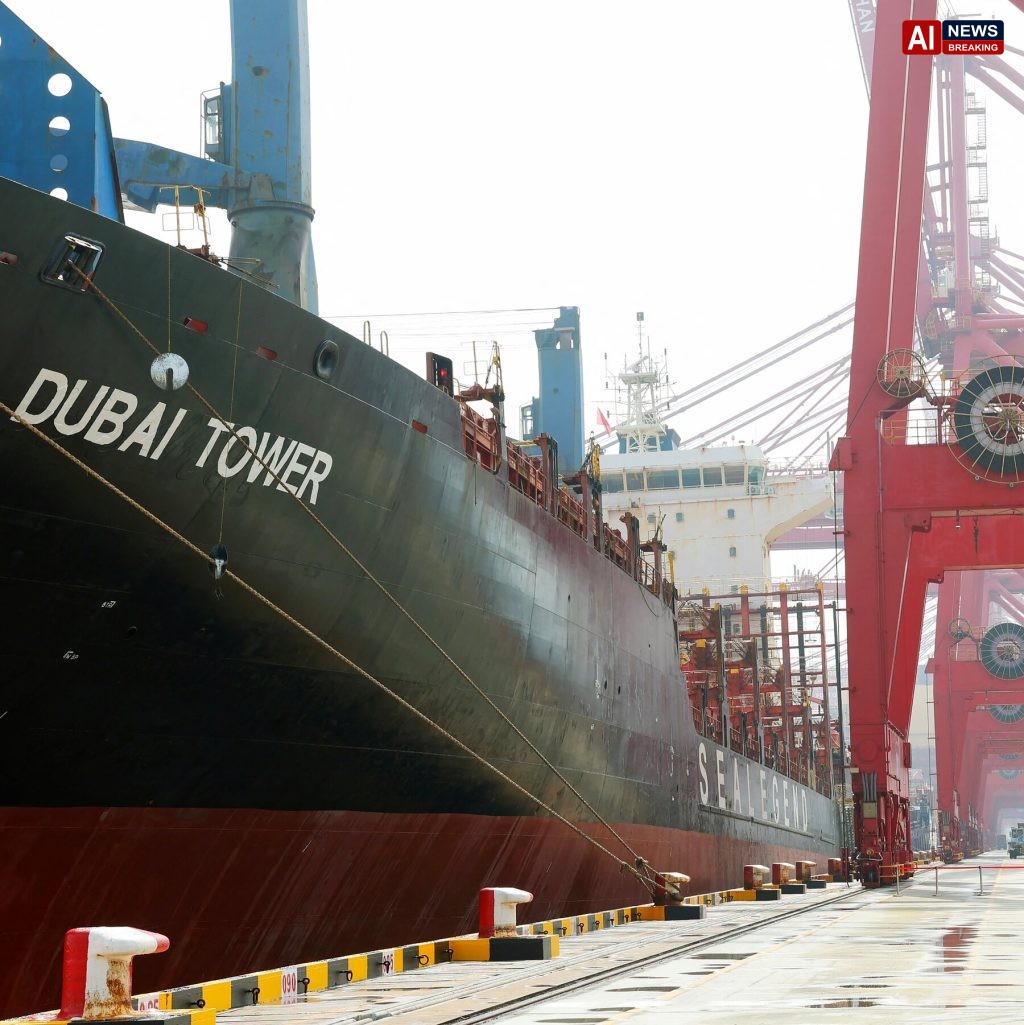
Chinese bulk carrier completes maiden Arctic voyage to Rotterdam - AI News Breaking
Chinese Ship Takes Arctic Shortcut: Smart Business? The thawing of the Arctic’s perennial ice sheet has turned a once‑impassable wilderness into a fledgling maritime highway. Earlier this month a Chinese‑flagged bulk carrier, the Xiang Yang, completed its inaugural voyage from Shanghai to Rotterdam via the Northern Sea Route, cutting the journey by roughly 4,000 kilometres and shaving off two weeks of sailing time..
The vessel, operated by the state‑linked China Shipping Group, is the first in a scheduled service that promises weekly departures once the summer window stabilises. The move is being hailed by Chinese officials as a milestone in the nation’s “polar ambition” and a tangible sign that the country is ready to reap the economic rewards of a warming world. The Northern Sea Route (NSR) runs along Russia’s coast from the Bering Strait to the Barents Sea, skirting the edge of the Arctic Ocean..
Historically, it has been a seasonal, ice‑bound passage used only by icebreakers and a handful of adventurous explorers. In the past decade, satellite data show a steady decline in sea‑ice extent, with the summer minimum now occurring a month earlier than in the 1990s. This environmental shift has encouraged both commercial and scientific actors to test the route’s viability, prompting a surge in applications for Russian transit permits and a scramble for infrastructure investment along the coast..
China’s interest in the Arctic is not new. Beijing has long positioned itself as a “near‑Arctic state” in diplomatic circles, joining the Arctic Council as an observer in 2013 and establishing a research station on the island of Spitsbergen in 2009. The latest development, however, signals a transition from research and soft‑power outreach to concrete commercial activity..
In a televised briefing, Commerce Minister Wang Wentao described the NSR as “a new Silk Road of the seas”, underscoring the strategic narrative that the route will bolster China’s Belt and Road Initiative by providing faster, greener links between East Asia and Europe. Critics argue that the commercial push masks a broader geopolitical agenda. The route traverses Russia’s Exclusive Economic Zone, and each transit requires a permit from the Russian Ministry of Transport..
Analysts note that Moscow has leveraged the NSR to deepen ties with Beijing, offering preferential fees and joint‑venture opportunities in port development. In return, China supplies capital, technology and, increasingly, political backing for Russian Arctic projects that have been hampered by Western sanctions. The symbiotic relationship about whether the Xiang Yang’s voyage is as much a diplomatic signal as it is a profit‑making venture..
From a business perspective, the route offers compelling advantages. Shipping companies estimate fuel savings of up to 30 percent compared to the traditional Suez Canal corridor, while carbon‑emission calculations suggest a reduction of roughly 1.5 million tonnes of CO₂ per year if the NSR were to handle a modest share of global trade. The Xiang Yang itself is equipped with a dual‑fuel engine capable of running on low‑sulphur marine diesel and liquefied natural gas, reflecting a growing industry trend toward greener propulsion..
Yet these benefits are tempered by the route’s volatility; sudden weather changes, limited search‑and‑rescue capacity and the still‑nascent network of Arctic ports pose operational risks that insurers are only beginning to price. The Russian side is keen to showcase the route’s potential. In a statement released alongside the Xiang Yang’s arrival in Murmansk, Deputy Prime Minister Alexander Novak highlighted recent upgrades to the port of Vladivostok and the construction of a new ice‑breaker fleet that now exceeds 30 vessels..
He warned, however, that “the Arctic is not a free‑for‑all”. Russian authorities maintain strict control over shipping lanes, demanding real‑time ice‑monitoring data and imposing mandatory pilotage in certain segments. Compliance costs, therefore, could erode some of the economic gains that the shortcut promises..
Internationally, the move has sparked a mixed reaction. The United States, which has long voiced concerns over Chinese activity in the Arctic, issued a diplomatic note reminding all parties that the region is governed by the United Nations Convention on the Law of the Sea (UNCLOS) and that any militarisation would be unacceptable. Meanwhile, the European Union’s Arctic policy chief, Simon Stiell, urged a “balanced approach” that safeguards environmental standards while recognising legitimate commercial interests..
Environmental NGOs, such as Greenpeace, have warned that increased traffic could accelerate ice melt and threaten fragile ecosystems, calling for a moratorium on large‑scale shipping until robust regulatory frameworks are in place. China’s domestic audience appears enthusiastic. State media ran front‑page stories celebrating the Xiang Yang as a testament to Chinese ingenuity and perseverance..
Trade ministries have already begun drafting incentives for other state‑owned enterprises to consider the NSR for bulk commodities like iron ore and coal, suggesting a coordinated rollout rather than isolated pilots. Yet within China’s own shipping community there is cautious optimism. Veteran captain Li Wei, who has navigated the Suez for three decades, noted that “the Arctic offers speed, but also demands new skills, new navigation tools, and a different mindset about safety”..
Training programs for Arctic navigation are therefore being fast‑tracked at several maritime academies. The economic calculus also hinges on the route’s seasonal window. Current climate models project that by 2050 the NSR could be ice‑free for up to eight months a.
Updated: September 8, 2026
Insight: Beijing weaponizes climate crisis by converting ecological instability into strategic leverage, deepening dependency on a sanctioned Moscow while bypassing Western-controlled chokepoints.
This logistical pivot transforms the Arctic from a global commons into a geopolitical tool, prioritizingChina’s sphere of influence over environmental preservation and international regulatory norms.