Trump administration offers mixed messages on limits to Ukraine’s Starshield access
 US Treasury proposes a rule to crack down on high-tech investments in China, other adversaries
 Calley Means, a key MAHA advocate, resigns as a top RFK Jr. adviser
 Spotify Tightens Family Plan Controls with QR Code Verification
 Use of Chief Minister C. Joseph Vijay’s deep fake videos to collect money: Rajasthan youth moves Madras High Court seeking bail
Colombia’s new government: 2016 deal with rebel group has not brought peace — but 132,000 killings
**
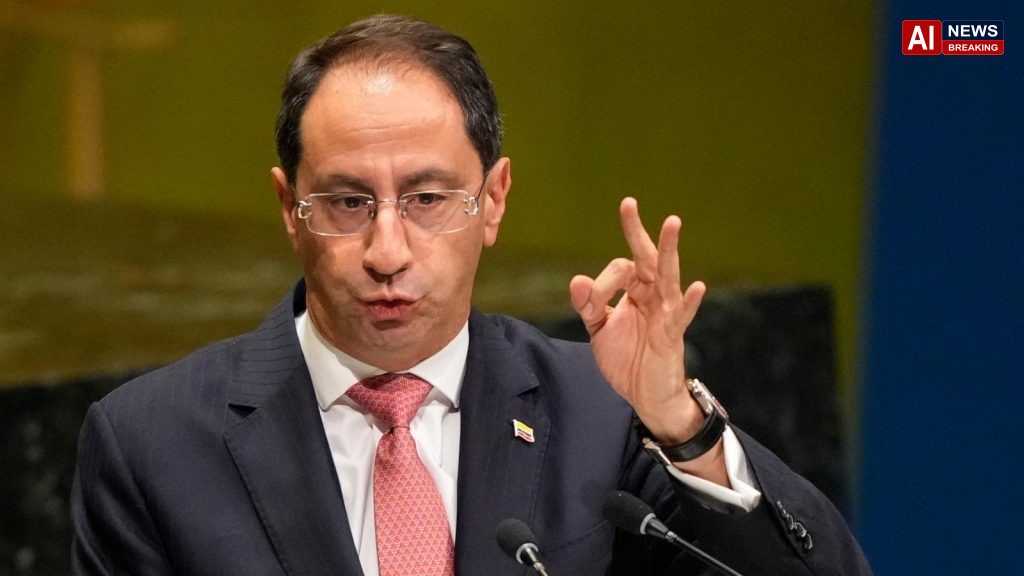
Colombia's new government: 2016 deal with rebel group has not brought peace — but 132,000 killings - AI News Breaking
colombias government 2016 deal:
Colombia’s new government: 2016 deal with rebel group has not brought peace — but 132,000 killings The administration of President Gustavo Petro has released stark figures that underscore the limited impact of the 2016 peace accord signed with the Revolutionary Armed Forces of Colombia (FARC). According to official data, more than 132,000 people have been killed in the ten years since the historic agreement, a number that eclipses the fatalities recorded during the height of the armed conflict in the early 2000s. The government says the deaths span civilians, members of security forces and combatants, reflecting a persistent climate of violence despite the formal end of hostilities with the country’s largest guerrilla movement..
In addition to the grim mortality statistics, the ministry of defence reports a dramatic rise in the size of armed groups operating outside the framework of the former FARC. Membership in these illegal organisations has swelled from roughly 6,000 fighters in 2016 to an estimated 30,000 today, according to the latest security assessment. The surge is attributed to the fragmentation of smaller militias, the emergence of drug-trafficking cartels and the re‑arming of self‑defence groups that have taken advantage of the security vacuum left by the demobilisation of former rebels..
Human rights organisations have echoed the government’s concerns, warning that the proliferation of armed actors is eroding the fragile gains made after the peace deal. Amnesty International’s Colombia office highlighted a pattern of extrajudicial killings, forced displacement and intimidation of community leaders, particularly in regions such as Arauca, Cauca and the eastern plains. The report noted that many of the victims are Afro‑descendant and Indigenous peoples, whose territories are coveted by illicit economies linked to coca cultivation and illegal mining..
The increase in violence has also strained Colombia’s justice system, which is still grappling with the implementation of transitional justice mechanisms established by the 2016 accord. The Special Jurisdiction for Peace (JEP) has processed thousands of cases, yet delays and political interference have slowed proceedings, leading some victims to lose faith in the process. Critics argue that without swift accountability, the cycle of retribution and revenge continues to fuel recruitment for criminal bands seeking to fill the void left by the FARC’s demobilisation..
Economically, the resurgence of conflict has hampered development initiatives aimed at reintegrating former combatants into civilian life. The government’s reintegration programme, which promised land, education and job training to ex‑FARC members, has struggled to meet its targets. According to a recent audit, only a fraction of the allocated budget has been disbursed, and many former fighters remain in precarious conditions, making them vulnerable to re‑recruitment by other armed factions..
International observers note that the United Nations Verification Mission in Colombia, which was tasked with monitoring the ceasefire and supporting the peace process, concluded its mandate in 2020. While the mission praised the initial reduction in large‑scale battles, it warned that the absence of a robust verification mechanism could allow new forms of violence to proliferate unchecked. The UN’s final report recommended strengthening local security forces and expanding community‑based peacebuilding efforts, recommendations that the current administration says it intends to pursue..
Petro’s government, which campaigned on a platform of ending the “war on drugs” and addressing social inequality, faces the delicate task of balancing security operations with its broader reform agenda. In a recent press conference, the president acknowledged the grim statistics but insisted that “peace is not the absence of conflict, but the presence of justice, development and reconciliation.” He announced a new security strategy that includes increased deployment of the army in high‑risk zones, coupled with social investment programmes aimed at the most vulnerable populations. Opposition parties have questioned the efficacy of the president’s approach, arguing that a heavy reliance on military solutions could exacerbate human rights abuses..
The Democratic Center, led by former president Álvaro Uribe, warned that the escalation of armed force risks repeating the heavy‑handed tactics of earlier administrations, which often resulted in civilian casualties and further alienation of rural communities. The party called for an independent parliamentary commission to investigate the rising death toll and the alleged misuse of security resources. Meanwhile, civil society groups have called for a renewed national dialogue that includes victims’ families, local authorities and representatives of illegal armed groups willing to lay down their weapons..
The National Council for Victims of Violence, a coalition of NGOs, organised a series of town‑hall meetings across the country to gather testimonies and propose concrete measures for restorative justice. Their proposals stress the need for guaranteed protection of witnesses, faster reparations and a transparent monitoring body to oversee the implementation of the peace accord’s remaining clauses. The data released by Petro’s administration also highlights a disturbing trend of targeted killings of environmental activists and journalists, a phenomenon that has drawn condemnation from the international community..
The United States Department of State’s 2023 Human Rights Report listed Colombia among the top three countries in the hemisphere where such attacks have risen sharply since 2020. Diplomatic sources suggest that the killings are linked to disputes over land use, illegal mining operations and the enforcement of anti‑coca policies that threaten entrenched criminal networks. As Colombia approaches the mid.
The staggering death toll betrays a false peace, exposing how the void left by FARC’s demobilisation has become fertile ground for fragmented criminal economies that thrive on impunity. Petro’s dual gamble of militarised security and social reform now risks deepening mistrust among rural communities, turning Colombia’s reconciliation promise into a ticking humanitarian and political crisis.