 Deepavali pollution spike: how does it affect lung function and respiratory health?
 Kyle Larson secures second straight
 Ukraine Peace Talks Resume This Week in Abu Dhabi
 Why political parties must be kept out of local body polls
Deepavali pollution spike: how does it affect lung function and respiratory health?
**
Deepavali pollution spike: how does it affect lung function and respiratory health? - AI News Breaking
deepavali pollution spike does:
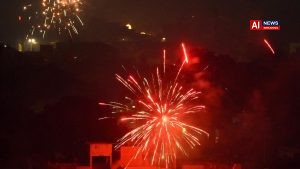
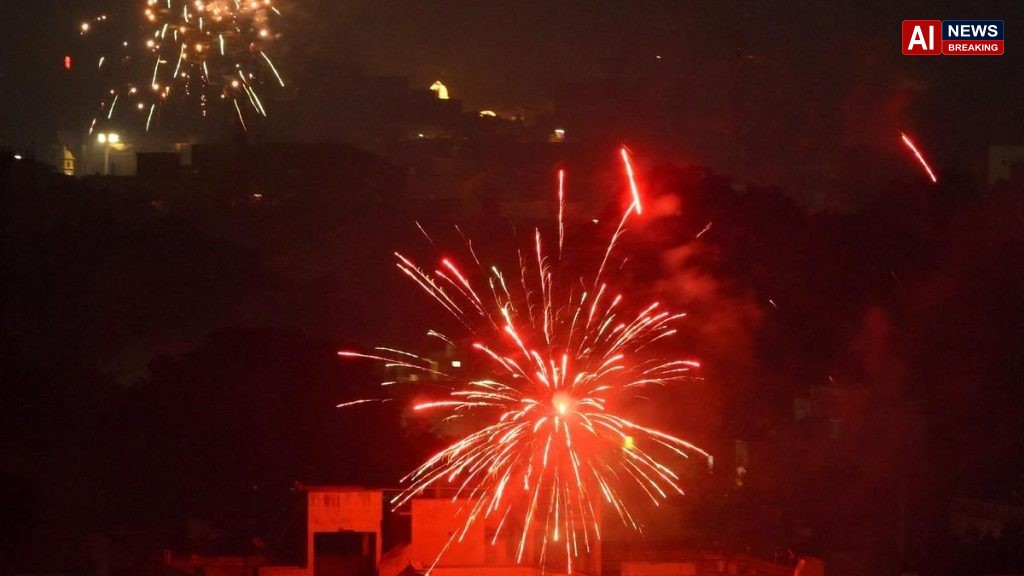
The festival of Deepavali, celebrated across South Asia with fireworks and bright lights, brings a temporary surge in air pollution that has drawn increasing scrutiny from health professionals. Data collected during recent celebrations show that concentrations of particulate matter—particularly PM2.5, particles smaller than 2.5 microns—can rise to levels many times higher than the World Health Organization’s recommended safe limits. Alongside these fine particles, firecrackers emit a cocktail of gases such as sulphur dioxide, nitrogen oxides and carbon monoxide, all of which can irritate the respiratory tract..
The combined effect of these pollutants creates a short‑term environmental hazard that may have lasting implications for lung function, especially among vulnerable groups.When a firecracker explodes, the combustion of its metal and chemical components releases a plume of smoke that quickly disperses into the surrounding atmosphere. PM2.5 particles are of particular concern because their minute size allows them to bypass the body’s natural defence mechanisms in the nose and throat, traveling deep into the bronchioles and alveoli. Once lodged in the lower respiratory tract, they can trigger inflammation, oxidative stress and a cascade of immune responses..
Studies conducted in major Indian cities during the week of Deepavali have recorded average PM2.5 concentrations climbing from a baseline of around 40 µg/m³ to peaks exceeding 250 µg/m³, a level associated with acute respiratory distress in epidemiological research.For individuals with pre‑existing conditions such as asthma, chronic obstructive pulmonary disease (COPD) or cardiovascular disease, the acute rise in pollutants can precipitate severe exacerbations. Hospital admissions for asthma attacks and COPD flare‑ups have historically spiked by 20 to 30 percent in the days following the festival, according to health department records in Delhi and Mumbai. Even among healthy adults, exposure to high levels of fine particles can cause a measurable decline in lung function tests, such as forced expiratory volume in one second (FEV1)..
A recent cross‑sectional study involving 1,200 participants demonstrated an average reduction of 5 percent in FEV1 values measured within 48 hours of the firework display, compared with baseline measurements taken a month earlier.The mechanisms behind this short‑term decline are linked to the irritant nature of the gases released alongside particulate matter. Sulphur dioxide, for example, reacts with the moisture in the airway lining to form sulphuric acid, which can damage epithelial cells and increase airway hyper‑responsiveness. Nitrogen oxides contribute to the formation of secondary pollutants such as ozone, further compounding respiratory irritation..
Carbon monoxide, while less directly harmful to lung tissue, reduces the blood’s capacity to transport oxygen, placing additional strain on the cardiovascular system during periods of elevated exposure.While the immediate impact of Deepavali‑related pollution is evident, the question of whether the damage persists after air quality normalises remains under investigation. Some longitudinal studies suggest that repeated seasonal spikes in particulate exposure can lead to cumulative effects, accelerating the decline in lung function that typically accompanies ageing. A cohort study tracking residents of Kolkata over five years found that those living in districts with consistently higher firecracker usage exhibited a steeper annual reduction in FEV1—approximately 30 millilitres per year more than their counterparts in less‑affected areas..
The researchers cautioned, however, that confounding factors such as indoor air quality and occupational exposures could also influence these outcomes.In contrast, other investigations have reported a rapid rebound in respiratory health once ambient pollutant levels return to baseline. A short‑term panel study in Chennai measured airway inflammation markers in a group of volunteers before, during and after Deepavali. The results showed a spike in exhaled nitric oxide—a marker of airway inflammation—during the festival, which fell back to pre‑festival levels within 72 hours of improved air quality..
The authors concluded that, for otherwise healthy individuals, the inflammatory response to a single episode of firecracker smoke is largely reversible, provided there is no underlying chronic disease.The variability in findings underscores the importance of individual susceptibility and the frequency of exposure. Residents who experience repeated high‑pollution events—whether due to annual festivals, agricultural burning or urban traffic—may accumulate sub‑clinical lung injury that, over time, manifests as chronic respiratory disease. Public health experts therefore advocate for mitigation strategies that reduce the intensity and duration of pollutant spikes rather than relying solely on post‑event recovery..
Recommendations include the promotion of “green” fireworks that use fewer toxic metals, the designation of firecracker‑free zones in densely populated districts, and stricter enforcement of existing emission standards for pyrotechnic manufacturers.Policy responses have begun to reflect these concerns. Several state governments in India have introduced bans on the sale of certain high‑emission firecrackers, while municipal authorities have increased monitoring of air quality during the festival period. Real‑time data from government‑run air quality index (AQI) platforms are now broadcast on television and social media, enabling residents to make informed decisions about outdoor activities..
Health advisories issued by ministries of health often target vulnerable groups, urging them to stay indoors, keep windows closed and use air purifiers where possible during peak pollution hours.Public awareness campaigns also play a crucial role in mitigating health risks. Educational initiatives that highlight the link between firecracker smoke and respiratory ailments have led to modest behavioural changes in some urban communities, with families opting for smaller, less polluting displays. Nevertheless, cultural attachment to traditional fireworks remains strong, and complete abandonment of the practice is unlikely in the near term..
Balancing cultural expression with public health imperatives therefore requires a nuanced approach that combines regulation, technological innovation and community engagement.In summary, the spike in air pollution associated with Deepavali firecrackers presents a clear, measurable threat to lung function and respiratory health, particularly for those with pre‑existing conditions. Short‑term exposure can cause acute inflammation, reduced lung capacity and increased hospital admissions, while repeated annual episodes may contribute to a gradual decline in pulmonary performance. The extent to which damage persists after air quality improves appears to depend on individual health status, the frequency of exposure and the presence of mitigating measures..
Ongoing research, coupled with targeted policy interventions and public education, will be essential to safeguard respiratory health while preserving the cultural significance of the festival..
Deepavali’s dazzling pyrotechnics may look festive, but the fine‑particle haze they unleash acts like a silent saboteur, slipping past our natural defenses and silently eroding lung function, especially in those already battling respiratory or cardiovascular woes. If we cling to the status quo, every