 France deploys patrol fleet to curb Channel migrant crossings
  From a Nepal in Pain, a Young Leader Makes a Case for Climate Reparations
  Ukraine transfers two North Korean POWs to South Korea.
  Australia probes AI‑driven breach of My Health Record portal
  Engineering student’s ‘suicide’ turns out to be murder two arrested
 Delhi court cancels non-bailable warrants against Aishe Ghosh
** A Delhi court has cancelled non-bailable warrants against student leader Aishe Ghosh and 18 other students, issued in connection with a clash between students and police at Jawaharlal Nehru University (JNU) earlier this year, in a decision that underscores the judiciary’s commitment to upholding individual rights and balancing law and order.
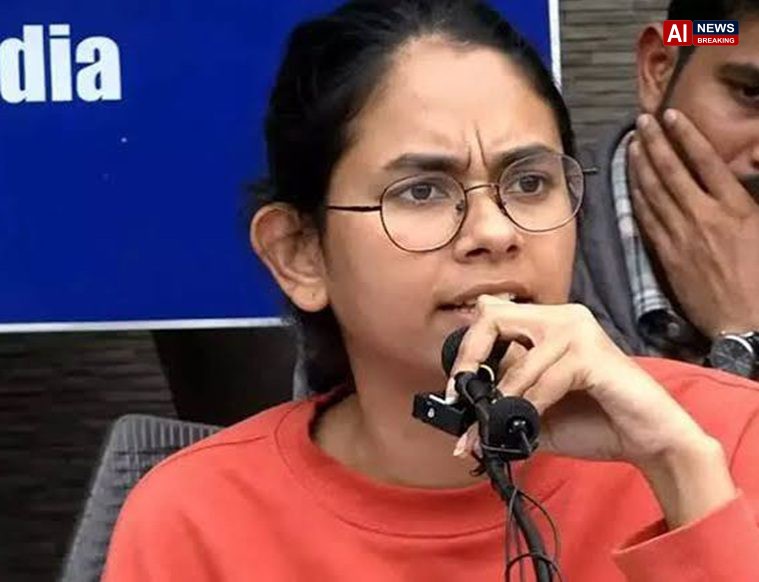
Delhi court cancels non-bailable warrants against Aishe Ghosh - AI News Breaking
delhi court cancels nonbailable:
A Delhi court has cancelled the non-bailable warrants issued against student leader Aishe Ghosh and 18 other students. The court’s decision came after Ghosh and the other students appeared physically before the court. This development has significant implications for the students who were issued warrants in connection with a clash between students and police at Jawaharlal Nehru University (JNU) in Delhi earlier this year..
The court, headed by judicial magistrate first class Vijayshree Rathore of the Patiala House court, cancelled the warrants subject to a cost of ₹1,000. The court reportedly noted that the presence of the accused in the court was a significant factor in cancelling the warrants. It appears that the court is willing to give the students another chance to face the law without having to be arrested..
This lenient approach is likely to be seen as a positive step by the students who were issued warrants. Aishe Ghosh is a prominent student leader at JNU, and her arrest had sparked widespread outrage among students and civil liberties groups. The non-bailable warrants were issued against her and 18 other students following a complaint filed by the police against them for allegedly participating in a violent clash with the police at JNU earlier this year..
The students had maintained that they were not involved in any violent activities. The case highlights the complex relationships between law enforcement agencies, students, and the judiciary in India. While the government has taken a hardline stance on student activism, the judiciary has shown a willingness to balance the need for law and order with the need to protect the rights of citizens..
The cancellation of the non-bailable warrants is a clear indication of the judiciary’s commitment to upholding the principles of justice. The Patiala House court’s decision is seen as a significant breakthrough in a case that has sparked intense debate about free speech, student activism, and police brutality. The court’s cancellation of the non-bailable warrants has also sparked celebrations among students and civil liberties groups, who see it as a victory for the rule of law..
However, not everyone is happy with the court’s decision. Some sections of the media have criticized the court for showing leniency towards the students, arguing that they were involved in violent activities. The police have also maintained that the students are guilty of violating the law..
The case against the students is likely to continue, with the prosecution planning to file a chargesheet in the coming weeks. However, the cancellation of the non-bailable warrants has already sent a strong message that the court is willing to give the accused a fair chance to defend themselves. Aishe Ghosh and her fellow students have maintained that they were involved in peaceful protests and were unfairly targeted by the police..
The cancellation of the non-bailable warrants is seen as a vindication of their claims. The case has also highlighted the need for greater accountability among law enforcement agencies, particularly in the context of policing student protests. The role of the judiciary in shielding students from police action has been a topic of much debate in India..
While the court’s decision is seen as a positive step, some critics argue that it sends the wrong signal to students who engage in violent activities. Others argue that the court is showing a bias towards students and is undermining the rule of law. The cancellation of the non-bailable warrants is also significant in the context of the ongoing debate about free speech and student activism in India..
The case has sparked intense debate about the limits of free speech and the role of students in advocating for social change. The case is also seen as a test of the government’s commitment to protecting the rights of citizens, particularly in the context of policing student protests. The government’s response to the court’s decision will be closely watched, with many expecting a statement from the Ministry of Home Affairs..
The cancellation of the non-bailable warrants has already sparked a fierce debate in the country about free speech, student activism, and police brutality. The case is likely to continue to be a topic of discussion in the coming weeks, with many expecting a chargesheet to be filed by the prosecution in the coming weeks..
Updated: July 30, 2026