 Trump administration offers mixed messages on limits to Ukraine’s Starshield access
  US Treasury proposes a rule to crack down on high-tech investments in China, other adversaries
  Calley Means, a key MAHA advocate, resigns as a top RFK Jr. adviser
  Spotify Tightens Family Plan Controls with QR Code Verification
  Use of Chief Minister C. Joseph Vijay’s deep fake videos to collect money: Rajasthan youth moves Madras High Court seeking bail
 Delhi Draft Roll: 47.7 Lakh Voters Marked for Deletion
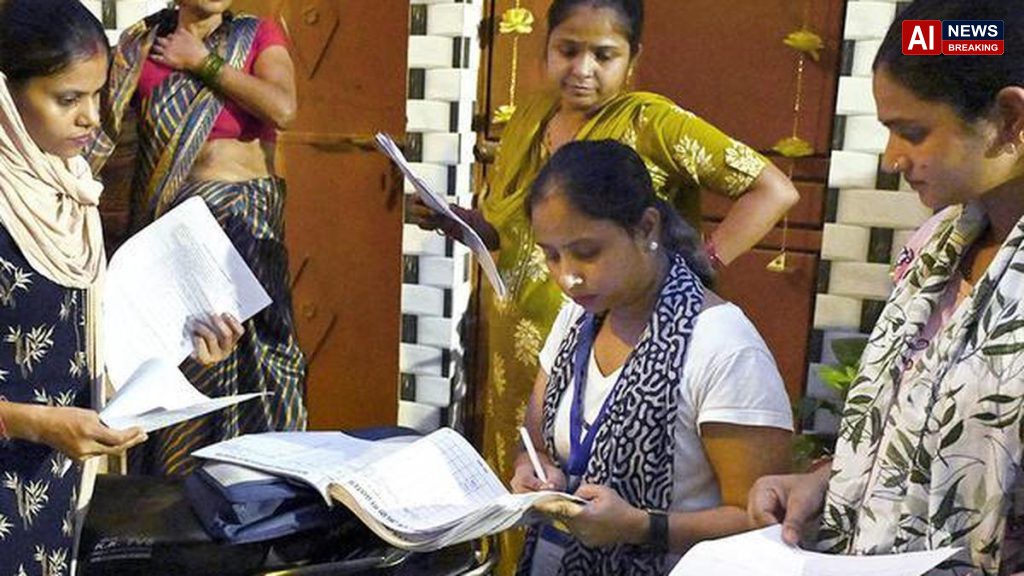
Delhi draft electoral roll out: How to check your name - AI News Breaking
delhi draft roll lakh:
The Delhi Electoral Office has officially released the draft electoral roll for the national capital, marking a critical juncture for the city’s democratic infrastructure ahead of upcoming bye-elections and general polls. This preliminary list serves as the basis for finalizing the voter registry that will determine who is eligible to cast a ballot in future elections. The release of such documents is a routine yet vital administrative process, ensuring that the electorate remains accurate, inclusive, and free from duplication or error..
For the millions of residents who call Delhi home, verifying their entry in these records is not merely a bureaucratic formality but a fundamental civic duty that safeguards their right to participate in the political process. The exercise aims to streamline the voter list, removing deceased electors, shifting residents, and duplicates, while simultaneously adding new eligible voters who have reached the age of majority or moved to the city since the last revision.A significant portion of the city’s voting population has been flagged for exclusion in this latest draft, raising immediate concerns among civic groups and political parties alike. Official figures indicate that as many as 47.7 lakh electors have been removed from the rolls of the 1.45 crore registered voters in the national capital..
This substantial number represents nearly one-third of the entire electorate potentially facing disqualification unless objections are raised correctly. The scale of this exclusion has sparked widespread debate regarding the criteria used for deletion and the adequacy of the notification process. Many residents suspect that legitimate voters may have been inadvertently marked for removal due to incomplete data, migration issues, or administrative oversights..
The electoral authorities have maintained that these exclusions are based on rigorous verification protocols, yet the sheer volume of deleted names underscores the complexity of maintaining an accurate registry in a dynamic, high-density metropolis.The Special Intensive Revision of the Register of Electors, known as SIR, was conducted over a strict timeframe from June 20 to August 17, 2026. This seven-week window was designated for the complete overhaul of the voter list, involving thousands of enumeration officers who visited households and public spaces to collect fresh data. The process was designed to be comprehensive, targeting not only residential areas but also institutional voters, including those in universities, military stations, and government hostels..
During this period, officials distributed forms to new voters and sought corrections from existing ones, aiming to create a clean and up-to-date database. The intensity of the revision reflected the Delhi Electoral Office’s commitment to modernizing its electoral management information system and addressing long-standing criticisms regarding the accuracy of previous voter lists.For citizens who find themselves uncertain about their status, the electoral commission has established multiple channels to verify their names. The most accessible method is through the official electoral services website, where individuals can search for their details using their age, gender, and constituency..
This digital interface allows users to cross-reference their names with the published draft roll, providing immediate clarity on whether they appear in the list or have been marked for deletion. Additionally, the Vahan platform and other integrated government portals have been synchronized to enable easier access to voter data, reducing the need for physical visits to electoral offices. These digital tools are essential in a city where mobile internet penetration is high and where citizens often prefer contactless services for administrative tasks.However, digital access alone does not resolve all uncertainties, particularly for elderly voters or those with limited technological literacy..
To address this gap, the electoral office has set up help desks at district collection centers across the nine administrative districts of Delhi. These centers are staffed with trained officials who can assist voters in checking their status, filing objections, and understanding the correction process. Physical copies of the draft roll are also available for public inspection at local police stations and community centers, allowing neighbors to verify each other’s entries..
This multi-layered approach ensures that no demographic is left behind in the verification process. It acknowledges the digital divide and provides alternative pathways for civic participation, reinforcing the principle of universal suffrage in the capital region.Those who discover their names missing from the roll, or incorrectly listed, must act swiftly within the prescribed timeframe. The electoral commission has opened a window for filing objections and claims, during which voters can submit forms claiming their right to inclusion or objecting to the deletion of their names..
These forms must be accompanied by supporting documentation, such as proof of residence, identity cards, and age certificates. The burden of proof lies with the claimant, requiring precise and verifiable information to overturn initial exclusions. Officials have warned that late submissions will not be considered, emphasizing the importance of timely action..
The process is strictly monitored to prevent fraudulent entries, but it also must remain flexible enough to accommodate genuine errors in data collection during the SIR phase.The exclusion of 47.7 lakh voters has not gone unnoticed by political stakeholders, who are mobilizing their supporters to verify their status. Political parties have emerged as key intermediaries in this process, organizing voter awareness campaigns and providing guidance on how to file objections. This involvement highlights the competitive nature of Delhi’s politics, where every vote counts and where an accurate roll is seen as a strategic asset..
Critics argue that the high number of exclusions may disproportionately affect marginalized communities, including recent migrants and informal settlement residents who often lack stable documentation. They contend that the rigid verification criteria may inadvertently disenfranchise vulnerable groups, skewing the electoral balance. The electoral authorities have responded by stating that the process is transparent and follows statutory guidelines, but the tension between administrative precision and inclusive participation remains a point of contention.Legislative experts note that the Special Intensive Revision is a powerful tool for cleaning up voter rolls, but it requires careful calibration to avoid disenfranchisement..
The law mandates that deletions must be based on concrete evidence of death, relocation, or duplication, rather than mere suspicion or lack of response. Enumeration officers are trained to conduct door-to-door surveys, but the quality of these interactions can vary depending on local conditions and officer diligence. The Delhi Electoral Office has implemented quality control measures, including random audits and supervisor reviews, to minimize errors..
Despite these safeguards, the high volume of exclusions suggests that systemic issues in data management may still persist. Addressing these issues will require continuous improvement in technology training, officer accountability, and public engagement strategies.The verification process also serves as a public education campaign, reminding citizens of their responsibilities as voters. Many residents are unaware of the importance of keeping their electoral details updated, leading to inadvertent exclusions due to changed addresses or names..
The release of the draft roll provides an opportunity for the electoral commission to reinforce the message that voter registration is an ongoing process, not a one-time event. Public service announcements, media campaigns, and community workshops are being conducted to explain the significance of the draft roll and the steps required to correct errors. These efforts aim to build a culture of civic responsibility, where citizens actively participate in maintaining the integrity of the democratic process..
Flagging nearly a third of Delhi’s voters for removal exposes admin efficiency as a potential wedge issue for upcoming polls.
This scale of cleanup risks treating human mobility as data error, forcing citizens to litigate their own right to vote.