
 Europe warns of Russia’s hybrid attacks but struggles to counter them
  Former chief election commissioner calls SIR scheme illegal.
  A Corruption Scandal Is Reshaping Brazil’s Presidential Election
  US citizen injured in Illinois after ICE agents mistook him for fugitive, tried to arrest him
  At 10 years old, Smithsonian’s Black museum is undaunted amid pressure from Trump administration
 Democratic Senators Confront Pentagon Official over US Iran War Role in Heated Senate Hearing
** A heated Senate hearing saw Democratic senators aggressively question Pentagon official Pete Hegseth on the US role in the ongoing conflict in Iran, exposing deep concerns about the country’s military involvement in the region. The tense exchange has sparked intense debate within the US and international communities, with implications for US foreign policy and national security.
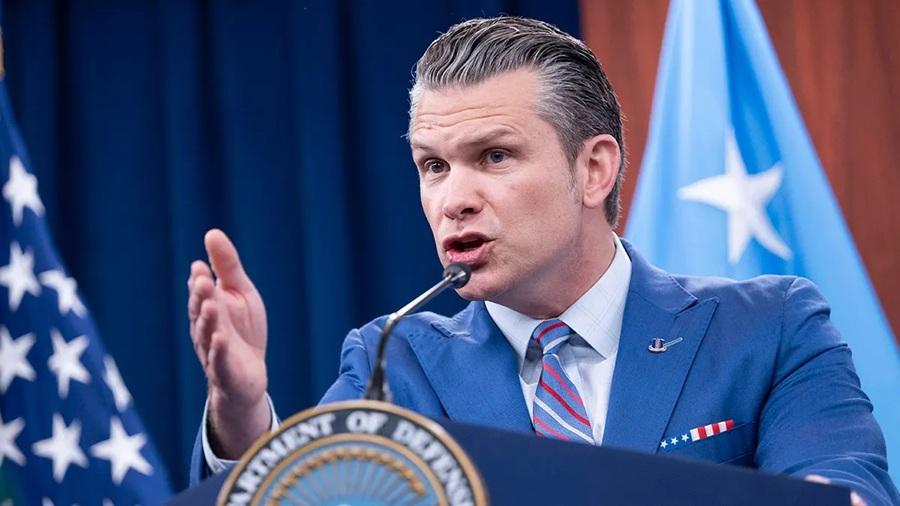
Pentagon Faces Scrutiny Over Alleged Underreporting of U.S. Military Injuries During Iran Conflict - AI News Breaking
Democratic Senators Grill Pentagon Official on US Involvement in Iran: A Growing Concern
Washington D.
C.
Updated: May 1, 2026
Democratic Senators Grill Pentagon Official on US Involvement in Iran: A Growing Concern
Washington D.C. – A recent Senate hearing saw a heated grilling of Pentagon official Pete Hegseth by Democratic senators over the US war in Iran. The tense exchange exposed deep concerns about the country’s military involvement in the region, with implications for US foreign policy and national security.
What Happened:
At the heart of the controversy lies the recent Senate hearing, during which Democratic senators aggressively questioned Pete Hegseth, Undersecretary of Defense (Acquisition and Sustainment), on the US role in the ongoing conflict in Iran. The heated exchange saw Hegseth repeatedly facing criticism from the Democratic side, while the Republicans provided him with an opportunity to highlight the achievements of the war.
Background:
To grasp the full scope of this development, it’s essential to consider the historical context of US involvement in Iran. Key events include:
– 2015 JCPOA: The Joint Comprehensive Plan of Action (JCPOA) marks a major milestone in Iran-US relations. The nuclear deal was reached under the Obama administration, with the aim of restraining Iran’s nuclear capabilities in exchange for sanctions relief. However, tensions between the two nations resurfaced in 2018 when President Trump withdrew the US from the agreement.
– 2018 drone incident: A US Navy MQ-4C Unmanned Aerial Vehicle (UAV) was shot down by an Iranian surface-to-air missile over the Strait of Hormuz. The incident further escalated tensions and led to ongoing confrontations in the region.
– 2020 US airstrikes in Iraq: Following the death of Iranian General Qasem Soleimani in a US drone strike, Iraq witnessed a wave of US-led airstrikes targeting pro-Iranian militia forces. The military operation has continued to this day, causing significant loss of life and civilian casualties.
– Current escalation: In recent months, the situation in Iran has become increasingly volatile. Iranian Supreme Leader Ali Khamenei has vowed to avenge the death of General Soleimani, while US forces have continued to face attacks from Iranian-backed forces.
Key Concerns:
1. Partisan divisions: The tense exchange in the Senate highlights the deep-seated divisions in the US Congress over its involvement in the Iran war. Democrats have expressed reservations about the war’s justification and its human rights implications, while Republicans defend the US role as a necessity for regional stability.
2. Escalating regional tensions: With continued airstrikes and proxy warfare in Iraq and Syria, the risk of a broader regional conflict grows. Critics worry that these actions may push Iran further away from the negotiating table, ultimately destabilizing the Middle East.
3. Civilian casualties and accountability: Concerns over the war’s civilian casualty toll and accountability mechanisms underscore the growing unease among lawmakers. Human rights groups have documented numerous civilian deaths, fueling demands for a more transparent and humane approach to US military operations.
What Next:
As tensions continue to simmer in the Middle East, Congress remains under considerable pressure to assess the US role in the conflict. The Democratic-led push for greater oversight and accountability has sparked intense debate within the US and international communities. As the war drags on, it remains to be seen whether Congress will push for more robust action or opt for increased diplomacy with Iran to resolve the crisis.
The heated Senate interrogation of Pete Hegseth reveals a deeper US concern: will the pursuit of regional stability be achieved at the cost of moral legitimacy and long-term geopolitical fallout?




