 Legal action ordered against officials over irregularities in voter list in Pilibhit
  Floods force evacuations and rooftop rescues
  Revival Rugs Birthday Sale: 20 Percent Off Sitewide Through Sunday
  Ohio mayor says employee error caused chemical leak, lifts evacuation orders
  Nabi, Rashid and quicks lead Afghanistan to tri-series title
 Democrats Declare Victory in Pennsylvania District Held by GOP for Nearly 30 Years
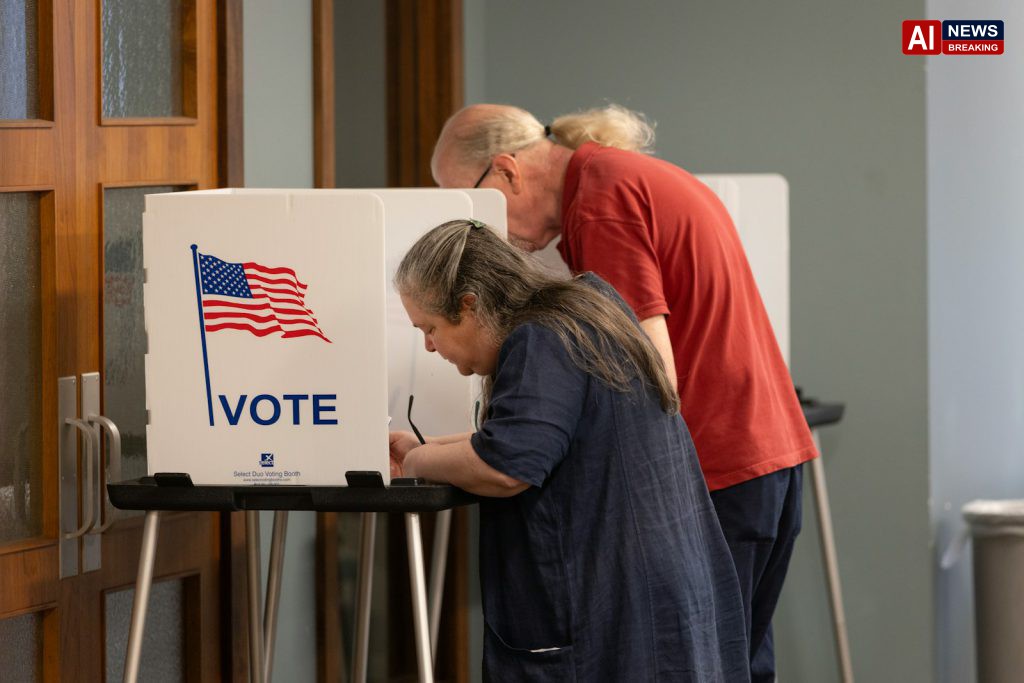
Democrats Declare Victory in District Held by GOP for Nearly 30 Years - AI News Breaking
democrats declare victory pennsylvania:
Harrisburg, August 19, 2026: Democrats have declared victory in a closely contested special election for a Pennsylvania state House seat in Butler County, flipping a traditionally Republican district that had been held by the GOP for nearly three decades.
Democrat Brandon Dukes narrowly defeated Republican Scott Timko in the special election for Pennsylvania’s 12th Legislative District, according to unofficial results. Dukes finished with 8,434 votes, compared with 8,346 for Timko, giving the Democrat an 88-vote advantage in a race decided by less than one percentage point.
The result has attracted national attention because the district is located in a heavily Republican part of Butler County and was carried by President Donald Trump by about 18 percentage points in the 2024 presidential election. Democrats are portraying the upset as a potential warning sign for Republicans ahead of November’s midterm elections.
Democrats celebrate major upset
Dukes declared victory after the unofficial results showed him maintaining a narrow lead over Timko.
In a statement, Dukes thanked his supporters and campaign volunteers while emphasizing that he wanted every vote, including provisional and overseas ballots, to be counted. He said the result would allow him to take issues affecting local residents to Harrisburg, including road safety, school funding, healthcare costs and the broader cost of living.
Pennsylvania Democrats quickly celebrated the result as an important political breakthrough.
Governor Josh Shapiro praised the outcome, pointing to the district’s strong Republican history and Trump’s large margin there in 2024. Democratic state party chairman Eugene DePasquale also described the result as evidence that Democrats can compete in districts that have traditionally been considered safe Republican territory.
The Democratic Party’s enthusiasm reflects the broader political significance being attached to the race rather than the immediate impact of the seat itself.
A district Republicans held for nearly 30 years
The seat has been a Republican stronghold for decades.
Former Republican state Rep. Daryl Metcalfe held the district for roughly 30 years after first winning the seat in 1998. His successor, Republican Stephenie Scialabba, later occupied the position before resigning in April, triggering Tuesday’s special election. Scialabba said at the time that she was leaving the legislature to focus on her family.
The district includes communities such as Cranberry Township, Adams Township, Evans City, Harmony, Seven Fields and Zelienople, north of Pittsburgh.
Republicans entered the contest with a substantial voter-registration advantage, with the GOP holding nearly a two-to-one registration edge over Democrats in the district. That made Dukes’ narrow victory particularly striking.
Trump carried the district by 18 points
The election took place in an area where Republicans have continued to perform strongly in statewide and national contests.
Trump won the district by approximately 18 percentage points in 2024, making the Democratic victory a significant overperformance compared with the party’s recent presidential performance there.
That contrast is one reason political observers are treating the election as an early indicator of the political environment heading into November.
The result does not mean the district has permanently shifted toward Democrats. Special elections can produce unusual turnout patterns, and the margin was only 88 votes. Nevertheless, the ability of a Democrat to win in a district with such a strong Republican history demonstrates that the political landscape may be more competitive than it appeared on paper.
Turnout was relatively low
The special election drew more than 16,800 votes, with turnout at just under one-third of eligible voters in the district.
Low-turnout special elections often place greater emphasis on campaign organization, voter contact and the ability of candidates to mobilize their supporters.
Democratic strategists pointed to an intensive ground operation, including door-to-door canvassing and direct engagement with voters, as an important factor behind Dukes’ performance.
The district’s changing suburban demographics may also have contributed to the result. Parts of the area around Cranberry Township have experienced population growth and demographic changes that have made some traditionally Republican suburban communities more competitive.
What the result means for Pennsylvania Democrats
The victory gives Democrats another reason for optimism as Pennsylvania heads toward a closely watched midterm election.
Democrats currently hold a narrow majority in the Pennsylvania House, and control of the state legislature will be one of the major political battles in November. All 203 state House seats will be on the ballot this year, while half of the state Senate’s 50 seats are also up for election.
Democrats are also seeking to expand their position in the state Senate, where Republicans have maintained control for decades.
A Democratic victory in a traditionally Republican House district could therefore provide additional momentum for the party’s broader statewide campaign.
However, the special election itself does not dramatically alter the balance of power in Harrisburg. Democrats already have a narrow House majority, and the result does not by itself determine which party will control the chamber after November’s general election.
Republicans face questions about November
For Republicans, the result raises questions about whether the party’s strong performance in rural and exurban Pennsylvania can be maintained as voters move into the midterm campaign.
The district’s Republican registration advantage suggests that the GOP still has a substantial structural base in the area. But Dukes’ victory demonstrates that registration numbers do not necessarily guarantee election victories, particularly when Democratic turnout and independent voter support are strong.
The result may also intensify Republican efforts to retain competitive suburban districts across Pennsylvania.
Political analysts have increasingly focused on suburban communities as potential battlegrounds in the 2026 elections, particularly as voters respond to economic conditions, the cost of living and the performance of the Trump administration.
Dukes and Timko will face each other again
The political battle between Dukes and Timko is not necessarily over.
The two candidates are also scheduled to face one another in the November 3 general election, when voters will choose who serves the district for the next full two-year term.
That means Tuesday’s result could have an immediate political consequence for the November campaign.
Dukes will enter the general election as the apparent incumbent if the special-election result is certified. Timko, meanwhile, will have another opportunity to appeal to the district’s large Republican base and attempt to reverse the narrow special-election outcome.
The November race could therefore become an important test of whether the special-election result represented a temporary turnout-driven upset or a more durable shift in the district’s political preferences.
Democrats see broader national implications
Democrats are already connecting the Pennsylvania result to a series of special-election performances in traditionally Republican areas.
The party has performed strongly in several special elections during the Trump administration, encouraging Democratic strategists who believe voter dissatisfaction could translate into larger gains during the 2026 midterms.
Republicans, however, are likely to emphasize the unusually low turnout and extremely narrow margin rather than treating the result as evidence of a fundamental political realignment.
Both interpretations contain some truth.
An 88-vote victory in a low-turnout special election cannot by itself establish a permanent partisan shift. But winning a district that Trump carried by 18 points and that Republicans had controlled for nearly 30 years is nevertheless a politically meaningful achievement.
A warning sign ahead of the midterms
The Pennsylvania special election will likely be closely examined by both parties as they prepare for November.
For Democrats, the victory provides evidence that aggressive grassroots organizing and strong turnout can overcome a significant Republican registration advantage, even in areas that have historically been considered safe GOP territory.
For Republicans, the result is a reminder that suburban and exurban districts cannot necessarily be taken for granted.
The most important question will be whether Democrats can reproduce the same level of support in November, when turnout will be substantially higher and the political environment will include statewide races and contests for control of the legislature.
For now, Brandon Dukes’ 88-vote victory represents one of the most notable Democratic upsets in Pennsylvania politics this election cycle. It breaks a Republican hold dating back nearly 30 years and gives Democrats a fresh source of momentum as the state moves toward a closely watched November midterm election.
The final outcome remains subject to the completion and certification of the election process because the reported margin is exceptionally narrow. But the political message from Butler County is already clear: a district once regarded as reliably Republican has become competitive, and both parties now have reason to watch Pennsylvania’s suburbs much more closely.
Post Content