Indonesia denies foreign claim to rescued orangutans
 Turkey hosts COP31 climate talks in Antalya.
 Pope meets Argentine bishops.
 APOD: 2026 November 8 – Major Fireball Meteor
 Indonesian Horror Hit ‘Pabrik Gula’ Gets 2028 Sequel as MD Entertainment Lines Up Three Imax Films
Dinosaur red blood cells recovered from 115-million-year-old fossil
**
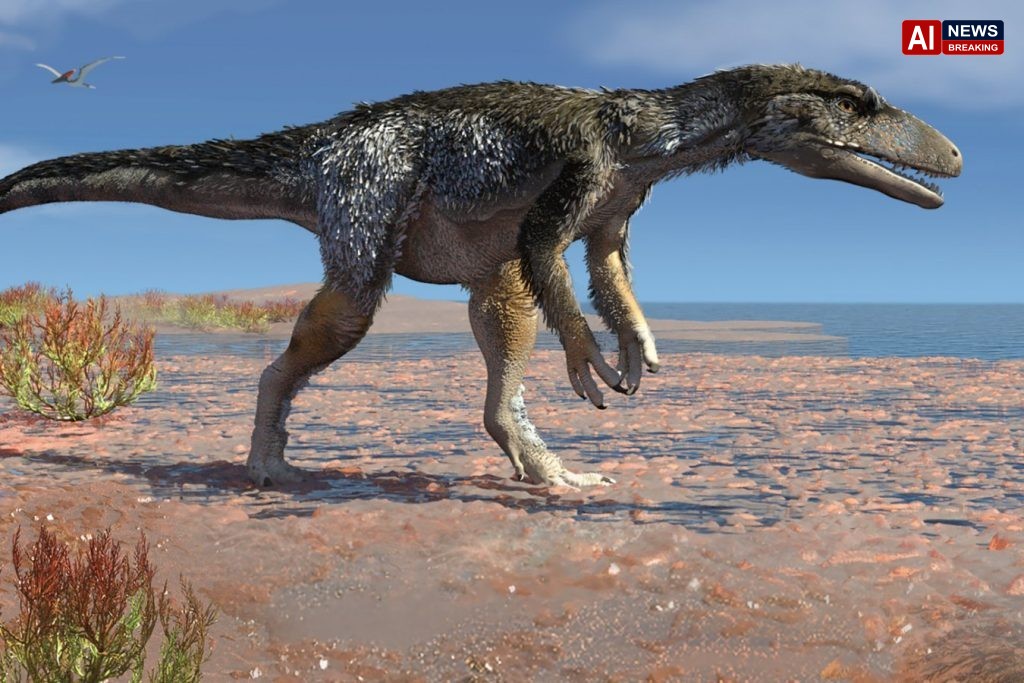
Dinosaur red blood cells recovered from 115-million-year-old fossil - AI News Breaking
dinosaur blood cells recovered:
A fragment of leg bone recovered from a 115‑million‑year‑old theropod in Brazil has yielded what scientists say are the oldest dinosaur red blood cells ever documented, offering an unprecedented glimpse into the micro‑anatomy of a creature that roamed the planet during the mid‑Cretaceous. The fossil, identified as belonging to Aratasaurus museunacionali, was unearthed in the Araripe Basin in 2008 and has been the subject of intense study ever since. Now, a team led by Dr Kliti Grice of Curtin University in Perth has isolated microscopic structures that match the size, shape and chemical composition of erythrocytes, suggesting that the cellular material survived nearly twelve hundred million years of geological processes.The discovery follows a series of earlier reports that identified blood‑cell‑like structures in much younger dinosaur specimens..
In 2005, fragments of a Tyrannosaurus rex femur recovered from Montana were claimed to contain intact erythrocytes, and in 2015, researchers described similar finds in 75‑million‑year‑old bone fragments from Canada. Those reports, while controversial, opened the door to the possibility that mineralisation could preserve soft tissue at the cellular level. The new Brazilian specimen pushes the temporal boundary back by another 40 million years, making it the earliest known example of preserved dinosaur blood cells and raising fresh questions about the mechanisms that enable such exceptional preservation.The research team employed a combination of scanning electron microscopy, energy‑dispersive X‑ray spectroscopy and Raman spectroscopy to examine the internal microstructure of the bone fragment..
After carefully demineralising the sample with a weak acid solution, the scientists were able to isolate a population of disc‑shaped structures measuring roughly 6‑8 micrometres in diameter, dimensions that correspond closely to the size of modern avian red blood cells. Chemical analyses revealed a high concentration of iron and phosphorus, elements that are characteristic of hemoglobin‑containing cells, while the Raman spectra showed peaks consistent with the presence of organic molecules such as porphyrins, the pigment that gives blood its colour.To rule out contamination, the researchers conducted a series of control experiments. They compared the putative erythrocytes with modern chicken blood cells processed under identical laboratory conditions, ensuring that the observed spectral signatures were not artefacts of the preparation process..
Additionally, they examined surrounding matrix material for any signs of modern biological intrusion and found none. The team also performed isotopic dating on the surrounding sedimentary layers, confirming the age of the fossil at approximately 115 million years, a figure that aligns with the established chronology of the Araripe Basin’s Santana Formation.The implications of the find extend beyond the novelty of preserving red blood cells for such an extraordinary span of time. If dinosaur erythrocytes can be recovered intact, they may retain molecular information that could illuminate aspects of dinosaur physiology that have long been inferred only indirectly..
For instance, the size and shape of red blood cells are closely tied to metabolic rates and oxygen‑transport efficiency. Modern birds, the closest living relatives of theropods, possess nucleated, oval erythrocytes, whereas mammals have small, anucleate discs. The discovery of disc‑shaped cells in Aratasaurus suggests that its circulatory system may have been more akin to that of birds, supporting theories that many theropods possessed high metabolic rates comparable to modern endotherms.Moreover, the presence of iron‑rich pigments opens the possibility of reconstructing aspects of dinosaur blood chemistry..
By analysing the isotopic composition of the iron and other trace elements within the cells, scientists could infer dietary habits, migratory patterns or even the oxygen levels of the ancient atmosphere. Such data would complement existing paleo‑environmental reconstructions derived from sedimentology and plant fossils, offering a more nuanced picture of the ecosystems in which these predators lived.The preservation of cellular material in this case is likely attributable to a confluence of rapid burial, low‑oxygen conditions and early mineralisation. The Santana Formation is renowned for its fine‑grained limestone deposits that encapsulate delicate structures, often preserving soft tissues as impressions or mineral replicas..
In the Aratasaurus specimen, the bone appears to have been infiltrated by iron‑rich minerals shortly after death, a process that can effectively “freeze” cellular architecture before decay progresses. This phenomenon, known as permineralisation, has been documented in other exceptional fossils, such as the soft‑tissue remnants found in a 75‑million‑year‑old duck‑billed dinosaur from Canada, but the degree of cellular fidelity observed here is unprecedented.Skepticism remains among some paleontologists who caution that the identification of ancient erythrocytes must be approached with rigorous standards. Critics point out that mineral particles or microbial remnants can sometimes mimic the morphology of blood cells under microscopy, potentially leading to misinterpretation..
Dr Grice acknowledges these concerns, emphasizing that the multi‑modal analytical approach—combining morphological, chemical and isotopic data—was designed to address exactly those pitfalls. She also notes that the team plans to subject the samples to proteomic analysis, searching for remnants of hemoglobin proteins that would provide further confirmation.If subsequent investigations validate the findings, the discovery could herald a new era in paleobiology, where the cellular and molecular remnants of extinct organisms become accessible for study. Such advances would bridge a gap between traditional morphological taxonomy and modern molecular biology, enabling researchers to test hypotheses about dinosaur growth rates, disease, and evolutionary relationships with a level of detail previously reserved for living species..
The prospect of extracting ancient DNA from such specimens remains highly speculative, given the extreme degradation expected over millions of years, but even partial protein sequences could refine phylogenetic trees and clarify the lineage leading from non‑avian theropods to modern birds.The Aratasaurus red blood cells also underscore the importance of revisiting older fossil collections with fresh techniques. Many specimens that have been stored in museum drawers for decades may contain hidden biochemical treasures that were undetectable with earlier technology. As analytical methods become increasingly sensitive and non‑destructive, paleontologists are likely to re‑examine a wealth of material, potentially uncovering more instances of soft‑tissue preservation..
In the meantime, the Brazilian bone fragment stands as a testament to the remarkable durability of life’s building blocks, surviving the vicissitudes of deep time to inform our understanding of a world long vanished..
Updated: November 2, 2026
Scientists have identified disc‑shaped, iron‑rich structures in a 115‑million‑year‑old Brazilian theropod bone that match the size and chemistry of red blood cells, marking the oldest such cellular preservation yet recorded. The find, validated through microscopy, spectroscopy and isotopic dating, could open new windows onto dinosaur metabolism and physiology while prompting calls for further molecular analysis.
The fact that a 115‑million‑year‑old theropod still harbors disc‑shaped red blood cells hints that these dinosaurs ran on a metabolism almost like modern birds—high‑efficiency oxygen transport rather than the sluggish mammalian style. If future proteomic tests confirm