Indonesia denies foreign claim to rescued orangutans
 Turkey hosts COP31 climate talks in Antalya.
 Pope meets Argentine bishops.
 APOD: 2026 November 8 – Major Fireball Meteor
 Indonesian Horror Hit ‘Pabrik Gula’ Gets 2028 Sequel as MD Entertainment Lines Up Three Imax Films
Édouard Philippe’s support drops as protests intensify
**
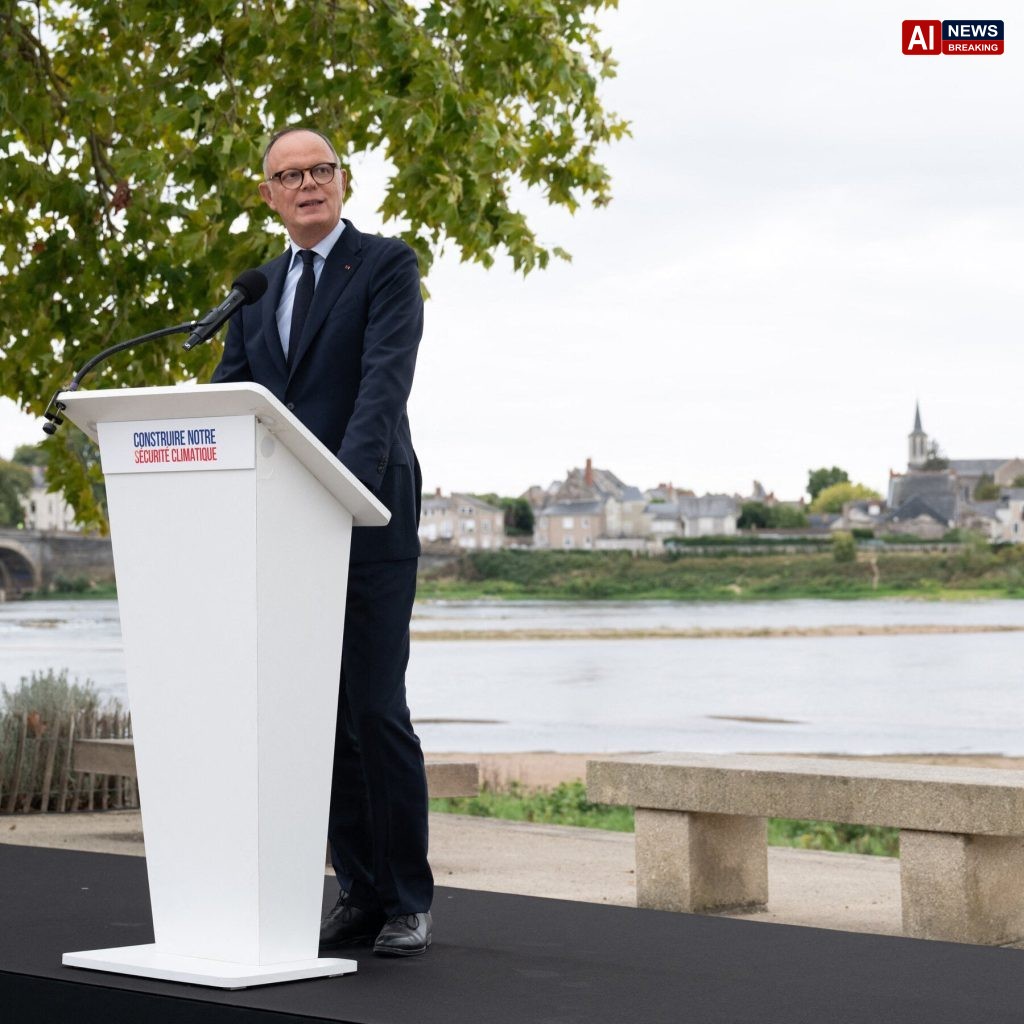
Édouard Philippe’s support drops as protests intensify - AI News Breaking
douardphilippes support drops protests:
Support for Édouard Philippe, the leading candidate of the centrist coalition, has slipped sharply in recent weeks, a development that political analysts say is directly linked to the wave of violent unrest that has roiled France since the start of the year. The protests, which began as a response to a proposed pension reform and quickly escalated into broader demonstrations against perceived elitism and government indifference, have created a climate of uncertainty that is eroding the appeal of the moderate platform that the former prime minister has championed. In the latest opinion polls, Philippe’s favourability has fallen by roughly eight points, while his far‑right and far‑left opponents have each gained a comparable boost.The centre‑right’s traditional base, once reliable in its support for pragmatic, pro‑European policies, appears increasingly disillusioned..
Voters who had previously seen the bloc as a stabilising force are now questioning whether the moderate agenda can adequately address the grievances that have driven thousands onto the streets. “People feel that the centre is out of touch, that it is trying to manage a crisis with the same old technocratic solutions,” said a senior researcher at a Parisian think‑tank. “When the streets are burning, the message of incremental reform feels hollow.”Far‑right figures such as Marine Le Pen’s successor have capitalised on the chaos, portraying the unrest as evidence of a failing liberal order that must be replaced by a stronger, more nationalist state..
Their messaging, amplified by social‑media campaigns and rally speeches, stresses law and order, sovereignty, and a rejection of the “globalist” policies they claim have left ordinary French citizens behind. In regions where protests have been most intense, the party’s local chapters report a surge in membership applications and an uptick in small‑scale fundraising, indicating a tangible conversion of discontent into political capital.On the opposite side of the spectrum, the far‑left coalition led by Jean‑Luc Mélenchon has also found fertile ground in the turmoil. Their narrative frames the unrest as a popular uprising against a corrupt establishment, positioning the left as the true champion of the working class..
Demonstrations that began with pension grievances have been reframed as broader anti‑capitalist protests, a shift that Mélenchon’s campaign has eagerly embraced. Recent rallies in Marseille and Lyon have drawn crowds that outnumber those at the centrist’s town‑hall meetings, suggesting a realignment of activist energy toward more radical alternatives.The erosion of Philippe’s support is not solely a function of protest dynamics; internal divisions within the centrist bloc have also played a role. A faction of younger deputies, dissatisfied with the perceived complacency of the party’s leadership, have publicly called for a more aggressive stance on social issues, including higher taxes on the wealthy and stronger environmental measures..
This intra‑party friction has been exploited by opponents who depict the coalition as fragmented and unable to present a coherent vision. “When a party talks to itself more than it talks to the electorate, it loses relevance,” observed a political columnist for a national daily.Economic indicators have further compounded the centrist’s woes. While France’s GDP growth remains modestly positive, consumer confidence has dipped to its lowest level in three years, according to a recent INSEE report..
Small‑business owners, particularly in the retail and hospitality sectors, cite the ongoing disruptions as a key factor in postponing investment and hiring. The centrist platform, which has traditionally emphasised fiscal prudence and European integration, struggles to resonate in an environment where immediate relief and tangible support are demanded by the electorate.International observers note that France’s political volatility is part of a broader European trend, where centrist parties are losing ground to more polarised options. In Germany, the liberal FDP has seen a similar decline, while in Italy the Democratic Party faces challenges from both the League and the Five Star Movement..
The French case, however, is distinguished by the intensity of the street protests, which have not only disrupted daily life but also symbolised a deeper crisis of legitimacy for the political centre.In response, Philippe’s campaign has attempted to recalibrate its message, emphasising a “new social contract” that promises increased dialogue with trade unions and a review of the most contentious elements of the pension plan. The candidate has also pledged to strengthen police resources while simultaneously advocating for community‑based interventions aimed at de‑escalating tensions. Yet critics argue that these measures amount to a “tactical pause” rather than a substantive shift, and that the centrist’s historic reliance on technocratic governance may be insufficient to rebuild trust.The upcoming municipal elections, scheduled for March, are likely to serve as a litmus test for the centrist bloc’s remaining influence..
Early indications suggest that in several key cities, independent candidates aligned with either the far‑right or far‑left are gaining traction, potentially reshaping local power structures. If these trends continue, the national parliamentary race could see the centrist coalition forced into a coalition government or even sidelined altogether, a scenario that would mark a significant departure from the political equilibrium that has characterised French governance for much of the Fifth Republic.Ultimately, the toll of the violent unrest extends beyond the immediate damage to infrastructure and public order; it is reshaping the ideological landscape of France. The erosion of support for Édouard Philippe underscores how quickly a once‑dominant centre can become vulnerable when the public perceives it as detached from pressing societal concerns..
Whether the centrist bloc can reinvent itself in time to reclaim its foothold remains uncertain, but the coming months will undoubtedly determine whether moderate politics can survive the current wave of polarisation or be relegated to the margins of French public life..
Updated: October 30, 2026
The erosion of Philippe’s centrist appeal signals a tipping point where France’s political center may be forced from the governing mainstream into a coalition‑dependent marginalia, reshaping policy‑making toward more confrontational, ideologically driven agendas. If the trend endures, the nation risks institutional volatility as fragmented extremes vie for legitimacy, potentially accelerating a long‑term realignment of the Fifth Republic’s power structure.