Use of Chief Minister C. Joseph Vijay’s deep fake videos to collect money: Rajasthan youth moves Madras High Court seeking bail
 Florida officer took possession of man’s home after finding him dead 4 years ago, police say
 Jury weighs fate of US woman who says father forced her into Syria’s war zone when she was a teen
 France bans certain protests to restore public
Egypt pledges defensive aid to Saudi Arabia amid Houthi attacks.
**
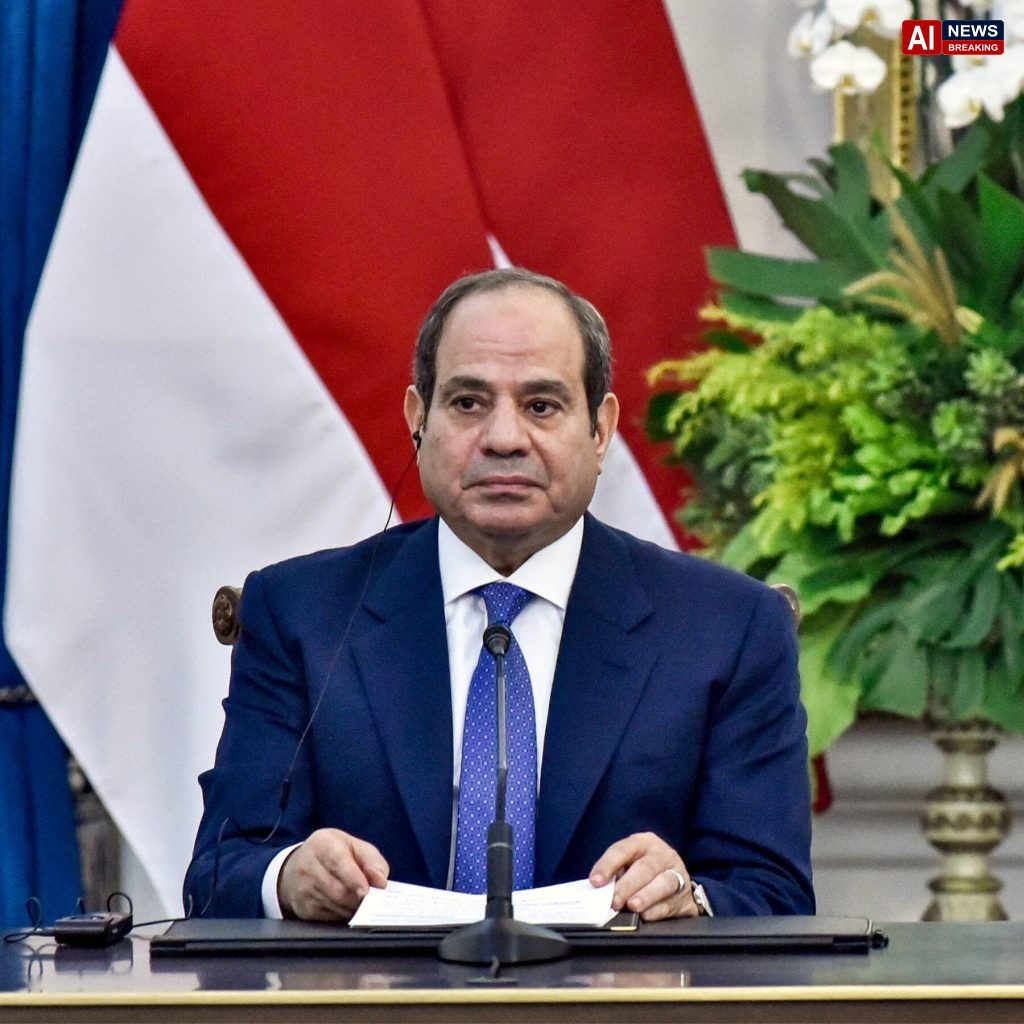
Egypt’s Defense Chiefs Pledge to Support Saudi Arabia After Houthi Attacks - AI News Breaking
egypt pledges defensive saudi:
Egypt’s senior military leadership has reaffirmed its willingness to provide assistance to Saudi Arabia in the wake of a series of Houthi missile and drone strikes that have targeted the kingdom’s critical infrastructure over the past month. In a joint statement released on Saturday, the chiefs of the Egyptian Armed Forces, the Air Force, the Navy and the Air Defence Forces said they stand ready to cooperate with Riyadh on any defensive measures deemed necessary, echoing President Abdel Fattah el‑Sisi’s earlier call for a parliamentary mandate to formalise such support.The statement came after a flurry of attacks that have hit Saudi oil facilities, port installations and civilian targets, prompting concerns that the conflict in the Red Sea could spill over into the wider Gulf region. While the Yemeni Houthi movement claims its actions are a response to perceived Western and Saudi aggression in Yemen, the escalation has drawn condemnation from a growing coalition of states, including the United States and European Union, which have warned of the broader implications for global energy markets and maritime security.In a televised address to members of parliament earlier this week, President el‑Sisi urged lawmakers to pass a resolution that would allow Egypt to supply defensive weaponry, intelligence and logistical support to Saudi Arabia..
“Our nation stands with our brothers and sisters in the Kingdom of Saudi Arabia, who are under attack,” he said. “Any assistance we provide will be strictly defensive, aimed at protecting civilian lives and preserving the stability of the region.” The president’s remarks were framed within a broader narrative of Arab solidarity and the need to counter what Cairo describes as “unlawful aggression” by the Houthi forces, which are backed by Iran.Analysts note that Egypt’s pledge reflects both strategic and economic considerations. As the world’s third‑largest importer of oil, Egypt is acutely aware of the potential impact of sustained disruptions to Saudi oil output on global prices and, by extension, its own balance of payments..
Moreover, the Red Sea is a vital corridor for Egyptian trade, with a significant proportion of its imports and exports transiting through Saudi ports such as Jeddah and Dammam. Any threat to the safety of these sea lanes could have immediate repercussions for Egypt’s economy.The defence chiefs’ statement also highlighted practical steps that could be taken under the proposed assistance framework. These include the sharing of real‑time intelligence on missile trajectories, the deployment of Egyptian air‑defence systems to bolster Saudi radar coverage, and the provision of logistical support for the repair and maintenance of Saudi aircraft that have suffered damage in recent strikes..
While no specific assets were listed, observers have pointed to Egypt’s recent acquisition of advanced Russian S‑300 and French‑made Mistral surface‑to‑air missile systems as potential contributors to a joint defensive posture.International reaction to the announcement has been measured. Washington, which has been coordinating a multinational task force to protect commercial shipping in the Red Sea, welcomed Egypt’s willingness to cooperate but cautioned against any escalation that could draw regional powers into a broader confrontation. “We appreciate Egypt’s solidarity with Saudi Arabia and its commitment to maintaining the security of global trade routes,” a US State Department spokesperson said..
“Our focus remains on de‑escalation and ensuring that all parties respect international law.”In Tehran, the response was predictably critical. Iranian officials dismissed the Egyptian pledge as a “provocative” move that would further entrench the proxy dynamics playing out in Yemen. A senior diplomat at the Iranian Foreign Ministry warned that any external military assistance to Saudi Arabia would be viewed as an “interference in the internal affairs of Yemen” and could prompt a corresponding increase in Houthi operations against both Saudi and allied targets.Within Egypt, the announcement has sparked debate among lawmakers and civil society groups about the constitutionality and prudence of deeper military involvement in a conflict that, while geographically proximate, is not directly linked to Egyptian security interests..
Opposition parties have called for greater parliamentary scrutiny of any aid packages, arguing that Egypt should prioritise internal development and avoid being drawn into a regional arms race. Human rights organisations have also expressed concern that the provision of defensive weaponry could inadvertently be used in ways that contravene international humanitarian law.Despite these domestic reservations, the defence chiefs underscored the historic ties between Cairo and Riyadh, citing decades of military cooperation, joint training exercises and shared intelligence initiatives. “Our armies have stood side by side since the early days of our republic,” said the chief of staff of the Egyptian Armed Forces, General Mohamed Zaki..
“In times of threat, we must act in unison, guided by the principles of mutual respect and the common goal of preserving peace and stability in the Arab world.”The parliamentary debate is expected to commence within the next two weeks, with the Defence and Foreign Affairs Committees slated to review the proposed framework. If approved, Egypt could become the first Arab nation beyond the Gulf states to formally extend defensive assistance to Saudi Arabia in response to the Houthi campaign. Such a move would mark a notable shift in the regional security architecture, potentially encouraging other countries—such as Jordan, Sudan and the United Arab Emirates—to consider similar measures.As the Red Sea crisis continues to unfold, the practical impact of Egypt’s pledge remains to be seen..
The Houthi movement has demonstrated a growing capacity to strike at long‑range targets, employing a mix of domestically produced and Iranian‑supplied missiles and drones. Saudi Arabia, meanwhile, has intensified its own defensive deployments, including the activation of the U.S.‑led coalition’s maritime security task force and the reinforcement of its own air‑defence network. In this volatile environment, Egypt’s contribution could tip the balance toward a more coordinated defensive posture, but it also carries the risk of deepening Cairo’s involvement in a conflict that already threatens to expand beyond Yemen’s borders..
The coming weeks will reveal whether the promised support translates into concrete action, and how regional and global powers will respond to an increasingly interconnected security challenge..
Updated: October 18, 2026
Insight: Egypt’s overt military backing of Saudi Arabia signals a pivot from passive solidarity to active deterrence, foreshadowing a tighter Arab security bloc that could compel rival powers to deepen their own footholds in the Red Sea.
Yet the move risks entangling Cairo in a proxy war far from its borders, exposing its economy and domestic politics to the volatility of an escalating Gulf‑Yemen conflict.