
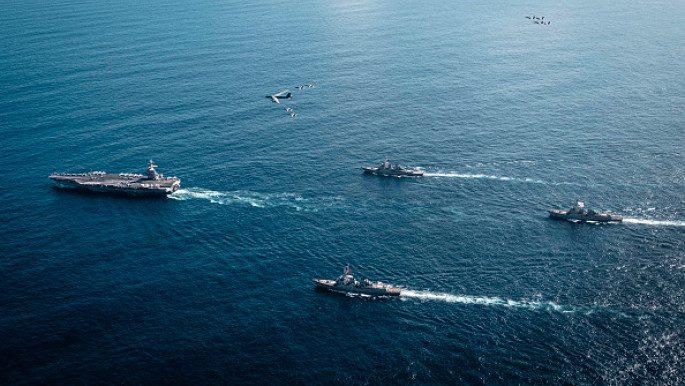
EU Leaders Dial Back Push for Naval Deployment to Middle East Amid Escalating Regional Tensions
European leaders have toned down earlier calls for sending naval ships to the Middle East, signalling a more cautious and calibrated approach as tensions continue to rise across the region. The shift reflects growing concern within the European Union over the risks of direct military involvement at a time when the Middle East is already facing a highly volatile security environment shaped by conflict, energy insecurity, and geopolitical rivalry.
The softer language from EU leaders comes as policymakers weigh how best to protect strategic shipping lanes, maintain regional stability, and avoid being drawn into a wider confrontation. In recent years, Europe has repeatedly expressed concern over threats to maritime security in the Gulf and surrounding waters, especially as disruptions in the region can quickly affect global trade, oil prices, and supply chains. But while the need to secure shipping routes remains urgent, there now appears to be less enthusiasm for visibly expanding Europe’s military footprint through a larger naval deployment.
This more restrained posture suggests that European governments are trying to strike a delicate balance. On one hand, they want to show that they are prepared to respond to instability that could threaten commercial traffic, energy imports, and broader international security. On the other hand, they are acutely aware that dispatching naval assets into an already tense theatre could be interpreted as an escalation, potentially increasing the risk of confrontation with state or non-state actors active in the region.
The Middle East remains central to Europe’s energy and strategic interests. Even though the EU has made efforts to diversify energy supplies and reduce dependence on conflict-prone regions, disruptions in the Gulf still have immediate consequences for European economies. Any threat to the free movement of oil, gas, and goods through major maritime chokepoints can intensify inflationary pressure, unsettle financial markets, and complicate already fragile post-crisis economic recovery across the continent. That is one reason maritime security in the region remains a matter of high importance for European capitals.
However, the decision to soften calls for naval deployment also reveals internal divisions within Europe about how far the bloc should go in responding to Middle East crises. Some member states traditionally favour a firmer security posture and stronger coordination with Western allies, especially when trade routes and strategic waterways are at risk. Others prefer diplomatic engagement, de-escalation, and limited military visibility, fearing that hard-power responses can create unintended consequences. The result is often carefully negotiated language that aims to preserve unity while avoiding commitments that could prove politically or militarily costly.
The debate is also shaped by Europe’s past experience in the region. From Libya and Syria to the wider Gulf, European states have learned that military actions, even when presented as limited or defensive, can carry long-term consequences. Naval missions intended to deter attacks or protect vessels may still place European forces in unpredictable situations. Leaders therefore appear keen to avoid steps that could transform the EU from an observer and diplomatic actor into a participant in regional power struggles.
Another factor behind the softened rhetoric is the broader international context. The Middle East is currently entangled in overlapping crises involving Iran, Israel, proxy groups, Red Sea shipping threats, and major-power competition. In such a landscape, even a defensive deployment can send complex political signals. European leaders may fear that a more assertive maritime move would reduce diplomatic room for manoeuvre, undermine mediation efforts, or expose divisions between the EU, the United States, and regional partners over strategy and end goals.
At the same time, toning down support for sending naval ships does not mean Europe is disengaging from the crisis. The EU is still likely to remain involved through intelligence-sharing, diplomatic outreach, sanctions coordination, humanitarian engagement, and support for existing maritime monitoring missions. Rather than announcing a fresh or more muscular naval initiative, leaders may prefer to reinforce current mechanisms, work with allies behind the scenes, and keep their options open depending on how the security situation evolves.
This shift in emphasis reflects a broader European foreign policy pattern: caution in military matters, especially in theatres where escalation risks are high and political consensus is fragile. While Europe often wants to project strategic relevance, it is also constrained by domestic politics, defence capacity limitations, and the need for agreement among multiple member states. As a result, declarations are frequently tempered by practical concerns about capability, legal mandate, cost, and the political appetite for sustained deployment.
The softened call may also be read as an attempt to avoid alarming financial and energy markets. Any suggestion of expanded Western naval action in the Middle East can feed fears of broader conflict, particularly when global investors are already sensitive to developments involving oil infrastructure, shipping chokepoints, and regional retaliation risks. A more measured message from Brussels and European capitals may therefore be intended not only for diplomatic audiences but also for businesses, traders, and energy stakeholders watching the region closely.
In strategic terms, Europe’s challenge is clear: it must protect its interests without becoming trapped in a confrontation it cannot control. Sending naval ships may offer visible reassurance, but it also comes with military, diplomatic, and political risks. By softening the push for such a move, EU leaders seem to be acknowledging that symbolism alone is not strategy. They appear to prefer flexibility over commitment, deterrence over provocation, and coordinated caution over bold but potentially hazardous action.
The coming days and weeks will determine whether this more restrained position holds. If attacks on shipping intensify, if regional hostilities spread, or if energy infrastructure comes under greater threat, pressure could return for a stronger European maritime role. For now, however, the message from EU leaders is one of caution: Europe remains concerned about the Middle East, but it is not yet ready to deepen its military presence there in a way that could further inflame an already dangerous situation.
This article may be prepared with the assistance of artificial intelligence (AI) and is reviewed before publication. While we aim for accuracy and timeliness, readers should verify important facts from official or primary sources. If you believe any information is inaccurate or that any content infringes your rights, please contact ainewsbreaking.com for review and appropriate action.