 Australia probes AI‑driven breach of My Health Record portal
  Engineering student’s ‘suicide’ turns out to be murder; two arrested
  Canada’s Capital Bids Good Riddance to Trump Avenue as Tensions With U.S. Rise
  Pentagon investigates after China obtains parts from F-35 stealth fighter jet
 'Exercise Tarang Shakti is back': IAF announces resumption of multinational air exercise
**
'Exercise Tarang Shakti is back': IAF announces resumption of multinational air exercise - AI News Breaking
039exercise tarang shakti back039:
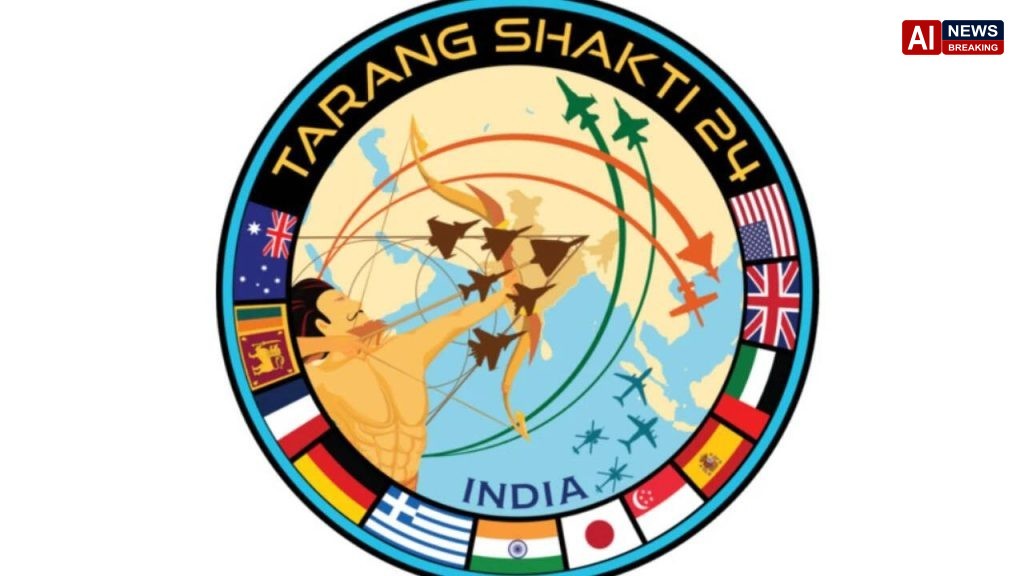
India’s premier multinational air exercise, Tarang Shakti, is slated to return to Jodhpur next month, after a brief hiatus that was prompted by the global pandemic and shifting defence priorities. The Indian Air Force (IAF) announced the resumption of the exercise on Thursday, confirming that the event will gather air forces from more than fifteen countries, including the United States, Australia, Japan, and France, among others. The decision follows the successful conclusion of the joint India‑Japan exercise Veer Guardian earlier this year, which provided a useful rehearsal for the logistics, command structures and air combat scenarios that will be expanded on during Tarang Shakti.The exercise is designed to enhance interoperability between participating forces, allowing pilots and ground crews to practise joint missions, shared command and control protocols, and integrated surveillance and intelligence operations..
While the IAF has long been a key partner in regional security dialogues, Tarang Shakti offers a platform for a deeper, operational level of collaboration that goes beyond the traditional training sorties. The event will also provide an opportunity for emerging air power players to showcase their capabilities in a multi‑aircraft environment that includes fighter jets, maritime patrol aircraft and unmanned aerial vehicles.Jodhpur, situated in the western Indian state of Rajasthan, has become a familiar venue for the exercise, offering an expansive airfield and a variety of terrains that are ideal for simulating desert, low‑altitude and high‑speed scenarios. The city’s existing infrastructure can accommodate the influx of aircraft, support aircraft and personnel from all participating nations..
Moreover, the IAF’s local logistics network has been upgraded over the past two years to handle the increased demand for fuel, ammunition and maintenance support that the exercise will entail.The IAF’s chief of air staff, Air Chief Marshal S. Raghuraman, said the decision to restart Tarang Shakti was made after a comprehensive assessment of the strategic environment and the need for robust, real‑time cooperation against common security challenges. “In an era of rapid technological change, our ability to operate seamlessly alongside allies is paramount,” he stated..
“Tarang Shakti is not just an exercise; it is a testament to the shared values and mutual respect that bind us together.”In addition to the conventional elements of air combat and tactical training, the exercise will incorporate new dimensions such as cyber‑security operations, electronic warfare, and joint intelligence analysis. These components are intended to simulate the complex threat landscape that modern air forces confront, including hypersonic weapons, anti‑access/area denial (A2/AD) systems and sophisticated signal‑jamming techniques. Participants will conduct drills that test the resilience of their communication networks, the speed of data sharing, and the effectiveness of decision‑making under pressure.The IAF has also expressed interest in using the exercise to experiment with next‑generation aircraft..
Last year’s Veer Guardian saw the deployment of the F‑35 Joint Strike Fighter and the J‑UFO (Unmanned Aerial Vehicle), and the IAF intends to bring in the advanced Tejas Mk‑III and the Indigenous UAV platform in future iterations of Tarang Shakti. These platforms will undergo rigorous testing in mixed‑aircraft formations to evaluate interoperability, sensor fusion and joint mission planning. The goal is to refine operational doctrines that incorporate both manned and unmanned assets, ensuring that the Indian Air Force remains at the forefront of technological innovation.While the IAF has highlighted the technical benefits of Tarang Shakti, the exercise also has significant diplomatic undertones..
By bringing together a diverse group of air forces, India seeks to reinforce its role as a stabilising force in the Indo‑Pacific region. The IAF’s spokesperson, Air Commodore P. Narayan, remarked that “the exercise serves as a platform for dialogue, mutual respect and a shared commitment to regional peace.” He added that the event will help build trust and understanding, especially in a region where strategic rivalries have intensified in recent years.The logistical challenges of hosting an exercise of this magnitude are not trivial..
The IAF will coordinate with the Indian Ministry of Defence, the Ministry of Home Affairs and various state authorities to manage security, civil aviation coordination and emergency response protocols. The exercise’s schedule includes joint sorties that will cover thousands of kilometres of airspace, requiring careful coordination with commercial air traffic to avoid disruptions. Additionally, the IAF has announced that it will adopt a comprehensive environmental management plan to minimise the impact of the exercise on the local ecosystem, in line with the Ministry of Environment’s guidelines.The international media’s coverage of Tarang Shakti is expected to be extensive, with live streams of key manoeuvres, interviews with senior officers and analytical commentaries from defence experts..
This media engagement is part of a broader public‑relations strategy designed to showcase India’s growing capabilities and to counterbalance narratives that portray the nation as a peripheral participant in global security affairs. The IAF has already secured agreements with several international news outlets to provide on‑site coverage, ensuring that audiences worldwide can witness the exercise’s progress.In conclusion, the resumption of Tarang Shakti underscores India’s commitment to fostering stronger ties with its global partners through practical, high‑level military cooperation. The exercise is set to provide a realistic training environment that will refine the skills of pilots and crews, test cutting‑edge technologies, and strengthen diplomatic relations in an increasingly complex strategic landscape..
As Jodhpur readies its airfields and support services for the influx of aircraft and personnel, the world watches closely to see how this flagship exercise will shape the future of multinational air operations..
India’s flagship joint‑air exercise, Tarang Shakti, will return to Jodhpur next month, bringing together more than fifteen nations, from the US to Japan, to sharpen interoperability and test emerging aircraft. The IAF says the event will deepen operational ties, showcase new cyber‑ and UAV capabilities, and reinforce India’s role as a stabilising force in the Indo‑Pacific.
India’s re‑launch of Tarang Shakti signals a strategic pivot: by weaving cyber‑warfare, hypersonic testing, and joint UAV operations into a high‑profile multinational deck, the IAF is not just sharpening tactics but also staking a claim as a hub for Indo‑Pacific deterrence. The