
 India and Bangladesh work
  Shikhar Mohan in India A squad for last two four-dayers against New Zealand A
  Belagavi police arrest two MES leaders.
  Arms Race Intensifies in Korea as the North Is Emboldened by Russia Alliance
  Trying to establish ‘facts’ about incident ‘apparently’ involving Indians on yacht off Yemen coast: India
 Federal Judge Blocks New USPS Mail-In Voting Rules in Oregon Lawsuit Ahead of 2026 Midterms
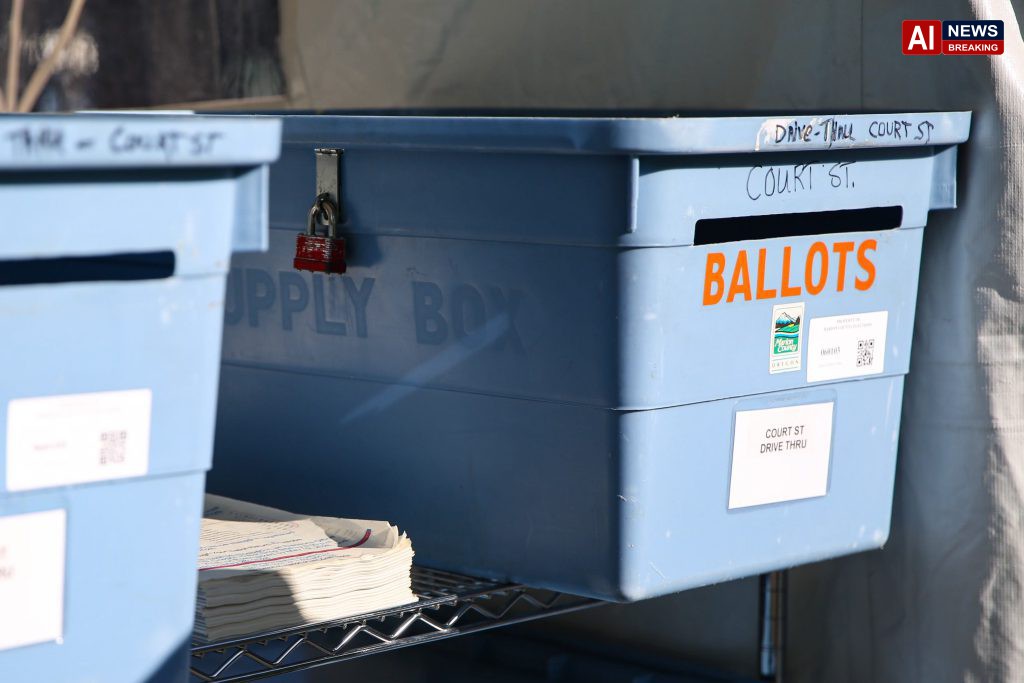
Federal judge pauses USPS vote by mail rule in Oregon lawsuit - AI News Breaking
federal judge blocks usps:
A federal judge has temporarily blocked key parts of a new U.S. Postal Service rule that would impose additional requirements on mail-in ballots ahead of the November 2026 elections. The ruling follows a lawsuit backed by Oregon and other states, which argue that the USPS requirements unlawfully interfere with states’ constitutional authority to administer elections.
Federal Judge Pauses USPS Vote-by-Mail Rule in Oregon Lawsuit
A federal judge has temporarily halted key provisions of a new U.S. Postal Service rule governing mail-in ballots, delivering a significant legal setback to the Trump administration as states prepare for the 2026 midterm elections.
U.S. District Judge Indira Talwani issued a temporary restraining order on August 27, blocking the implementation of major portions of the USPS rule while litigation continues. The order came after Oregon and other Democratic-led states, along with voting-rights organizations, launched a renewed legal challenge against federal efforts to impose new requirements on mail voting.
The dispute has quickly become one of the most consequential election-law battles ahead of the November midterms, particularly because election officials are already preparing to send mail ballots to voters. The judge’s order will remain in effect for 14 days, with a hearing on a longer-term preliminary injunction scheduled for September 3.
The latest ruling follows a series of court battles over President Donald Trump’s March 2026 executive order seeking to impose new federal requirements on mail-in voting. The administration has argued that the changes are intended to strengthen election safeguards, while opponents contend that the federal government is attempting to assume authority traditionally exercised by the states.
At the heart of the controversy are requirements that would compel states to provide voter information to the Postal Service and comply with federally specified standards for mail-ballot envelopes. Under the rule, USPS would have the ability to withhold delivery of ballots that failed to satisfy certain requirements.
States challenging the policy argue that these provisions could create significant administrative problems and potentially prevent eligible voters from receiving ballots.
Oregon Leads Challenge to Federal Mail-Voting Requirements
Oregon has emerged as a particularly prominent opponent of the new USPS requirements because the state has operated an almost entirely vote-by-mail election system for decades.
Oregon Attorney General Dan Rayfield filed a new federal lawsuit on August 26, arguing that the Postal Service rule interferes with the state’s constitutional authority to administer elections. Oregon’s Justice Department said the new requirements could disrupt longstanding election procedures and place federal officials between Oregon voters and their ballots.
Rayfield argued that the Constitution gives states primary responsibility for administering elections and that the federal government cannot simply establish new rules determining which voters receive mail ballots.
The Oregon lawsuit is part of a broader multistate legal campaign. Oregon and Washington joined a coalition of states seeking to stop USPS from implementing the new requirements before the November elections. The coalition includes 25 states and the District of Columbia, according to reports on the litigation.
The states contend that the new system would require election officials to make substantial changes to established procedures only weeks before voting begins.
Among the concerns raised are the redesign of ballot envelopes, submission of voter information to a federal system, employee training, software and administrative changes, and voter notification.
State officials say that introducing these requirements at such a late stage could create confusion and increase the risk that legitimate voters fail to receive or return their ballots properly.
What the USPS Rule Would Require
The new USPS framework is connected to Trump’s March executive order on elections.
The order directed federal agencies to establish systems for identifying eligible voters and instructed states to submit voter information to USPS. It also envisioned restrictions on the delivery of mail ballots to voters who did not appear on federally maintained lists.
Oregon officials previously warned that such a system could effectively give the federal government a role in determining which voters receive ballots.
The newly challenged USPS rule includes requirements concerning ballot envelopes and voter information. States would need to ensure that envelopes comply with federal specifications and provide voter data through a federal electronic portal.
The administration has maintained that the rule does not eliminate states’ authority to decide whether to conduct elections by mail or determine voter eligibility. The USPS itself said in the final rule that states retain authority over whether they use the mail as part of their electoral systems and who is eligible to vote by mail.
But opponents argue that the practical effect could nevertheless be substantial because USPS controls delivery of election mail.
Their concern is straightforward: if a state follows its own election laws and issues a ballot, but USPS refuses to deliver it because the envelope or voter information does not satisfy federal requirements, the federal government could effectively interfere with the state’s election process.
That issue is now central to the court battle.
Judge Warns of Risk to Voters
In granting the temporary restraining order, Judge Talwani concluded that the plaintiffs had raised serious legal concerns about the rule.
According to Reuters, the judge found that USPS had not presented evidence of widespread mail-voting fraud that would justify imposing the new requirements. She also concluded that the rule could interfere with states’ authority over election administration and could potentially create widespread disenfranchisement.
The judge’s concern was amplified by the timing of the rule.
Election officials have already spent months preparing for the November election under existing state procedures. Introducing new federal requirements shortly before ballots are mailed could force states to make rapid administrative changes.
The court therefore focused not only on the constitutional questions but also on the practical consequences for voters.
The temporary restraining order does not permanently invalidate the USPS rule. Instead, it temporarily prevents enforcement while the court considers the broader legal questions.
That distinction is important because the litigation could continue for months, potentially reaching the U.S. Supreme Court.
Supreme Court Decision Set Stage for New Lawsuit
The latest legal confrontation follows a Supreme Court decision earlier in August that changed the procedural landscape surrounding Trump’s mail-voting order.
The Supreme Court allowed the administration to proceed after concluding that an earlier challenge had been brought prematurely. The justices did not determine that Trump’s executive order was legally valid.
That distinction allowed states and voting-rights organizations to bring a new challenge once USPS formally adopted its implementing rule.
Oregon officials emphasized this point after the Supreme Court ruling, saying the decision was procedural rather than a final determination on the legality of federal restrictions on mail voting.
The new lawsuit therefore targets the USPS rule itself rather than simply challenging Trump’s executive order.
This strategy enabled the states to return to federal court with a more concrete government action to challenge.
The rapid sequence of events has created substantial uncertainty for election administrators.
The Supreme Court decision came just as the administration was moving forward with implementation. USPS subsequently announced that the new requirements were in effect, prompting states and voting-rights groups to seek another emergency court order.
Judge Talwani’s latest ruling effectively puts that implementation on hold, at least temporarily.
September 3 Hearing Could Determine Next Step
The next major development is expected at the September 3 hearing.
At that hearing, Judge Talwani is expected to consider whether the temporary restraining order should be replaced by a longer-term preliminary injunction.
A preliminary injunction would keep the USPS requirements blocked while the underlying lawsuit proceeds.
The government is expected to challenge the order, meaning the case could move rapidly through the federal appeals process.
Given the proximity of the November midterm elections, the dispute could eventually return to the Supreme Court.
The Supreme Court’s earlier ruling did not resolve the underlying constitutional questions. Instead, it focused on the procedural posture of the original case.
That means the justices could potentially be asked to consider the legality of the USPS rule itself if the litigation advances far enough.
Political Battle Over Federal and State Power
The lawsuit is also part of a much broader political conflict over who should control American elections.
States have traditionally played a major role in administering elections, while Congress has exercised federal authority in areas such as voting rights and election standards.
The Trump administration’s efforts to expand federal involvement have therefore generated significant resistance from Democratic-led states.
Oregon officials have framed the dispute as a constitutional question rather than simply a disagreement about election procedures.
Rayfield has argued that the federal government should not be able to decide which Oregon voters receive ballots.
The administration, meanwhile, maintains that the USPS regulations are within its authority and are designed to protect the integrity of election mail.
The competing arguments are likely to remain at the center of the case as the November election approaches.
The Oregon USPS lawsuit is significant because it combines three high-stakes issues: voting access, federalism and election administration. Judge Talwani’s temporary restraining order does not decide whether Trump’s mail-voting policy is ultimately constitutional, but it signals that the courts see substantial legal and practical risks in implementing major election changes only weeks before voting begins. The most important issue going forward is likely to be whether USPS possesses sufficient statutory authority to condition ballot delivery on federally mandated voter lists and envelope requirements. With the 2026 midterm elections approaching rapidly, the litigation could become a defining test of the balance between federal election oversight and the states’ traditional authority to administer elections.