Trump administration offers mixed messages on limits to Ukraine’s Starshield access
 US Treasury proposes a rule to crack down on high-tech investments in China, other adversaries
 Calley Means, a key MAHA advocate, resigns as a top RFK Jr. adviser
 Spotify Tightens Family Plan Controls with QR Code Verification
 Use of Chief Minister C. Joseph Vijay’s deep fake videos to collect money: Rajasthan youth moves Madras High Court seeking bail
Federal judge orders Trump administration to halt work on historic DC golf course until Oct. 26
**
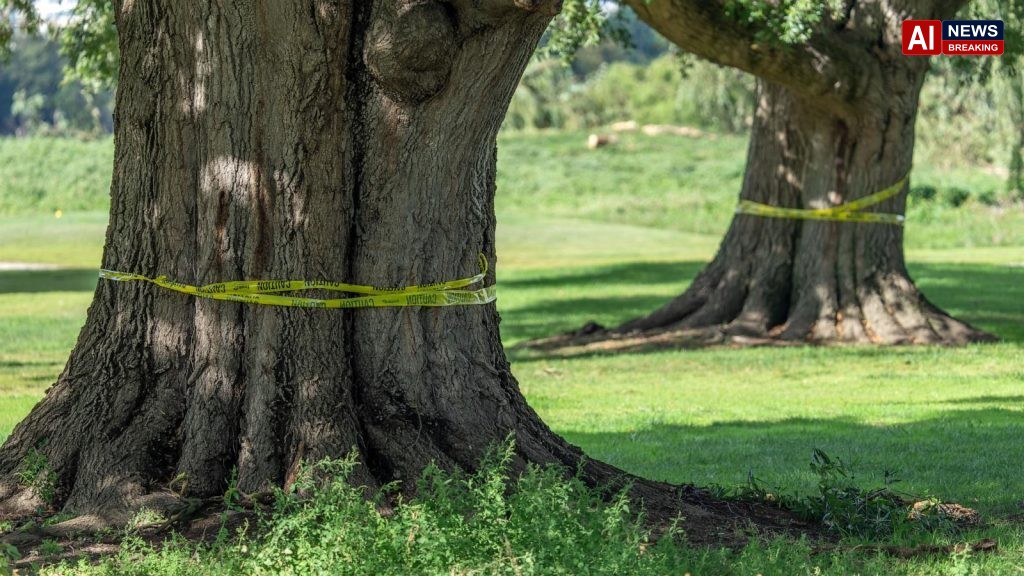
Federal judge orders Trump administration to halt work on historic DC golf course until Oct. 26 - AI News Breaking
A federal judge in Washington, D.C., issued an order on Tuesday that requires the Trump administration to suspend all work on the historic West Potomac Golf Course until at least 26 October, pending further judicial review. The injunction, which was granted after a lawsuit filed by preservation groups and local residents, halts a series of improvements and construction projects that the Department of the Interior began earlier this year under the direction of the National Park Service. The court’s decision reflects growing legal contention over the future of the 22‑acre site, which dates back to the early 20th century and is listed on the National Register of Historic Places.The plaintiffs – a coalition that includes the D.C..
Historic Preservation Office, the National Trust for Historic Preservation and several neighborhood associations – argue that the administration’s plan to redesign parts of the course, add new facilities and re‑zone sections of the property violates federal historic preservation statutes. They contend that the agencies involved failed to conduct a thorough Section 106 review, a process that requires agencies to assess the impact of any federal undertaking on historic resources and to consider alternatives. According to the complaint, the review was either rushed or omitted, depriving the public and stakeholders of a meaningful opportunity to weigh in on changes to a landmark that has served the city’s residents for more than a century.In a 13‑page opinion, Judge Eleanor R..
District Court for the District of Columbia concluded that the plaintiffs had shown a “substantial likelihood of success” on their claim that the Section 106 review was insufficient. She noted that the West Potomac Golf Course, designed in part by renowned architect William D. McAlister, holds architectural, cultural and social significance that merits careful protection..
The judge also cited the administration’s failure to publish a comprehensive environmental impact statement as a procedural defect that warranted an immediate stay. While the order does not preclude the government from resuming work after 26 October, it compels the agencies to halt any ground‑breaking, excavation or construction activities until a more detailed review is completed and a further hearing is held.The Department of the Interior responded swiftly, filing a motion for a preliminary injunction that sought to lift the stay, arguing that the administration’s actions are within the scope of its authority to maintain and improve public recreation facilities. In a brief submitted to the court, Interior ary Michael Regan emphasized that the proposed upgrades – including a new clubhouse, upgraded irrigation systems and enhanced accessibility features – are intended to increase the course’s usability for a broader segment of Washington’s population, particularly underserved communities..
The department contended that the lawsuit threatens to delay much‑needed improvements and could set a precedent that hampers federal agencies from managing historic sites efficiently.Supporters of the project, including several local business groups and the Washington Golf Association, have voiced disappointment over the ruling. In statements released to the press, they argued that the golf course has suffered from underinvestment and that the proposed changes would modernise facilities while preserving historic elements. They cited a 2022 feasibility study that recommended a phased renovation plan to address deteriorating fairways, outdated drainage, and insufficient parking..
The association also pointed to the administration’s broader “National Parks for All” initiative, which seeks to make public lands more inclusive, as a framework that justifies the enhancements. Critics, however, maintain that the initiative cannot override statutory obligations to protect historic integrity.Legal experts say the case underscores the tension between preservation law and contemporary policy goals. Professor Elena Ramirez, who teaches environmental and historic preservation law at Georgetown University, noted that the Section 106 process is designed precisely to balance development needs with conservation..
“When agencies bypass or truncate that process, they not only risk legal challenges but also erode public confidence in how federal resources are managed,” she said. Ramirez added that the injunction is likely to prompt a more robust dialogue between the government and preservation advocates, potentially leading to a revised plan that accommodates both historic preservation and modern accessibility standards.The ruling arrives amid a broader national debate over the stewardship of historic sites under the current administration. Over the past year, several high‑profile projects – ranging from the renovation of the historic Ellis Island immigration station to the redevelopment of portions of the National Mall – have faced legal scrutiny for alleged procedural shortcomings..
Conservationists argue that accelerated timelines and ambitious agendas have sometimes resulted in insufficient public notice and inadequate mitigation measures. Meanwhile, administration officials argue that timely improvements are essential to keep historic sites relevant and financially viable in an era of shifting public expectations.For residents of the District, the West Potomac Golf Course is more than a recreational venue; it is a community hub that has hosted public tournaments, youth programs and civic events since its opening in 1933. The course’s proximity to the Tidal Basin and the National Mall adds to its symbolic importance, linking it to the broader landscape of the capital’s historic core..
Neighborhood groups have long advocated for preserving the course’s original layout, which includes a distinctive “bunker‑free” design that reflects early 20th‑century golf architecture. The injunction, they say, offers a critical window to ensure that any future modifications respect those historical characteristics.The court’s order also places a procedural burden on the National Park Service to produce a revised environmental and historic impact analysis by the October deadline. In a briefing, the NPS indicated that it would convene an advisory panel comprising historians, landscape architects and community representatives to reassess the project’s scope..
The agency pledged to incorporate public comments gathered through a series of town‑hall meetings scheduled throughout the month of September. If the revised documentation meets the statutory standards, the administration may seek to lift the stay before the 26 October deadline, though the judge warned that any further delays could lead to additional sanctions.As the October hearing approaches, both sides are preparing arguments that will likely shape the future of the site. The administration is expected to argue that the improvements are consistent with the National Historic Preservation Act’s allowance for “compatible use” of historic properties, while the plaintiffs will maintain that the proposed changes constitute a “significant alteration” that jeopardises the course’s historic integrity..
Legal analysts anticipate that the case could ascend to the appellate level, given its potential implications for how federal agencies conduct Section 106 reviews on a national scale.The outcome will have ramifications beyond the immediate vicinity of the golf course. If the court ultimately rules in favour of the preservationists, it may set a precedent that strengthens procedural safeguards for historic sites facing federal involvement, possibly prompting other agencies to reevaluate their compliance practices. Conversely, a decision that favours the administration could signal a more flexible interpretation of preservation statutes, allowing for greater leeway in modernising.
Updated: October 14, 2026
This development highlights evolving dynamics and may have broader implications in the near term.