
 Karnataka SIR: Teaching on the back burner
  Trump administration offers mixed messages on limits to Ukraine’s Starshield access
  US Treasury proposes a rule to crack down on high-tech investments in China, other adversaries
  Calley Means, a key MAHA advocate, resigns as a top RFK Jr. adviser
  Spotify Tightens Family Plan Controls with QR Code Verification
 France sees record-early grape harvest amid heatwaves
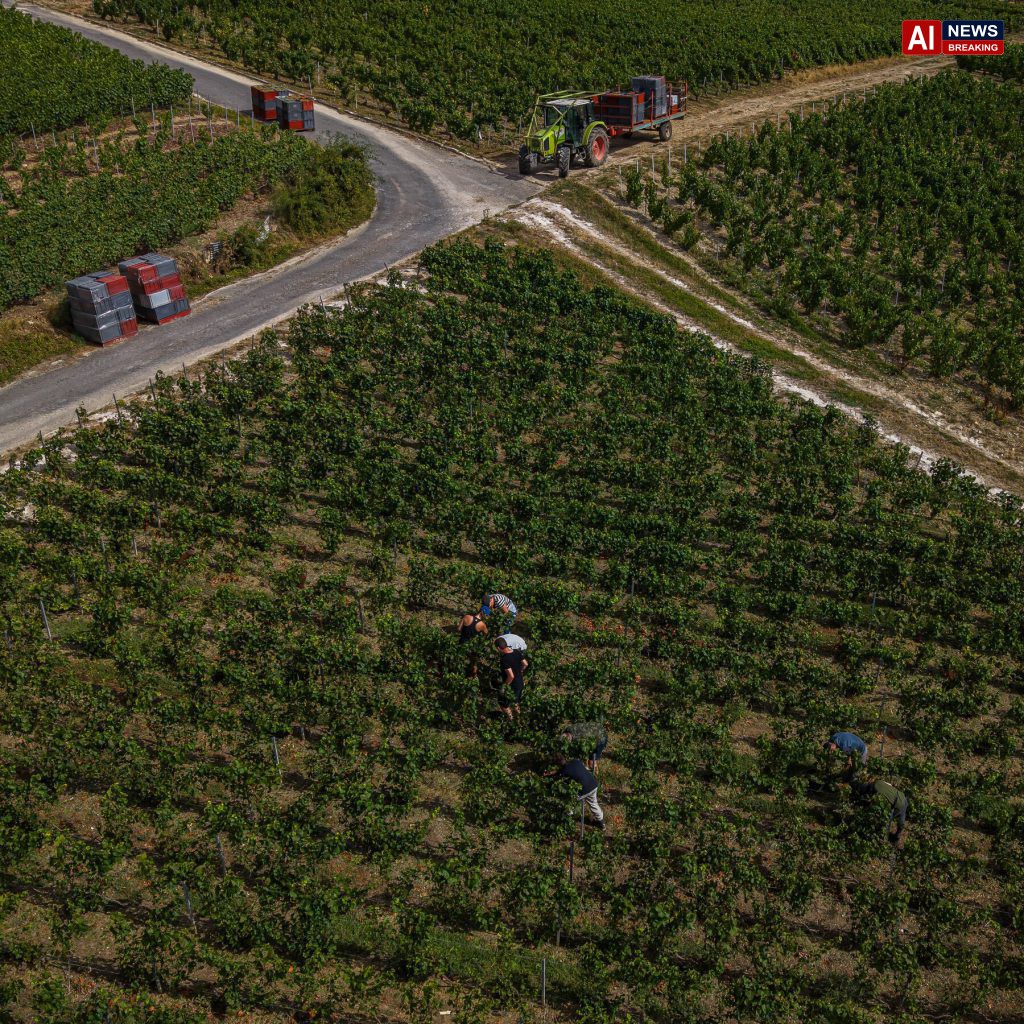
French vineyards harvest - AI News Breaking
france sees recordearly grape:
The rolling hills of Champagne, a region globally synonymous with celebration and precision, have this summer been gripped by a fever that defies historical precedent. Vineyards that typically bask in the gentle warmth of late August and early September are now yielding their fruit under the blistering intensity of midsummer heat. This premature ripening is not an isolated anomaly but a widespread phenomenon stretching across France’s most prestigious wine regions, from the limestone slopes of Bordeaux to the misty valleys of the Rhône..
Viticulturists are rushing against the clock, harvesting grapes that have reached optimal sugar levels weeks, if not months, ahead of schedule. The urgency is palpable, with harvest crews working through sultry nights to prevent the fruit from over-ripening and losing its delicate acidity, a critical component for the crisp, balanced wines that define French winemaking.Industry leaders describe the current situation with a mixture of awe and profound concern, noting that the speed and intensity of the harvest are unprecedented in living memory. Jean-Luc Moreau, a third-generation vigneron in the Aube department of Champagne, stated that the early arrival of ripe grapes has disrupted traditional farming rhythms entirely..
He noted that while mild years have occurred in the past, the sheer velocity with which the vines have moved from flowering to veraison to full maturity is unlike anything recorded in historical logs. This acceleration forces growers to make rapid decisions regarding labor allocation, machinery availability, and cellar capacity, creating logistical bottlenecks that ripple through the entire supply chain. The phrase “we’ve never seen anything like it” has become a common refrain among experts who monitor weather patterns and crop development across the continent.The scientific community attributes these shifts to a compounding effect of climate change, which has altered the very foundations of agricultural planning in Europe..
Meteorological data indicates that temperature averages in major wine-producing regions have risen significantly over the past three decades, with summer heatwaves becoming more frequent and more severe. These extreme conditions accelerate photosynthesis and sugar accumulation in grapes, shortening the growing season and complicating the delicate balance between sugar, acid, and tannin that winemakers strive to achieve. Researchers at the National Institute for Agricultural Research in Bordeaux warn that existing grape varieties may soon reach their physiological limits, prompting an urgent need for adaptative strategies, including the introduction of heat-resistant rootstocks and alternative grape cultivars that can withstand higher temperatures without compromising quality.In Champagne, the implications of an early harvest extend beyond the immediate logistical challenges of picking and pressing..
The region’s strict appellation laws require a specific balance of freshness and structure in the base wines used for blending, a balance that is increasingly difficult to maintain when grapes ripen too quickly. Winemakers are faced with the dilemma of whether to pick early to preserve acidity or wait for fuller flavor development, risking the loss of the vibrant character that defines Champagne. Some producers are experimenting with harvesting at night or during cooler hours to slow down oxidation and preserve the aromatic profile of the grapes..
These adjustments, while necessary, come at a significant financial cost, straining budgets that are already under pressure from rising operational expenses and fluctuating market demands.The impact is not confined to sparkling wine producers. In the Burgundy region, known for its earthy Pinot Noir and mineral-driven Chardonnay, the heat has led to crops that are smaller in volume but richer in concentration. While some consumers may welcome more intense flavors, many critics argue that the characteristic subtlety and elegance of Burgundy wines are being eroded by the intensity of the climate..
Vineyards that traditionally rely on slow, steady maturation are now grappling with grapes that develop firm tannins and high alcohol levels, challenging the traditional style of the region. This shift is forcing winemakers to reconsider their fermentation techniques and aging processes to manage the increased alcohol content and preserve the terroir expression that defines their regional identity.Bordeaux, perhaps the most commercially influential wine region in the world, is also feeling the pressure. The early harvest here is particularly concerning because the region produces vast quantities of wine for global export, and any variation in quality or volume can have significant economic repercussions..
Growers are reporting uneven ripening across different plots, with some vines struggling under the heat stress while others thrive. This variability makes it difficult to produce consistent blends, a cornerstone of Bordeaux’s reputation for reliability and balance. The uncertainty surrounding future vintages is causing anxiety among négociants, who must secure purchases and manage expectations for distributors and consumers worldwide..
The financial stakes are high, with the annual harvest determining the economic health of thousands of families and businesses in the region.Beyond the immediate effects on quality and logistics, the early harvest signifies a broader transformation in how French viticulture is approached. Traditional knowledge, passed down through generations, is being supplemented by advanced technology and data analytics. Growers are increasingly relying on satellite imagery, soil moisture sensors, and predictive modeling tools to monitor vine health and optimize harvest timing..
This technological integration is essential for navigating the complexities of a changing climate, allowing for more precise interventions that can mitigate the risks associated with extreme weather events. However, the adoption of these technologies is uneven, with smaller, family-run estates often lacking the resources to invest in such systems, thereby widening the gap between industrial producers and traditional artisans.The social fabric of wine-producing communities is also being tested by these changes. Rural areas that depend on seasonal labor for the harvest are facing shortages as workers struggle with the harsh conditions of early morning and late-night picking schedules..
Migrant workers, who form the backbone of the French harvest workforce, are pushing for better protections and compensation for working in increasingly dangerous heat. Labor unions and agricultural cooperatives are engaging in negotiations to ensure fair wages and safe working conditions, highlighting the human cost of environmental shifts. This tension between economic necessity and worker welfare underscores the broader societal challenges that the wine industry must address as it adapcs to a new normal.Moreover, the early harvest has sparked a reevaluation of water management strategies across France’s wine landscapes..
Drought conditions, exacerbated by high temperatures, have strained local water resources, leading to conflicts between agricultural, municipal, and environmental needs. In regions like the Languedoc and Provence, where irrigation is already common, authorities are tightening regulations on water usage to protect aquifers and sustain ecosystems. This regulatory pressure is forcing winemakers to invest in water-saving technologies, such as drip irrigation and cover cropping, to enhance soil moisture retention and reduce dependency on external water supplies..
These measures, while beneficial in the long term, require significant upfront investment and technical expertise, posing additional hurdles for small-scale producers.Looking ahead, the wine industry faces a critical juncture where adaptation is no longer optional but existential. Experts predict that without significant changes in viticultural practices, many traditional grape varieties may become unsuitable for their historic regions. This reality is driving research into new climate-res.
Updated: August 25, 2026
Insight: France’s harvest isn’t just early; it’s a high-stakes gamble where tradition battles thermal limits.
Winemakers are now betting survival on tech and trial, not just terroir.