Trump administration offers mixed messages on limits to Ukraine’s Starshield access
 US Treasury proposes a rule to crack down on high-tech investments in China, other adversaries
 Calley Means, a key MAHA advocate, resigns as a top RFK Jr. adviser
 Spotify Tightens Family Plan Controls with QR Code Verification
 Use of Chief Minister C. Joseph Vijay’s deep fake videos to collect money: Rajasthan youth moves Madras High Court seeking bail
France students protest education budget cuts.
**
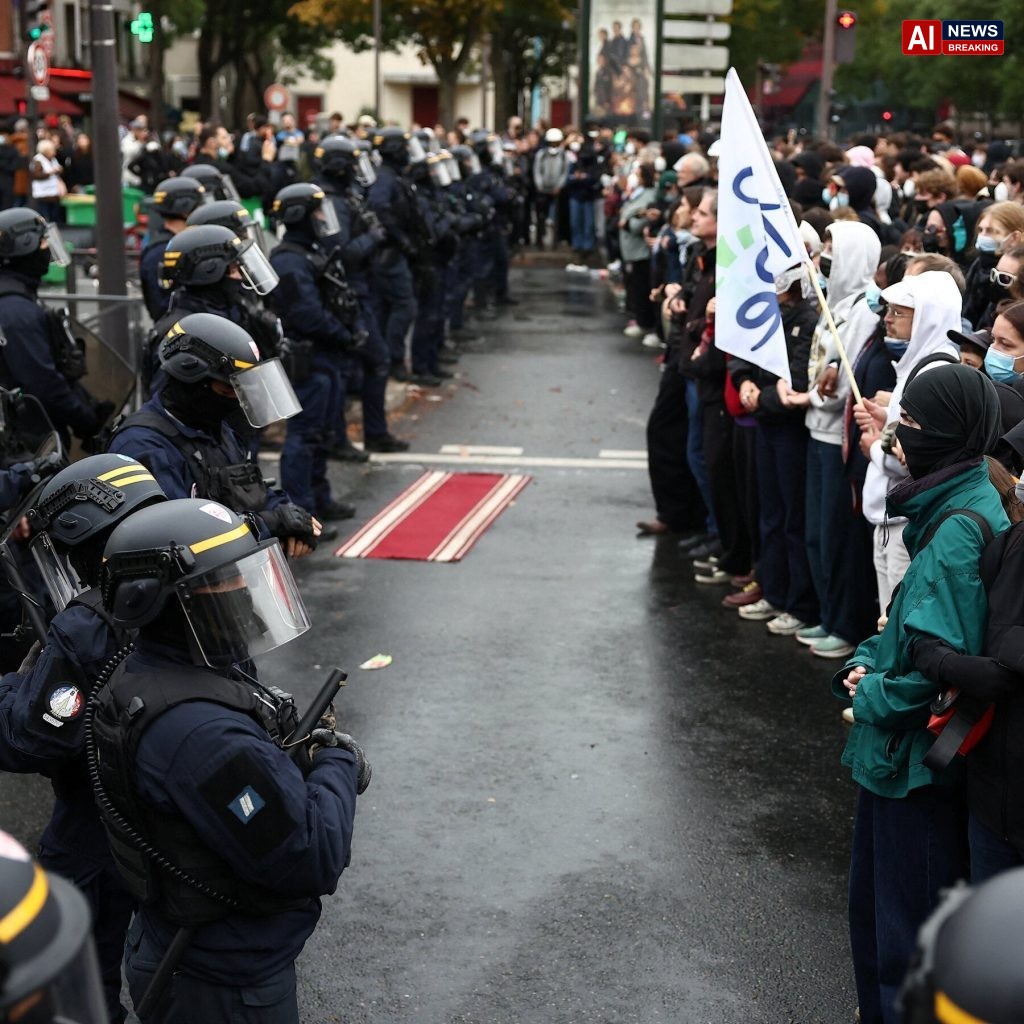
Why Are France’s Students Protesting? - AI News Breaking
Why Are France’s Students Protesting? Student demonstrations for a better‑funded education system are converging with a broader protest movement against rising living costs. The streets of Paris, Lyon and Marseille have been filled with students brandishing banners that read “Éducation libre, avenir solide” and “Stop the cuts”..
What began in late January as a campus‑specific grievance over university budget cuts has now merged with a nationwide wave of discontent over soaring rents, energy bills and stagnating wages. Over 150 000 demonstrators marched through the capital on 12 October, a figure that includes high‑school pupils, university undergraduates and recent graduates, all demanding a systemic overhaul of the French education model and a more equitable cost‑of‑living framework. The immediate trigger for the student mobilisation was the Ministry of Higher Education’s announcement in December that public university funding would be reduced by 6 % in the 2025‑26 fiscal year..
The cut, officials say, is part of a broader effort to trim the state deficit, but students argue it will translate into larger class sizes, fewer scholarships and the closure of many peripheral campuses. In a joint statement, the National Union of Students (UNEF) warned that “the very foundation of meritocratic opportunity is being eroded”, echoing concerns that France’s famed “grande école” system is becoming increasingly exclusive. Behind the education‑specific demands lies a deeper, economic anxiety that has been simmering across French society since the pandemic..
Inflation hit a 40‑year high in 2023, driven largely by energy prices and a housing market that has outpaced wage growth. The government’s “Pouvoir d’achat” package, unveiled in March, offered modest tax relief but failed to offset the reality of a 12 % rise in average rent since 2021. Students, many of whom rely on part‑time work and state‑provided housing, feel the pinch more acutely than older workers, leading to a convergence of grievances that has amplified the scale of the protests..
For many demonstrators, the fight is not merely about money but about the social contract that underpins the French Republic. The 1945 Education Act enshrined free, secular education as a civic right, yet the current budgetary squeeze appears to contravene that principle. “When the state says education is a public good, it must also fund it adequately,” said Léa Martin, a second‑year law student at the Sorbonne, during an interview on the Rue de la Montagne..
Martin’s sentiment reflects a broader narrative: that austerity measures threaten the egalitarian ethos that has long defined French public life. The protests have been marked by a notable degree of organisation and solidarity across disparate groups. Student unions have coordinated with labour unions such as the CGT and the CFDT, whose members have staged simultaneous strikes in transportation, health care and public administration..
This unprecedented alliance has forced the government to confront a dual front: a youthful demand for educational reform and a broader working‑class call for higher wages and rent controls. Analysts warn that the interlocking nature of these demands could make any piecemeal concession politically untenable. Government response has been cautious, oscillating between dialogue and deterrence..
Education Minister Jean‑Michel Blanquer met UNEF representatives on 9 October, offering a temporary suspension of the funding cuts and a pledge to review university budgets in 2026. Critics argue that the proposal is a “too‑little‑too‑late” gesture, given that the cuts have already been legislated and that the promised review lacks a binding timetable. Meanwhile, the Interior Ministry has increased police presence at protest sites, citing concerns over potential clashes, a move that has drawn accusations of intimidation from civil‑rights groups..
Social media has amplified the reach of the protests, with hashtags such as #ÉducationPourTous and #CoûtDeLaVie trending on Twitter and TikTok. Influencers and student bloggers have produced live streams from the front lines, sharing footage of confrontations with police, but also moments of solidarity, such as the spontaneous “song of the streets” that resonated through the Place de la République. These digital narratives have helped sustain momentum, especially among younger participants who rely on online platforms for information and mobilisation..
The economic backdrop cannot be ignored. France’s public debt now exceeds 115 % of GDP, a level that policymakers cite as justification for fiscal restraint. Yet the International Monetary Fund’s latest forecast suggests that a modest increase in public spending on education could yield long‑term gains in productivity and social cohesion..
Economists like Claire Bouvier of the Paris School of Economics argue that “investing in human capital now is a hedge against future structural unemployment”, a point that resonates with both students and union leaders. Internationally, France’s student protests echo similar movements across Europe, from Spain’s “Educación Gratis” rallies to Germany’s “Studierendenstreik” over tuition fees. The common thread is a perception that neoliberal policies are eroding the welfare state, especially in the realm of higher education..
Observers note that the French case is distinctive in its scale and its ability to link educational grievances with a wider cost‑of‑living crisis, creating a potent political cocktail that could reshape public discourse for years to come. Local businesses in protest‑heavy districts have reported mixed effects. Cafés near university campuses have seen a surge in patronage from demonstrators seeking a place to regroup, while retail outlets have suffered from reduced foot traffic on days of major marches..
Some city councils have responded by temporarily waiving.
The student uprising shows how austerity is turning education from a civic right into a socioeconomic battleground, forcing France to choose between short‑term deficit cuts and the long‑term health of its meritocratic model.
By linking campus funding cuts to soaring rents and stagnant wages, protesters are reframing the debate