Europe warns of Russia’s hybrid attacks but struggles to counter them
  Former chief election commissioner calls SIR scheme illegal.
  A Corruption Scandal Is Reshaping Brazil’s Presidential Election
  US citizen injured in Illinois after ICE agents mistook him for fugitive, tried to arrest him
  At 10 years old, Smithsonian’s Black museum is undaunted amid pressure from Trump administration
 ‘Gen Z Is Emotional and Doesn’t Think With a Calm Mind’: RSS Chief Mohan Bhagwat Sparks Debate
RSS chief Mohan Bhagwat has sparked a debate by describing Gen Z as emotional and adaptable, but also prone to impulsive decisions, highlighting the challenges of balancing tradition and modernity in India’s rapidly changing society.
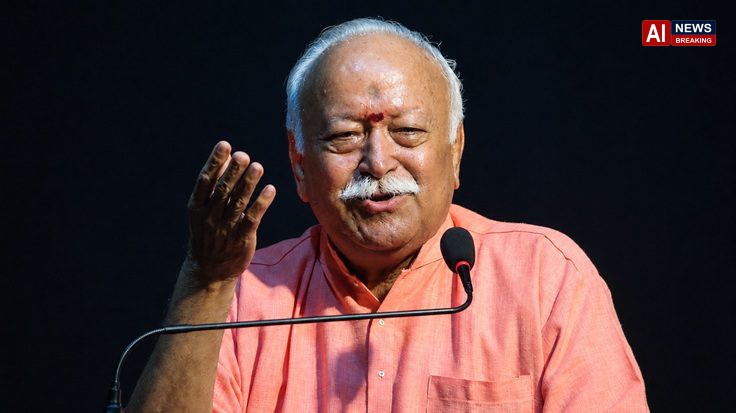
'Gen Z Is Emotional and Doesn't Think With a Calm Mind': RSS Chief Mohan Bhagwat Sparks Debate - AI News Breaking
emotional doesnt think calm:
Rashtriya Swayamsevak Sangh (RSS) chief Mohan Bhagwat on Sunday described Generation Z as an emotional and adaptable generation, while cautioning that young people often do not think with a “calm mind.” The remarks were made during an event in Hyderabad focused on contemporary motherhood and societal change.
In a remark that has sparked widespread discussion across political and social circles, Rashtriya Swayamsevak Sangh (RSS) chief Mohan Bhagwat described Generation Z as an “emotional” generation that often does not think with a “calm mind.” Speaking at an event in Hyderabad on contemporary motherhood and changing social values, Bhagwat’s comments touched upon youth behavior, women’s empowerment, marriage, and LGBTQ+ inclusion—bringing renewed attention to the evolving relationship between India’s youngest generation and its traditional institutions.
News Highlights:
- RSS chief Mohan Bhagwat described Gen Z as “emotional” and said they often do not think with a “calm mind.”
- He made the remarks while speaking at an event in Hyderabad on contemporary motherhood.
- Bhagwat also commented on the women’s liberation movement and said LGBTQ+ individuals are a part of Indian society and should not be ostracized.
- His comments have triggered discussion on social media regarding generational differences and changing social values.
“Gen Z is good, adaptable and emotional by nature. They do not think with a very calm mind. If what is in touch with them is visibly authentic, it appeals to them,” Bhagwat said while addressing the gathering. According to him, the younger generation is more likely to respond to causes and movements that they perceive as genuine and authentic.
Bhagwat linked his observations about youth behavior to broader social developments, including the women’s liberation movement. He argued that the movement gained widespread acceptance among younger people before some of its proponents later reconsidered its trajectory.
The RSS chief also spoke about changing family structures, stating that marriage brings discipline and responsibility while expressing concerns about the increasing acceptance of live-in relationships in many parts of the world.
In another notable part of his speech, Bhagwat said LGBTQ+ communities have always existed within Indian society and should not be excluded or treated as outsiders. He acknowledged that Indian traditions have historically recognized their presence and emphasized that all individuals have the right to live with dignity.
“LGBTQ+ and all these communities exist. Such tendencies are present in society… They are human beings too and have a right to live,” Bhagwat said.
His comments come at a time when generational differences are increasingly shaping public discourse in India. Recent student-led demonstrations and youth-driven social movements have highlighted the growing political and cultural influence of Gen Z, a demographic often characterized by its strong engagement with social media, activism, and digital communities.
Political observers note that Bhagwat’s remarks are likely to generate debate across ideological lines. Supporters may view his comments as an observation about the fast-paced, emotionally charged nature of modern digital culture, while critics could interpret them as a broad generalization about an entire generation.
Generation Z—typically defined as people born between the late 1990s and early 2010s—constitutes one of India’s largest demographic groups. Their increasing participation in politics, entrepreneurship, technology, and social movements has made them an influential force in shaping the country’s future.
Whether viewed as a critique or an observation, Mohan Bhagwat’s comments have once again brought attention to the evolving relationship between generations in India and the challenges of balancing tradition, modernity, and social change in one of the world’s youngest nations.
Insights: Mohan Bhagwat’s observations may divide opinion, but they underscore a larger national conversation about how India is changing. As Gen Z emerges as a powerful demographic force—shaping politics, culture, and technology—their values and priorities will increasingly influence the country’s future. Whether one agrees with Bhagwat’s assessment or not, his remarks highlight an undeniable reality: modern India stands at the intersection of tradition and transformation, where each generation is redefining what it means to be Indian in the 21st century.
This is a developing story. More updates will follow as new information becomes available.