Europe warns of Russia’s hybrid attacks but struggles to counter them
  Former chief election commissioner calls SIR scheme illegal.
  A Corruption Scandal Is Reshaping Brazil’s Presidential Election
  US citizen injured in Illinois after ICE agents mistook him for fugitive, tried to arrest him
  At 10 years old, Smithsonian’s Black museum is undaunted amid pressure from Trump administration
 Gordie Howe International Bridge Opens Amid US-Canada Trade Tensions, Turning a Symbol of Unity Into One of Division
** The Gordie Howe International Bridge, a $4.5 billion megaproject connecting Michigan and Ontario, has opened amid strained US-Canada relations, symbolizing the growing tensions between the two nations despite being intended as a symbol of unity and cooperation.
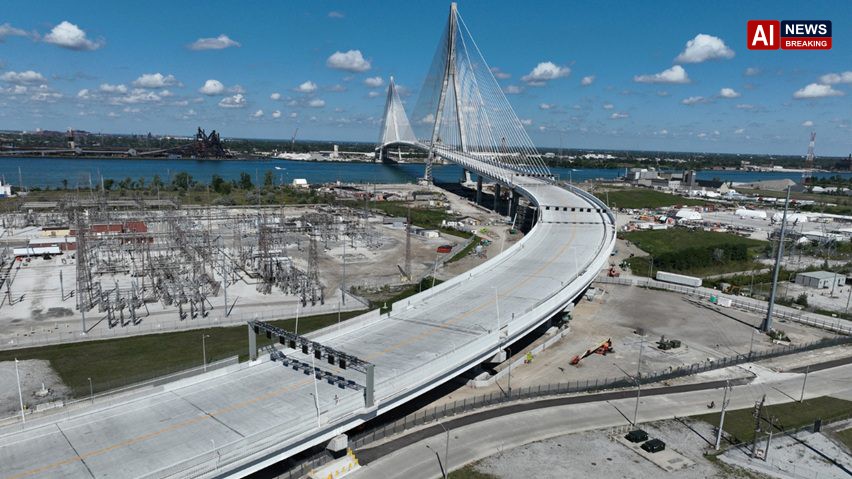
$4.5 billion Gordie Howe International Bridge opens on July 27, 2026
The long-awaited Gordie Howe International Bridge, a $4.5 billion megaproject connecting Michigan and Ontario, is finally opening after years of construction. The Gordie Howe International Bridge connecting Detroit, Michigan, and Windsor, Ontario, will officially open on Monday, July 27, 2026, after more than eight years of construction. However, what was envisioned as a symbol of North American partnership has become a reminder of strained US-Canada relations following President Donald Trump’s latest tariff measures against Canada.
Key Points to Notes
- The $4.5 billion Gordie Howe International Bridge opens on July 27, 2026.
- Canada canceled a joint opening ceremony with the US after President Trump announced new tariffs.
- The bridge connects Detroit, Michigan, and Windsor, Ontario.
- Canada financed the entire project and expects to recover costs through toll revenues.
- The bridge has become a symbol of growing tensions in US-Canada relations.
Stretching across the Detroit River, the six-lane cable-stayed bridge represents one of the largest infrastructure projects ever undertaken jointly by Canada and the United States. Costing approximately $4.5 billion, the bridge was designed to strengthen economic ties, facilitate trade and symbolize the enduring friendship between two of the world’s closest allies.
Yet as officials prepare for opening ceremonies, celebrations have been overshadowed by an escalating trade dispute between Washington and Ottawa.
US President Donald Trump’s recent announcement of 50% tariffs on most Canadian imports has dramatically altered the political atmosphere surrounding the bridge’s inauguration, prompting Canadian officials to cancel a planned joint opening ceremony with their American counterparts.
A Bridge Decades in the Making
The Gordie Howe International Bridge has been years in the making.
Named after the legendary Canadian hockey icon Gordie Howe, the bridge spans approximately 1.5 miles (2.5 kilometers) and connects two of North America’s most important manufacturing hubs—Detroit and Windsor. The crossing includes state-of-the-art ports of entry on both sides of the border and boasts the longest cable-stayed bridge span in North America at 853 meters.
Construction officially began in 2018 after years of negotiations involving:
- The Canadian government.
- The State of Michigan.
- US federal authorities.
- Local communities.
- Trade and transportation stakeholders.
The bridge is expected to open to vehicle traffic on July 27, with pedestrian and cyclist access scheduled to begin shortly afterward.
Why the Bridge Matters
The Windsor-Detroit corridor is the busiest commercial land crossing in North America.
Every day, hundreds of millions of dollars worth of goods pass between Canada and the United States through the region, making it a critical artery for industries such as:
- Automotive manufacturing.
- Agriculture.
- Energy.
- Consumer goods.
- Advanced manufacturing.
The Gordie Howe International Bridge was envisioned as a solution to growing congestion at the nearly century-old Ambassador Bridge, which has long dominated cross-border traffic.
Canadian officials estimate the new crossing will:
- Strengthen North American supply chains.
- Reduce transportation delays.
- Boost regional tourism.
- Support economic growth.
- Enhance border security and efficiency.
For many residents on both sides of the border, the project represents an investment in future prosperity.
Trump’s Tariffs Cast a Shadow
However, the bridge’s opening comes at an unusually tense moment in US-Canada relations.
President Trump recently announced a new round of tariffs targeting Canadian goods, arguing that Canada has engaged in unfair trade practices affecting American industries, including automobiles, alcohol and dairy products. The measures include tariffs of up to 50% on a broad range of Canadian imports.
The announcement immediately sparked criticism from Canadian officials and led Ottawa to reconsider the optics of celebrating alongside the United States.
“It would be inappropriate to proceed with a celebratory event between the two countries,” a spokesperson for Canada’s Infrastructure Ministry said when announcing that Canada would host its own separate ceremony.
The decision underscores how significantly bilateral relations have deteriorated in recent months.
From Symbol of Friendship to Symbol of Friction
Perhaps the most striking aspect of the Gordie Howe Bridge story is its symbolism.
When first conceived, the bridge was intended to demonstrate the strength of US-Canada cooperation. Instead, its opening has become intertwined with disputes over tariffs, ownership and revenue sharing.
Earlier this year, President Trump reportedly questioned the bridge agreement and sought greater American participation in the project’s economic benefits. Discussions surrounding toll revenues and economic development funds became politically contentious in both countries.
Recent agreements indicate that a portion of bridge revenues will contribute to a US-controlled economic development fund for the first 15 years of operation—a development that has generated criticism among some Canadian lawmakers and commentators.
For many Canadians, the bridge has become an uncomfortable reminder of how geopolitical tensions can reshape even the most collaborative infrastructure projects.
Canada Paid the Bill
Adding to the political debate is the fact that Canada financed the entire project.
While the bridge will benefit both countries economically, Canadian taxpayers shouldered the construction costs, with expectations that toll revenues would eventually offset the investment over several decades.
The project’s financing structure has sparked questions about:
- Revenue-sharing arrangements.
- Long-term profitability.
- Canadian taxpayer returns.
- Future bilateral infrastructure cooperation.
Despite these concerns, Canadian officials continue to emphasize the bridge’s strategic importance to North American trade and economic integration.
Economic Stakes Are High
The timing of the bridge’s opening could hardly be more significant.
The US and Canada remain each other’s largest trading partners, with billions of dollars in goods crossing the border every day.
Experts warn that prolonged trade tensions could affect:
- Automotive supply chains.
- Manufacturing investments.
- Cross-border employment.
- Consumer prices.
- Regional economic growth.
The Detroit-Windsor corridor is particularly vulnerable given its central role in the North American automotive industry.
Ironically, the bridge was specifically designed to make trade easier at a time when political decisions are making it more complicated.
Opening Day Arrives
Despite the diplomatic tensions, preparations for the bridge’s opening are moving ahead.
Canadian officials held a standalone ceremony on Friday, while traffic is expected to begin crossing the bridge on Monday. Tolls for passenger vehicles have been set at approximately $5.75 USD or $8 CAD, while pedestrians and cyclists will initially cross free of charge.
Residents in Windsor and Detroit have expressed excitement about finally using the crossing after years of anticipation.
For many, the bridge’s practical benefits outweigh the political disagreements surrounding its inauguration.
Looking Ahead
The Gordie Howe International Bridge is likely to remain a powerful symbol for years to come.
Whether it ultimately represents renewed cooperation or a period of diplomatic strain will depend largely on how the United States and Canada navigate their current disagreements.
Infrastructure projects are often described as monuments to shared ambition. In this case, the bridge may also serve as a reminder that even the closest alliances can face periods of uncertainty.
For now, vehicles will soon begin crossing a structure built to connect two nations—at a moment when politics threatens to pull them apart.
The Gordie Howe International Bridge illustrates how infrastructure can transcend engineering and become deeply political. Designed to strengthen North America’s economic integration, the bridge is opening during one of the most challenging periods in modern US-Canada relations. Its future success will likely depend not only on traffic volumes and trade flows, but also on whether policymakers on both sides of the border can rebuild the trust that originally made the project possible.