Indonesia denies foreign claim to rescued orangutans
 Turkey hosts COP31 climate talks in Antalya.
 Pope meets Argentine bishops.
 APOD: 2026 November 8 – Major Fireball Meteor
 Indonesian Horror Hit ‘Pabrik Gula’ Gets 2028 Sequel as MD Entertainment Lines Up Three Imax Films
Hassan district bans vehicles at Male Malleshwara temple for two weeks.
**
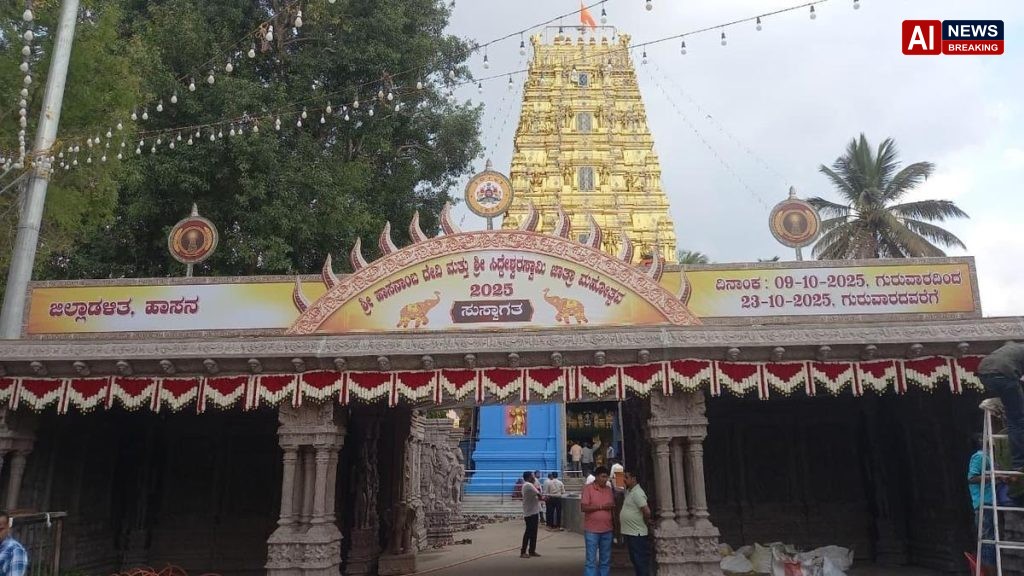
Hassan DC bans vehicles to Male Malleshwara temple at Seegegudda in Hassan - AI News Breaking
The district administration of Hassan has imposed a ban on motor vehicles entering the precinct of the Male Malleshwara temple at Seegegudda, a decision announced on Monday by Deputy Commissioner Hassan S. The prohibition, which applies to private cars, two‑wheelers and commercial vehicles, is slated to remain in force for an initial period of two weeks, after which the authorities will review the situation and consider a longer‑term arrangement if necessary. Officials say the move is intended to safeguard devotees, preserve the sanctity of the shrine and prevent congestion that has become increasingly severe in recent weeks.The Male Malleshwara temple, an ancient centre of worship dedicated to Lord Shiva, has long been a focal point for pilgrims from across Karnataka..
Situated atop a modest hill in the village of Seegegudda, the shrine attracts worshippers on weekly bhakti days, during festivals such as Mahashivaratri and Navaratri, and on personal occasions when families seek blessings. Historically, access to the temple was facilitated by a narrow, winding road that winds through a series of residential clusters and agricultural fields. While the path could accommodate a steady stream of foot traffic, the surge in vehicular movement over the past month has strained the infrastructure, leading to bottlenecks, parking overflow and heightened safety concerns for elderly and disabled devotees.The spike in visitor numbers can be traced to the recent commercial success of the Kannada film “Premed Ooralli”, whose climactic sequences were shot at the temple and its surrounding landscape..
The movie, a romantic drama that resonated with a broad audience, has prompted fans to seek out the real‑life locations featured on screen. Social media platforms are awash with photographs of the temple façade, the stone steps and the panoramic vista, often tagged with the film’s name, which has amplified curiosity and drawn tourists who are less familiar with the religious customs of the site. Local businesses, from tea stalls to souvenir sellers, have reported a noticeable uptick in sales, confirming that the film’s popularity is translating into tangible footfall.In response to the influx, the district administration initially deployed additional traffic marshals and erected temporary signage to manage the flow of vehicles..
However, on-site observations revealed that the narrow access road, originally designed for pedestrian and animal‑drawn transport, could not safely accommodate the growing number of cars and two‑wheelers. Instances of vehicles blocking the entrance, obstructing emergency exit routes, and creating hazardous conditions for pilgrims climbing the steep steps were documented by the police and municipal officials. Moreover, the nearby residential lanes, shared by local families, experienced heightened noise and air pollution, prompting complaints from community members who feared a deterioration of their quality of life.Deputy Commissioner Rao explained the rationale behind the ban during a press briefing, emphasizing that the primary objective is to protect devotees and maintain public order..
“The temple is a place of worship, not a commercial venue,” he said. “While we welcome visitors and recognize the cultural boost provided by the film, we must ensure that the sanctity of the site is not compromised by traffic congestion or safety hazards. The temporary vehicle ban is a measured response to an emerging challenge.” He added that the administration is coordinating with the temple’s management committee, local law enforcement and the Karnataka State Road Transport Corporation to provide alternative transport arrangements, including shuttle services from designated parking zones on the outskirts of Seegegudda.To facilitate the new policy, the authorities have identified three peripheral parking areas on the periphery of the village where private vehicles can be left under supervision..
From these points, designated shuttle buses—operated by the state transport department—will ferry devotees to the temple entrance at regular intervals. The shuttles, which are air‑conditioned and equipped to handle up to 40 passengers, are scheduled to run every fifteen minutes during peak visiting hours and every thirty minutes in the early morning and late afternoon. For residents and frequent visitors, a limited number of permits will be issued, allowing a single vehicle per household to access the temple for essential purposes, such as transporting medical supplies or assisting the elderly.The ban has elicited mixed reactions among the public..
Many devotees, particularly senior citizens and families with young children, welcomed the decision, noting that the reduced vehicular traffic will make the ascent to the shrine less daunting and safer. “I have been coming here for over thirty years,” said Shyamala Devi, a regular pilgrim from Hassan city. “Earlier, I had to wait for a long time just to find a spot to park, and sometimes the road was blocked..
Now, with the shuttles, I can focus on my prayers without worrying about traffic.” Conversely, some local vendors expressed concern that the restriction could deter casual tourists and diminish the economic benefits generated by the recent surge in visitors. “Our tea stall does well when people come in their cars and stop for a while,” remarked Ramesh Gowda, who runs a stall near the temple’s entrance. “If they can’t park nearby, they might skip the stop altogether.”In anticipation of these concerns, the district administration has announced a parallel initiative to promote local entrepreneurship..
A temporary market, sanctioned by the municipal council, will be set up near the designated parking zones, offering stalls to vendors who wish to sell refreshments, religious paraphernalia and regional handicrafts. The market will operate under strict hygiene and safety standards, and its location will be clearly signposted to guide visitors from the shuttles. Officials hope that this arrangement will sustain the economic uplift while respecting the newly imposed traffic regulations.Cultural analysts note that the situation at Male Malleshwara temple reflects a broader trend in which popular media can inadvertently catalyse tourism spikes at heritage sites, often outpacing the capacity of existing infrastructure..
“Film‑induced tourism is a double‑edged sword,” observed Dr. Ananya Rao, a scholar of cultural geography at the University of Mysore. “On one hand, it raises awareness of lesser‑known locations and can bring in much‑needed revenue..
On the other, if not managed proactively, it can strain resources, degrade visitor experience and even threaten the preservation of the site itself.” She suggested that a coordinated approach, involving stakeholders from the film industry, tourism boards and heritage conservation bodies, could help mitigate such challenges in the future.The temporary ban will be monitored through daily reports submitted by the police, traffic officers and temple authorities. These reports will assess parameters such as the number of pilgrims arriving via shuttle, incidents of congestion, and feedback from devotees and residents. At the end of the two‑week trial period, a committee chaired by the Deputy Commissioner will convene to evaluate the data and decide whether to extend, modify or lift the restrictions..
The committee’s findings will be made public through a press release and will.
Hassan officials have temporarily barred all motor vehicles from the Male Malleshwara temple precinct for two weeks, citing safety and crowd‑control concerns after a film‑driven surge in visitors. Shuttle services from nearby parking zones and a provisional vendor market will replace private parking while the ban’s impact is assessed.
The film‑induced rush has turned a sacred hill‑top into a traffic choke‑point, exposing how pop culture can outpace heritage infrastructure overnight. By swapping private wheels for shuttles, Hassan’s officials are testing whether a modest logistical tweak can preserve reverence while still cashing