Europe warns of Russia’s hybrid attacks but struggles to counter them
  Former chief election commissioner calls SIR scheme illegal.
  A Corruption Scandal Is Reshaping Brazil’s Presidential Election
  US citizen injured in Illinois after ICE agents mistook him for fugitive, tried to arrest him
  At 10 years old, Smithsonian’s Black museum is undaunted amid pressure from Trump administration
 Houthi Rebels Launch mortar and rocket fire on Yemeni military camps.
** The already fragile peace in Yemen has been threatened by a series of deadly attacks by Houthi rebels on military camps in the provinces of Marib and Al-Jawf, leaving several soldiers dead and injured and sparking international condemnation.
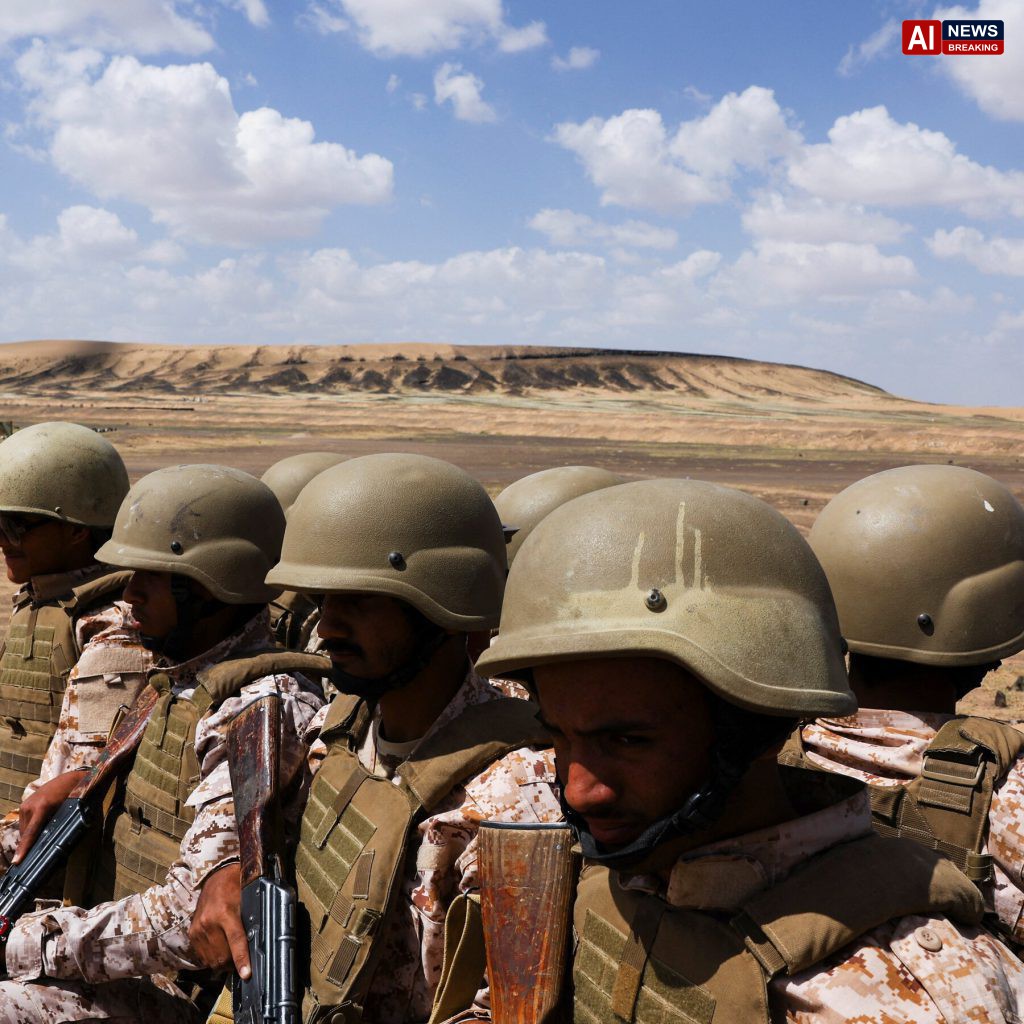
Houthi Rebels Launch mortar and rocket fire on Yemeni military camps. - AI News Breaking
Houthi Strikes on Yemeni Military Threaten to Reignite Civil War Yemen’s already fragile peace has taken a devastating blow as Houthi rebels claimed responsibility for a series of daring strikes against the country’s military forces. The targets, located in the resource-rich provinces of Marib and Al-Jawf, have sent shockwaves through the international community, casting a cloud of uncertainty over the tenuous truce that has been in place since April 2022. The Iran-backed militia has consistently denied any involvement in previous incidents of violence, but the latest attacks have all the hallmarks of their signature style..
The Houthi rebel group, officially known as Ansar Allah, has been waging a brutal civil war against the Yemeni government since 2015. Despite the involvement of several international powers, including the US and Saudi Arabia, the conflict has shown little sign of abating. The Houthi’s decision to target military strongholds in Marib and Al-Jawf has been seen by many as a brazen attempt to disrupt the already-fragile peace process..
These provinces are critical in the conflict, as they contain a significant portion of Yemen’s oil and gas reserves. According to eyewitnesses, the strikes, which took place early on Tuesday morning, involved a barrage of mortar shells and rocket fire. The attacks were specifically targeted at two military camps in Al-Jawf, leaving several soldiers dead and injured..
A Houthi spokesperson, speaking to reporters via satellite phone, claimed that the strikes were a direct response to the Yemeni military’s alleged failure to comply with a ceasefire agreement. He stated that the militia would continue to target military strongholds unless their demands were met. However, many observers believe that the Houthi’s actions may be merely a ruse to draw attention away from their own internal divisions..
The militia has been plagued by disputes over leadership and strategy, with several key leaders recently defecting to the rival Salafist Islah party. Critics argue that the Houthi’s reckless behavior will only serve to undermine their own fragile unity, ultimately threatening the stability of the entire country. The international community has issued a chorus of condemnation over the latest attacks, with US ary of State Antony Blinken urging both parties to refrain from further violence..
Saudi Arabia’s Foreign Ministry has also denounced the strikes, calling on the Houthi to adhere to the terms of the ceasefire agreement. However, experts warn that the situation on the ground remains volatile, and that the latest attacks may be just the tip of the iceberg. Yemen’s President Abdrabbuh Mansur Hadi has accused the Houthi of deliberately targeting civilian areas, a charge hotly disputed by the militia..
The Hadi government has long claimed that the Houthi are nothing more than proxy forces for Iran, seeking to undermine regional stability and expand their own territorial influence. Tehran has consistently denied any involvement in the conflict, despite mounting evidence to the contrary. In the aftermath of the strikes, residents of Marib and Al-Jawf reported hearing a cacophony of gunfire and explosions, sending them scurrying for cover..
The UN has estimated that over 5,000 civilians have been killed in the conflict, with a further 30,000 displaced. As the situation deteriorates, international pressure is building on the Houthi to cease their activities and engage in meaningful negotiations. While the Houthi’s motives for the latest attacks remain unclear, one thing is certain: the fragile peace in Yemen is hanging by a thread..
With the country’s economic and humanitarian situation continuing to deteriorate, many fear that the conflict is on the cusp of re-igniting into full-blown civil war. As the international community struggles to broker a lasting peace, the Yemeni people are left to wonder if their country will ever be free from the cycle of violence and bloodshed. The Houthi’s decision to target military strongholds in Marib and Al-Jawf has sparked a heated debate over the militia’s use of proxies and foreign fighters..
Critics argue that the Houthi’s dependence on Iranian support is a major obstacle to a lasting peace, as it creates an incentive for the militia to continue its aggressive behavior. However, supporters point to the need for the Hadi government to engage in genuine negotiations with the Houthi, rather than relying solely on military force. In a move aimed at reducing regional tensions, the US has announced plans to withdraw its remaining military personnel from Yemen..
While the decision has been widely welcomed, many experts fear that the vacuum created by the US pullout will give the Houthi the green light to carry out further attacks. The UAE, long an ally of the Hadi government, has also suspended its military operations in the country, citing a need to reassess its strategy. The humanitarian impact of the conflict has been nothing short of catastrophic..
A recent UN report highlighted the dire conditions in Yemen’s hospitals, where medical staff are struggling to cope with the sheer volume of casualties. As the international community struggles to mobilize aid, many worry that Yemen’s healthcare infrastructure will collapse entirely if the conflict continues. In a statement released on Tuesday evening, the UN Special Envoy for Yemen, Martin Griffiths, urged the Houthi to refrain from further violence and engage in genuine negotiations with the Hadi government..
However, his words have been met with skepticism by many observers, who point to the Houthi’s consistent refusal to compromise in the past. In the wake of the strikes, Yemeni opposition parties and human rights groups have called for a full investigation into the Houthi’s actions. They argue that the militia’s deliberate targeting of civilian areas is a war crime, punishable under international law..
As the international community grapples with the implications of the latest attacks, one thing is clear: Yemen’s fragile peace is on the brink of collapse, and the consequences for the country’s.
The Houthi’s brazen strikes on Yemen’s military may be more than just a desperate attempt to disrupt the peace process – they could also be a clever ploy to shift the narrative away from their own internal divisions and consolidate power. By blaming the military for alleged ceasefire violations, the Houthi may be trying to portray themselves as the victim, while masking their own struggles for unity and leadership