
 Russians across
  Jagan to move Supreme Court again over ‘obstruction’ of YSRCP nominees in Andhra local body polls
  Pentagon directive bans troops from using nonpublic info to bet in prediction markets
  Plaintiffs in Trump arch project seek injunction to stop administration from beginning work Nov. 5
 India Signs Agreement to Procure US Javelin Anti-Tank Missiles
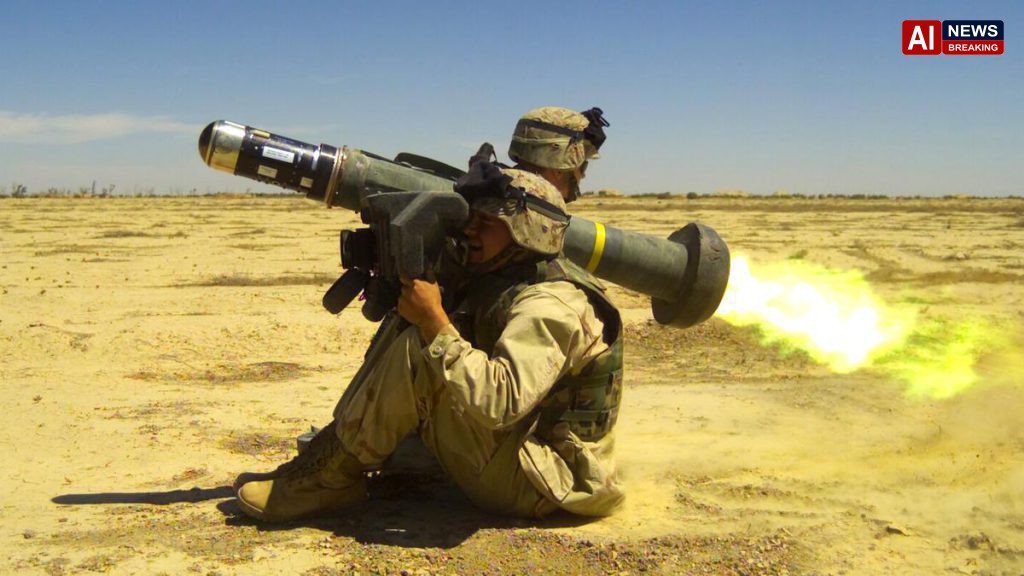
India, U.S. sign agreement for procurement of Javelin anti-tank missile system - AI News Breaking
india signs agreement procure:
New Delhi and Washington have formally inked a landmark defence deal for the procurement of the FGM-148 Javelin anti-tank missile system, marking a significant escalation in bilateral military cooperation and strategic alignment. The agreement, signed by senior diplomatic and military officials from both nations, underscores a deepening partnership aimed at modernizing India’s armour defence capabilities while integrating American technology into the Indian Army’s operational framework. This move is widely viewed as a strategic counterbalance to regional security dynamics in South Asia, particularly concerning the modernization efforts of neighbouring states..
The Javelin, renowned for its fire-and-forget capability and top-attack guidance mode, has proven its efficacy in numerous conflict zones, making it a highly sought-after asset for modern armies seeking to neutralize heavily armoured threats effectively.The procurement deal represents more than a simple transaction of hardware; it signifies a pivotal shift in India’s defence import strategy toward partnering with nations that share broader strategic interests and offer advanced technological integration. By choosing the United States as the supplier of this critical capability, New Delhi is reinforcing its commitment to diversifying its defence supply chain away from traditional sources, thereby enhancing its strategic autonomy. The introduction of the Javelin system will provide Indian forces with a significant qualitative edge in asymmetric warfare, allowing them to engage enemy tanks and fortified positions with precision and minimal exposure to return fire..
This acquisition aligns with India’s broader doctrine of network-centric warfare, where interoperability and real-time data sharing are paramount for maintaining battlefield superiority.The Javelin Missile System, manufactured by Raytheon Missile Systems, is a shoulder-fired, man-portable, fire-and-forget anti-tank weapon that has set the global standard for contemporary infantry anti-armour warfare. Its primary advantage lies in its ability to engage targets from above, striking the thinner roof armour of main battle tanks with high-explosive thermobaric warheads, which are notoriously difficult to defend against using conventional reactive armour. The system utilizes advanced infrared imaging seekers that lock onto the heat signature of the target, allowing the operator to select the engagement mode and fire without maintaining line-of-sight contact..
This capability drastically reduces the vulnerability of the firing team, enabling them to relocate immediately after launching the missile, thereby surviving potential counter-battery fire or direct engagement by enemy infantry.The integration of the Javelin into the Indian Army’s inventory is expected to undergo a rigorous testing and evaluation phase before full-scale induction begins, ensuring compatibility with existing military infrastructure and communication networks. Defence analysts note that the acquisition process will involve extensive training programs for Indian soldiers, conducted by American military instructors, to ensure optimal proficiency in handling the sophisticated guidance systems. This knowledge transfer component is a critical aspect of the deal, as it not only enhances the immediate combat readiness of the troops but also builds long-term capacity within the Indian defence establishment..
The collaboration includes provisions for logistics support, spare parts supply, and maintenance training, which are essential for sustaining the operational availability of the missile systems in diverse terrains ranging from the high altitudes of the Himalayas to the plains of the northwest.From a geopolitical perspective, the deal reinforces the strategic convergence between New Delhi and Washington, both of which view stability in the Indo-Pacific region as a central pillar of their foreign policy. The United States has increasingly positioned itself as a reliable defence partner for India, recognizing the need to counterbalance the growing military presence and assertive posture of other regional powers. By supplying advanced weaponry such as the Javelin, the U.S..
is not only providing India with a tangible military asset but also signaling its commitment to supporting India’s defence modernization agenda. This alignment is further strengthened by joint military exercises, intelligence sharing, and diplomatic coordination, creating a multifaceted partnership that extends beyond mere arms sales.The economic implications of the deal are also noteworthy, as it involves significant investment in the local defence ecosystem through offset agreements and potential technology transfer initiatives. Such provisions are designed to foster domestic manufacturing capabilities and create employment opportunities within India’s defence sector, aligning with the government’s Make in India initiative..
While the initial procurement is likely to be imported, discussions are underway regarding future co-production or local assembly, which would further deepen the industrial ties between the two countries. This approach aims to reduce India’s long-term dependence on imports while building a robust domestic defence industrial base capable of producing high-tech weaponry.Military strategists have highlighted that the introduction of the Javelin will significantly enhance the Indian Army’s ability to conduct defensive operations in contested border areas, where mobility and firepower are critical. The system’s portability allows it to be deployed in difficult terrains, including mountainous regions where heavier anti-tank weapons are impractical to maneuver..
This flexibility makes the Javelan an ideal choice for infantry units that need to hold ground against mechanized assaults. The psychological impact of possessing such a potent weapon is also considerable, as it serves as a deterrent to potential adversaries who may reconsider aggressive maneuvers knowing that Indian forces are equipped with one of the most effective anti-armour systems in the world.The deal also reflects a broader trend in global defence markets, where nations are increasingly prioritizing precision-guided munitions and networked warfare capabilities over sheer numbers of conventional weapons. As modern battlefields become more complex and digitized, the ability to identify, track, and engage targets with high accuracy is becoming a decisive factor in military success..
The Javelin’s integration into India’s growing network of sensors and command-and-control systems will contribute to this transformation, allowing for more coordinated and efficient use of fire support. This technological leap is essential for maintaining parity with regional rivals who are also upgrading their military capabilities with state-of-the-art equipment from various global suppliers.Critics and observers have noted that while the procurement of Western weaponry enhances interoperability with potential partners, it also introduces logistical complexities due to the mixing of different standards and maintenance requirements. The Indian Army already operates a diverse array of armaments sourced from Russia, France, Israel, and other countries, which poses challenges in terms of supply chain management and training..
However, proponents argue that the strategic benefits of acquiring advanced technology and strengthening ties with the United States outweigh these logistical hurdles. The incorporation of the Javelin is seen as a step toward a more balanced and diversified defence portfolio, reducing vulnerability to supply disruptions from any single source.Looking ahead, the successful induction of the Javelin system is expected to pave the way for further defence collaborations between India and the United States, potentially including joint development projects and deeper integration into the US-led defence industrial base. This partnership has the potential to reshape the strategic landscape of South Asia, influencing the balance of power and deterrence strategies in the region..
As India continues to modernize its armed forces, the emphasis on quality, technology, and strategic alignment will remain central to its defence policy. The Javelin deal is thus not just about acquiring a missile system, but about securing a long-term.
Updated: August 28, 2026
New Delhi and Washington have finalized a landmark pact for India to acquire U.S. Javelin anti-tank missiles, boosting New Delhi’s defensive capabilities against armored threats. This strategic procurement underscores deepening military ties and a shift toward diversified, high-tech defence partnerships in South Asia.