Europe warns of Russia’s hybrid attacks but struggles to counter them
  Former chief election commissioner calls SIR scheme illegal.
  A Corruption Scandal Is Reshaping Brazil’s Presidential Election
  US citizen injured in Illinois after ICE agents mistook him for fugitive, tried to arrest him
  At 10 years old, Smithsonian’s Black museum is undaunted amid pressure from Trump administration
 India-US Interim Trade Deal Nearly Ready as Jaishankar Meets Marco Rubio in Manila
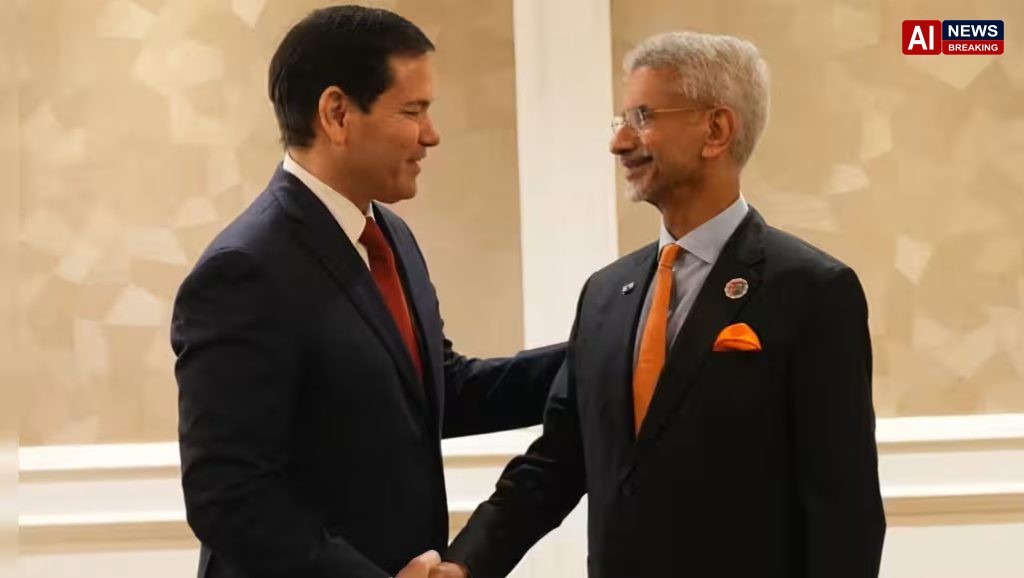
India-US Interim Trade Deal Nearly Ready as Jaishankar Meets Marco Rubio in Manila - AI News Breaking
indiaus interim trade deal:
India and the United States are on the verge of finalizing an interim trade agreement, according to the U.S. State Department, following talks between External Affairs Minister S. Jaishankar and U.S. Secretary of State Marco Rubio in Manila. The two leaders discussed trade, tariffs, defense cooperation and regional security on the sidelines of the ASEAN Foreign Ministers’ Meeting.
India and the United States have moved a step closer to finalizing a long-awaited interim trade agreement after External Affairs Minister S. Jaishankar held bilateral talks with U.S. Secretary of State Marco Rubio in Manila.
The meeting took place on the sidelines of the ASEAN Foreign Ministers’ Meeting in the Philippines, where both leaders reviewed progress on economic cooperation, regional security and defense ties. According to the U.S. State Department, Jaishankar and Rubio agreed on the importance of concluding the interim trade deal, which is now “almost complete.”
The development comes amid sustained efforts by New Delhi and Washington to deepen economic engagement and strengthen their strategic partnership at a time of growing geopolitical uncertainty in the Indo-Pacific region.
Key Highlights
- S. Jaishankar met U.S. Secretary of State Marco Rubio in Manila.
- The U.S. says the interim India-US trade deal is “almost complete.”
- The agreement could be signed within the next three to four months.
- Trade, tariffs, defense and critical minerals were among the key topics discussed.
- The deal is expected to serve as the first phase of a broader bilateral trade agreement.
Trade Deal ‘Almost Complete’
In a statement issued after the meeting, State Department spokesperson Tommy Pigott said the two sides discussed finalizing the interim trade agreement as well as advancing key defense commitments made during previous engagements between U.S. President Donald Trump and Prime Minister Narendra Modi.
A senior U.S. official separately indicated that the agreement could be signed within the next three to four months, noting that negotiations have been virtually completed and that only a few procedural issues remain.
“The deal is there. We literally have the paper,” the official reportedly said on the sidelines of the ASEAN summit.
The remaining hurdle is Washington’s completion of its Section 301 trade investigations, which relate to unfair trade practices and could influence the timing of the agreement’s formal signing.
What Could the Interim Trade Deal Include?
Although the final text has not yet been made public, officials have indicated that the interim agreement is expected to cover:
- Tariff reductions.
- Greater market access.
- Customs and trade facilitation.
- Economic security cooperation.
- Critical minerals partnerships.
- Digital trade provisions.
- Supply chain resilience initiatives.
The trade pact is also expected to serve as the first phase of a broader Bilateral Trade Agreement (BTA) aimed at significantly increasing trade volumes between the two countries over the coming decade.
Jaishankar and Rubio Discuss Wider Issues
Trade was not the only subject on the agenda.
Jaishankar and Rubio also exchanged views on:
- Developments in the Middle East.
- The Indo-Pacific security landscape.
- Defense cooperation.
- Critical minerals.
- Artificial intelligence.
- Multilateral engagement.
Following the meeting, Jaishankar posted on social media that the two leaders had discussed “trade, tariffs and critical minerals,” while also reviewing regional and global developments of mutual interest.
The discussions underscore the increasingly broad nature of the India-U.S. partnership, which now spans economic, technological and strategic domains.
ASEAN Summit Provides Diplomatic Platform
The talks occurred during a busy diplomatic week in Manila, where foreign ministers from ASEAN member states and key partner nations gathered to discuss pressing regional issues.
Rubio’s visit included meetings with officials from the Philippines, Japan and other Quad partners, with discussions focusing on:
- China’s activities in the South China Sea.
- The ongoing conflict in Ukraine.
- Tensions involving Iran.
- Regional economic cooperation.
- Maritime security.
Jaishankar also participated in the Quad Foreign Ministers’ Meeting alongside counterparts from the United States, Japan and Australia.
Why the Trade Deal Matters
The interim trade agreement is viewed as an important milestone in India-U.S. relations.
Analysts say the deal could:
- Boost bilateral trade.
- Improve market access for businesses.
- Reduce tariff-related disputes.
- Strengthen supply chains.
- Enhance strategic cooperation.
India and the United States have set ambitious goals for expanding economic ties, with policymakers on both sides emphasizing the importance of building resilient partnerships in an increasingly fragmented global economy.
The agreement is also expected to provide a framework for resolving future trade disagreements and preventing the introduction of new tariffs.
What Happens Next?
With negotiations reportedly nearing completion, attention is now turning to the formal signing process.
Officials say the interim agreement could pave the way for a more comprehensive bilateral trade pact in the years ahead.
If finalized, the deal would represent one of the most significant economic developments in India-U.S. relations in recent years and further reinforce the strategic partnership between the world’s two largest democracies.
The near completion of the India-U.S. interim trade agreement highlights the growing convergence between economic and strategic interests. As global supply chains evolve and geopolitical competition intensifies, both nations appear increasingly committed to building a long-term partnership that extends beyond trade into technology, defense and regional security.