Europe warns of Russia’s hybrid attacks but struggles to counter them
  Former chief election commissioner calls SIR scheme illegal.
  A Corruption Scandal Is Reshaping Brazil’s Presidential Election
  US citizen injured in Illinois after ICE agents mistook him for fugitive, tried to arrest him
  At 10 years old, Smithsonian’s Black museum is undaunted amid pressure from Trump administration
 IndiaUS Trade Pact First Phase Likely by Mid-July: Talks Advance Toward Limited Deal Covering Tariffs, Market Access and Strategic Sectors
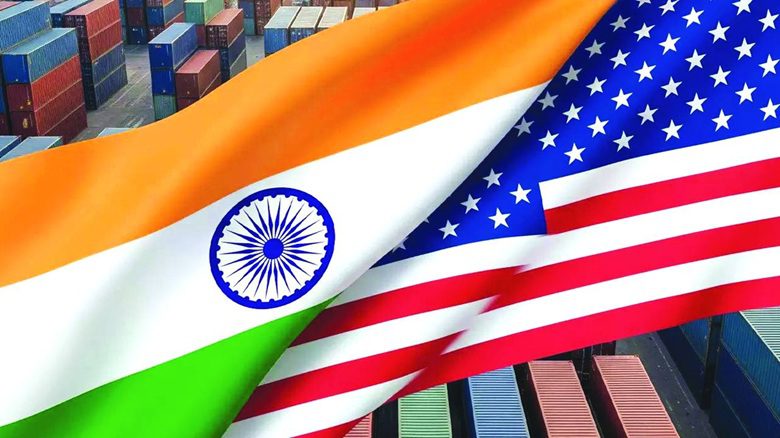
India and the United States are reportedly moving closer to finalizing the first phase of a long-anticipated trade agreement, with a tentative timeline of mid-July. The initial phase is expected to focus on tariff reductions, limited market access, and sector-specific cooperation in areas like technology, agriculture, and critical minerals. The development signals a renewed push to strengthen bilateral economic ties amid shifting global trade dynamics.
The India–US trade relationship is entering a potentially decisive phase, with reports suggesting that the first tranche of a structured bilateral trade agreement may be finalized by mid-July. This development comes after years of intermittent negotiations, policy disagreements, and shifting geopolitical priorities on both sides.
While the proposed agreement is not expected to be a comprehensive free trade agreement at the outset, the “first phase” is likely to function as a foundational framework. It is expected to address key friction points such as tariff structures, regulatory barriers, digital trade norms, and selective market access across strategic sectors.
In a global economy increasingly shaped by supply chain realignments, industrial policy competition, and geopolitical fragmentation, the India–US trade pact is being viewed as more than a commercial arrangement—it is also a strategic economic alignment.
A Complex and Cyclical Trade Relationship
India and the United States share one of the world’s largest bilateral trade relationships, spanning goods, services, investment flows, and technology cooperation. However, the relationship has historically oscillated between cooperation and friction.
Key characteristics of India–US trade ties:
- Strong growth in IT and services exports from India
- Significant US exports in energy, defense, and high-tech goods
- Periodic tariff disputes over steel, aluminum, and agricultural goods
- Divergent regulatory approaches to digital taxation and data governance
- Ongoing intellectual property and market access concerns
Over the past decade, both countries have attempted multiple times to negotiate a broader trade framework, but progress has been slow due to structural differences in economic priorities.
The current push for a phased agreement reflects a pragmatic shift—moving away from attempting a single comprehensive deal toward incremental, sector-based outcomes.
What the “First Phase” Trade Pact Likely Means
The reported “first phase” of the India–US trade pact suggests a modular approach rather than a full free trade agreement.
Key features of a phased approach typically include:
- Tariff Rationalization
Selective reduction or adjustment of import duties on agreed goods. - Market Access Improvements
Limited easing of restrictions in sensitive sectors. - Regulatory Cooperation
Alignment on standards, certifications, and customs processes. - Sector-Specific Agreements
Focus on high-priority industries rather than broad liberalization. - Strategic Economic Alignment
Linking trade policy with geopolitical cooperation.
In this case, the first phase is expected to act as a confidence-building measure, setting the stage for deeper negotiations in subsequent phases.
Why Mid-July Matters
The reported mid-July timeline is significant for several reasons:
1. Political Calendar Alignment
Both India and the United States are operating within domestic political cycles that influence trade decision-making.
2. Negotiation Momentum
Trade negotiations often accelerate after technical working groups finalize foundational frameworks.
3. Global Economic Pressure
Slowing global trade growth and supply chain restructuring have increased urgency for bilateral deals.
4. Strategic Competition
Both countries are seeking to reduce dependence on concentrated supply chains in sensitive sectors.
The mid-July target likely reflects an effort to announce a politically and economically meaningful milestone before broader global trade summits and domestic policy cycles intensify.
Key Sectors Likely Covered in Phase One : While final details remain under negotiation, several sectors are expected to dominate the first phase of the agreement.
1. Technology and Digital Trade
Technology is one of the most critical pillars of India–US economic relations.
Likely areas of focus:
- Cross-border data flows
- Digital taxation frameworks
- Cloud services regulation
- Artificial intelligence cooperation
- Semiconductor supply chain integration
The United States has consistently emphasized freer digital market access, while India has prioritized data sovereignty and regulatory control. The first phase may aim for a balanced framework rather than full convergence.
2. Agriculture and Food Products
Agriculture has historically been one of the most sensitive areas in trade negotiations.
Key issues include:
- Tariff reductions on select agricultural imports
- Market access for US dairy and farm products
- India’s protection of domestic farmers
- Sanitary and phytosanitary standards
Given the political sensitivity of agriculture in India, any agreement is expected to be highly selective and carefully structured.
3. Industrial Goods and Manufacturing
Manufacturing trade is expected to be a central pillar of the agreement.
Possible components:
- Reduction in tariffs on industrial inputs
- Improved supply chain integration
- Cooperation in advanced manufacturing
- Alignment on quality standards
This aligns with India’s “Make in India” and US reshoring strategies, which both aim to diversify global production networks.
4. Energy Trade
Energy has become an increasingly important dimension of India–US relations.
Areas of cooperation:
- Liquefied natural gas (LNG) imports
- Renewable energy technology transfer
- Strategic petroleum reserves cooperation
- Clean energy financing mechanisms
Energy trade is often viewed as a stabilizing factor in bilateral economic relations due to its strategic importance.
5. Critical Minerals and Supply Chains
Global competition for critical minerals has intensified, especially in the context of clean energy and electronics.
Focus areas include:
- Lithium and rare earth supply chains
- Battery manufacturing ecosystems
- Semiconductor materials
- Supply chain resilience frameworks
Both countries are seeking to reduce dependence on concentrated supply sources, particularly in East Asia.
The reported timeline suggesting that the first phase of the India–US trade pact could be finalized by mid-July represents a meaningful step in a long and complex negotiation process. While the agreement is likely to be limited in scope, it carries significant symbolic and strategic weight.
Rather than a sweeping free trade agreement, the emerging framework reflects a modern trade strategy based on incremental progress, sectoral alignment, and geopolitical coordination. If successful, it could set the foundation for a deeper economic partnership between two of the world’s largest democracies.
From a macroeconomic systems perspective, this development reflects a shift from “static trade liberalization” toward “adaptive trade architecture.” Instead of pursuing fully comprehensive agreements—which are increasingly difficult in politically polarized environments—major economies are adopting modular, phase-based frameworks. This allows them to decouple high-consensus sectors (energy, technology, supply chains) from low-consensus sectors (agriculture, labor mobility). The India–US approach is consistent with this global trend and signals that future trade diplomacy will likely be iterative, resilience-focused, and geopolitically integrated rather than purely tariff-driven.