Europe warns of Russia’s hybrid attacks but struggles to counter them
  Former chief election commissioner calls SIR scheme illegal.
  A Corruption Scandal Is Reshaping Brazil’s Presidential Election
  US citizen injured in Illinois after ICE agents mistook him for fugitive, tried to arrest him
  At 10 years old, Smithsonian’s Black museum is undaunted amid pressure from Trump administration
 Indian Railways Consumes Nearly 3 Billion Units of Electricity Every Month to Power World’s Fourth-Largest Rail Network
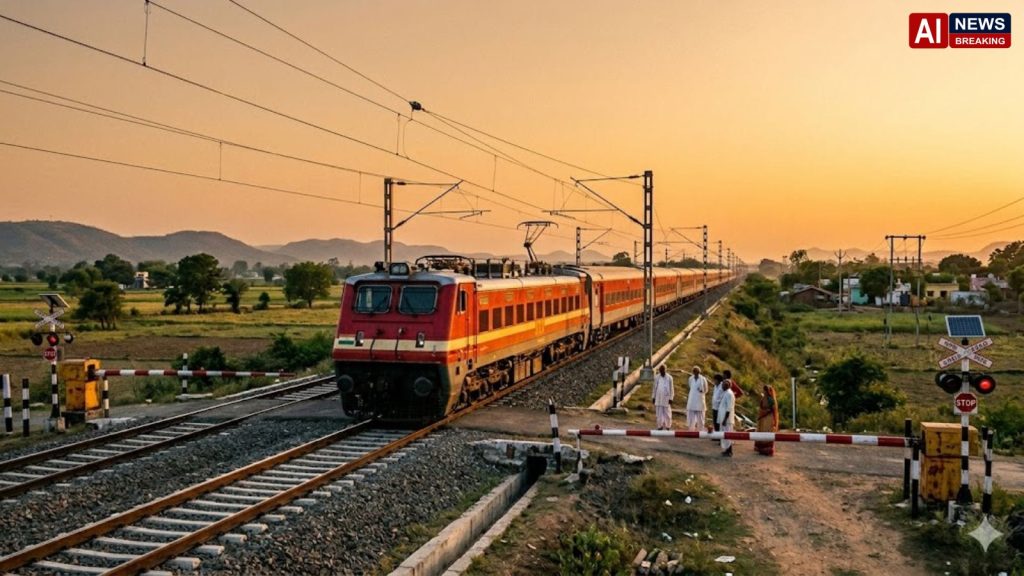
Indian Railways Consumes Nearly 3 Billion Units of Electricity Every Month to Power World's Fourth-Largest Rail Network - AI News Breaking
Indian Railways consumes close to 3 billion units (BU) of electricity every month to ensure uninterrupted train operations across the country. The massive energy requirement reflects the scale of one of the world’s largest railway systems and highlights the growing importance of sustainable and efficient energy management in India’s transportation sector.
Key Highlights
- Indian Railways consumes nearly 3 billion units of electricity every month.
- Electricity powers trains, stations, signaling systems and maintenance facilities.
- The organization has significantly expanded railway electrification across India.
- Renewable energy initiatives are helping reduce the environmental impact of operations.
- Future infrastructure projects are expected to increase electricity demand further.
Indian Railways, often described as the lifeline of the nation, consumes nearly 3 billion units (BU) of electricity every month to keep its vast network of trains running smoothly across the country. The staggering figure underscores the enormous operational scale of one of the world’s largest railway systems, which transports millions of passengers and tonnes of freight daily.
From powering electric locomotives and signaling systems to illuminating stations and maintaining critical infrastructure, electricity has become an indispensable component of modern railway operations in India. With an expanding electrified network and increasing passenger demand, the energy needs of Indian Railways continue to grow at an unprecedented pace.
A Railway Network of Unparalleled Scale
Indian Railways operates one of the most extensive rail networks in the world, connecting thousands of towns, cities and villages across the country. Every day, the national transporter carries millions of passengers while simultaneously moving essential commodities, industrial goods and agricultural produce.
Its operations encompass:
- More than 68,000 route kilometers.
- Thousands of passenger and freight trains daily.
- Hundreds of railway stations operating round the clock.
- Extensive signaling and telecommunications infrastructure.
- Large maintenance depots and workshops.
Managing such an expansive transportation ecosystem requires a continuous and reliable electricity supply, making Indian Railways one of the country’s largest institutional consumers of power.
Where Is the Electricity Used?
The nearly 3 billion units of monthly electricity consumption are distributed across several operational areas.
Key electricity-consuming components include:
- Electric locomotives.
- Railway stations and platforms.
- Signaling and communication systems.
- Maintenance workshops and depots.
- Administrative offices.
- Trackside equipment.
- Escalators, elevators and station amenities.
- Lighting and air-conditioning systems.
As India rapidly modernizes its rail infrastructure, additional facilities such as Wi-Fi-enabled stations, digital displays and advanced safety systems are also contributing to higher power consumption.
Electrification Drive Changes the Energy Landscape
Over the past decade, Indian Railways has aggressively pursued the electrification of its network. The initiative aims to reduce dependence on imported fossil fuels, improve operational efficiency and lower carbon emissions.
Officials have repeatedly emphasized that electrification offers multiple benefits:
- Reduced fuel costs.
- Faster train operations.
- Lower greenhouse gas emissions.
- Improved energy efficiency.
- Greater energy security.
Today, a significant portion of India’s railway routes operates using electric traction, representing a major transformation from the diesel-dominated era of previous decades.
The electrification drive has also aligned Indian Railways with the government’s broader goals of achieving sustainable and environmentally responsible growth.
Sustainability and Renewable Energy Goals
While electricity consumption continues to rise, Indian Railways has simultaneously accelerated its transition toward renewable energy sources.
The organization has undertaken several initiatives, including:
- Installation of rooftop solar panels at railway stations.
- Procurement of renewable energy from solar and wind projects.
- Adoption of energy-efficient lighting systems.
- Implementation of green building standards.
- Use of regenerative braking technology in trains.
Indian Railways has also announced ambitious plans to become a net-zero carbon emitter in the coming years, making it one of the few major transportation networks globally to pursue such a target.
Energy experts note that integrating renewable sources into railway operations could significantly reduce the environmental footprint of the country’s transportation sector.
Rising Demand Reflects Economic Growth
The increasing electricity consumption of Indian Railways is also viewed as an indicator of India’s broader economic expansion.
Higher energy usage often corresponds with:
- Increased passenger traffic.
- Growing freight movement.
- Expansion of railway infrastructure.
- Introduction of new train services.
- Modernization of stations and facilities.
Freight operations, in particular, play a critical role in supporting industries such as steel, cement, agriculture and manufacturing. As economic activity expands, demand for efficient rail transportation is expected to continue rising.
Modern Technology Improves Efficiency
Despite consuming vast quantities of electricity, Indian Railways has made substantial progress in improving energy efficiency.
Several technological interventions have been implemented, including:
- LED lighting across stations.
- Smart energy management systems.
- Energy-efficient air-conditioning units.
- Automated monitoring of electricity consumption.
- Regenerative braking in electric locomotives.
These measures have enabled the railway network to optimize energy usage while maintaining high operational standards.
Industry observers believe that future investments in artificial intelligence and data analytics could further enhance energy management across the network.
Challenges of Managing Massive Power Requirements
Ensuring uninterrupted electricity supply for Indian Railways presents significant logistical and operational challenges.
Authorities must account for:
- Seasonal fluctuations in power demand.
- Regional differences in electricity availability.
- Infrastructure maintenance requirements.
- Rising operational costs.
- Integration of renewable energy sources.
Maintaining a stable power supply is particularly important given the critical role railways play in passenger mobility and freight transportation.
Any disruption to electricity availability can have cascading effects across the transportation network, impacting schedules, logistics and economic activity.
Looking Ahead
As India continues investing in high-speed rail corridors, station redevelopment projects and new freight infrastructure, electricity consumption is likely to increase further.
Future developments expected to influence power demand include:
- Expansion of Vande Bharat train services.
- Dedicated freight corridors.
- High-speed rail projects.
- Modernized station infrastructure.
- Increased adoption of digital technologies.
Experts believe that balancing rising energy needs with sustainability goals will remain one of Indian Railways’ most important priorities over the coming decade.
Indian Railways’ monthly electricity consumption illustrates both the scale of India’s transportation infrastructure and the country’s growing energy requirements. As the railway network becomes increasingly electrified, its success will depend on balancing operational expansion with sustainability initiatives. Investments in renewable energy, smart grid technologies and energy-efficient systems could position Indian Railways as a global model for environmentally responsible mass transportation in the years ahead.