Trump administration offers mixed messages on limits to Ukraine’s Starshield access
 US Treasury proposes a rule to crack down on high-tech investments in China, other adversaries
 Calley Means, a key MAHA advocate, resigns as a top RFK Jr. adviser
 Spotify Tightens Family Plan Controls with QR Code Verification
 Use of Chief Minister C. Joseph Vijay’s deep fake videos to collect money: Rajasthan youth moves Madras High Court seeking bail
INS Samarthak, first indigenous multi-purpose vessel, commissioned
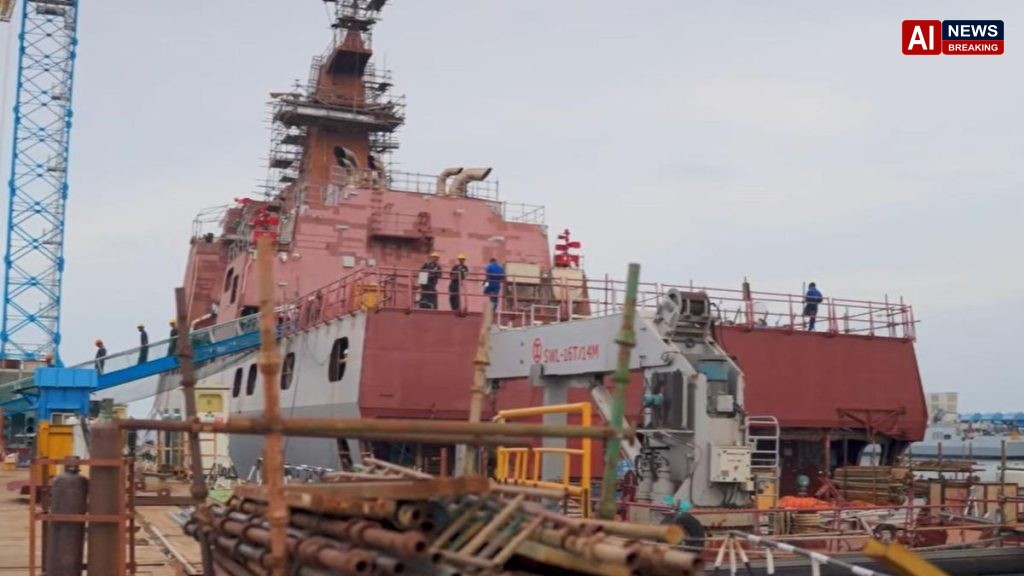
INS Samarthak, first indigenous multi-purpose vessel, commissioned - AI News Breaking
samarthak first indigenous multipurpose:
Vice‑President C. P. Radhakrishnan opened the ceremony on 27 July, presiding over the launch of INS Samarthak, the first of two indigenously built multi‑purpose vessels for the Indian Navy. The ceremony, held at the naval base in Karwar, was attended by senior officers, members of the public and representatives of Larsen & Toubro (L&T), the shipbuilder. The ship’s commissioning marks a milestone in India’s push to increase self‑reliance in defence technology, with the vessel incorporating more than 75 % domestic content and a suite of sensors and weapons developed in India.INS Samarthak is a 5,000‑tonne vessel designed to carry out a variety of tasks, from maritime security operations to anti‑submarine warfare and maritime counter‑terrorism missions..
Its modular design allows the Navy to swap out mission‑specific modules as required, making it a flexible tool in an increasingly complex maritime environment. The ship’s hull and propulsion systems were fabricated from steel produced in Indian yards, while the onboard radar, electronic warfare suites, and navigation systems were supplied by Indian manufacturers. In addition, the vessel is fitted with a 30‑mm cannon and a remotely operated weapon station, both of which were produced in the country.The choice of L&T as the prime contractor was driven by the company’s experience in building offshore and naval platforms, as well as its ability to manage the complex integration of indigenous systems..
The shipyard in Kalyan, Maharashtra, where the keel was laid in 2020, has been working on the design for almost a decade, collaborating closely with the Defence Research and Development Organisation (DRDO). The collaboration ensured that the sensors and weapons tested on INS Samarthak are compatible with the broader ecosystem of Indian naval platforms.According to the Vice‑President, the vessel’s sensors include a low‑observable hull design that reduces its radar cross‑section, making it harder for hostile forces to detect. The ship’s integrated navigation and communications suite uses domestic software to process data from satellite links, maritime domain awareness networks, and other assets..
These capabilities are intended to provide real‑time situational awareness and improve decision‑making at the point of action. “The ship is not just a platform, it is a testbed for technology that will later be deployed on larger vessels,” Radhakrishnan said.The commissioning was also a symbolic step towards the Indian Navy’s goal of having an all‑indigenous fleet. The Defence Ministry has set a target of 50 % indigenous content for new ships by 2030, and the success of INS Samarthak demonstrates that complex platforms can be built with a high proportion of local components..
In addition, the vessel’s design incorporates a modular mission bay that can be reconfigured for amphibious operations, logistics support, or humanitarian assistance. This flexibility is expected to enhance the Navy’s ability to respond to crises in the Bay of Bengal and beyond.INS Samarthak’s weaponry is notable for its reliance on domestic production. The 30‑mm main gun is manufactured by Bharat Dynamics, a subsidiary of the Defence Research and Development Organisation, while the remotely operated weapon station uses a servo‑controlled turret designed by L&T..
The ship also carries a small boat that can be deployed for boarding operations or search and rescue missions. These systems were developed over several years of research, with the Navy’s procurement process ensuring that they met stringent performance and safety standards.The vessel’s construction involved a workforce of more than 1,500 technicians, engineers, and craftsmen, many of whom received specialised training at L&T’s training centre in Chennai. The project has been praised by industry analysts as an example of effective public‑private partnership, with the government providing financial support and the company providing technical expertise..
“It’s an illustration of how industrial policy and defence needs can align for mutual benefit,” said Dr. N. K. Srinivasan, a professor of maritime engineering at the Indian Institute of Technology, Kanpur.INS Samarthak is scheduled to undertake a series of trials in the Arabian Sea and the Bay of Bengal during the next six months. The trials will test the vessel’s performance in various sea states, its propulsion efficiency, and the reliability of its communication systems..
The ship’s crew will also be evaluated on their ability to operate the modular mission bay and to conduct joint operations with other naval assets. Once the trials are complete, the ship will be assigned to the Western Naval Command, where it will support fleet exercises and patrol duties.The launch of INS Samarthak comes at a time when regional security dynamics are shifting. China’s maritime activities in the Indian Ocean have increased, and the Indian Navy has been expanding its presence in the region to safeguard sea lines of communication..
The new vessel adds a layer of flexibility to the Navy’s strategic options, allowing it to conduct a wider range of missions without requiring a dedicated ship for each task.The commissioning ceremony was conducted with the usual formalities: the ship’s crest was hoisted, the national flag was raised, and the commissioning order was signed. The Vice‑President delivered a speech that praised the Navy’s commitment to indigenisation, highlighted the role of industry partners, and reaffirmed the country’s dedication to maritime security. He also noted that the ship would be a stepping stone for future projects, including the development of larger surface combatants and submarines that will also feature high levels of domestic content.Looking ahead, the Navy plans to commission a second vessel of the same class in 2025..
The second ship is expected to incorporate lessons learned from INS Samarthak’s trials and will feature upgraded sensors and a larger payload capacity. The development of the class also aligns with the Navy’s broader modernization programme, which includes the acquisition of new aircraft carriers, frigates, and patrol vessels.In summary, the commissioning of INS Samarthak represents a significant advance in India’s naval capabilities and its ability to manufacture complex warships domestically. With its modular design, indigenous sensors, and weapons systems, the vessel provides a versatile platform that can adapt to a range of missions..
As the Indian Navy continues to modernise its fleet, the lessons learned from this project will inform the development of future platforms, ensuring that the country can maintain a robust maritime presence in a rapidly evolving security environment..
Updated: October 18, 2026
Vice‑President C.P. Radhakrishnan inaugurated INS Samarthak, the Indian Navy’s first indigenously built multi‑purpose vessel, at a Karwar ceremony that underscored the country’s push toward 75 % domestic content in defence assets. The 5,000‑tonne ship’s modular design and locally sourced sensors, weapons and propulsion systems mark a milestone in self‑reliance, positioning the
Insight: India’s pivot to indigenise its fleet is no longer a policy aspiration—it is becoming a strategic asset that can be re‑armed for every scenario on demand. Should this modular approach scale, it could recalibrate regional deterrence, forcing neighbours to rethink their own naval procurement and signaling that self‑reliance now carries real force‑projection weight.