 Iran Rejects Trump Talks Until 2029, Adopts ‘Strategic Patience’ as Strait of Hormuz Standoff Deepens
  US H-1B, L-1 Visa Rule Change: Employers Face Up to 4.14 Lakh Cost for Indian Workers
  Trump Says US Is “Semi-Negotiating” With Iran as Tehran Sets Tough Conditions to Reopen Strait of Hormuz
  Border firing between Assam and Arunachal leaves 18 villagers injured
  Ukraine targets Wildberries warehouses
 Iran Rejects Trump Talks Until 2029, Adopts ‘Strategic Patience’ as Strait of Hormuz Standoff Deepens
Iran Rejects Trump Talks Until 2029, Adopts 'Strategic Patience' as Strait of Hormuz Standoff Deepens - AI News Breaking
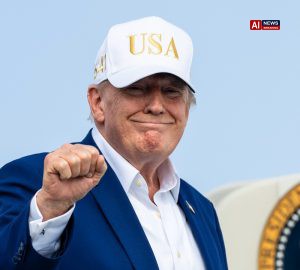
Tehran appears to be preparing for a prolonged confrontation with Washington, with Iranian officials signaling that they do not expect a diplomatic breakthrough with US President Donald Trump before his presidency ends in January 2029.
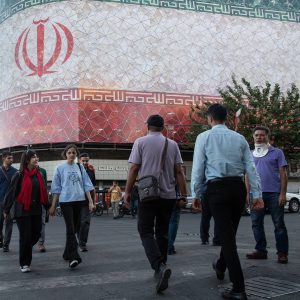
Iran has delivered one of its clearest signals yet that it is not looking for a near-term political settlement with US President Donald Trump.
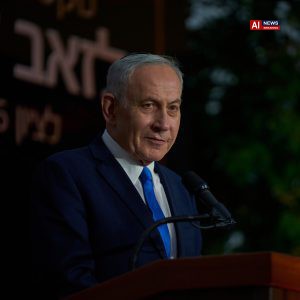
According to statements reported by Iranian media and cited by Moneycontrol, Majid Shakeri, an adviser to Iranian Parliament Speaker Mohammad Bagher Ghalibaf, said Tehran does not expect Trump to reach an agreement with Iran and intends to continue managing the confrontation until the end of his presidential term.
The message represents a significant hardening of Iran’s position at a time when Washington and Tehran remain locked in a confrontation involving military pressure, sanctions, nuclear concerns and the strategic Strait of Hormuz.
Shakeri’s reported argument is that Iran should avoid being pushed into either a full-scale military escalation or a negotiated settlement under the current US administration. Instead, Tehran should pursue what he described as a strategy of maintaining a state between war and peace while waiting for circumstances to change.
The position has important consequences well beyond the US-Iran relationship. The Strait of Hormuz is one of the world’s most important energy corridors, and continuing restrictions on maritime traffic through the waterway have raised concerns over oil supplies, shipping costs and the wider global economy.
Iran’s latest position therefore turns the dispute from a short-term diplomatic crisis into a potentially prolonged strategic contest.
Iran signals it will wait out Trump
The central message coming from Tehran is straightforward: Iran does not appear to believe that a lasting agreement with the Trump administration is currently possible.
Shakeri, an adviser to parliamentary speaker Mohammad Bagher Ghalibaf, reportedly said that Trump would not reach an agreement with Iran and that Tehran would continue its current approach until Trump’s term ends.
His comments are particularly significant because they suggest that Iran’s calculations extend beyond immediate military or diplomatic developments.
Rather than focusing exclusively on what Washington may offer today, Tehran appears to be calculating what the political landscape could look like after Trump’s presidency.
Trump’s current term is scheduled to end on January 20, 2029. That gives Iran a defined political horizon around which it can organize its strategy.
The approach does not necessarily mean that Iran intends to completely abandon diplomacy. Instead, Iranian officials are distinguishing between formal negotiations and indirect communication.
Iranian Foreign Minister Abbas Araghchi said that Tehran was not currently engaged in negotiations with Washington. However, intermediaries were still attempting to establish channels that could eventually facilitate the resumption of talks.
That distinction is important.
For Tehran, communication through intermediaries does not necessarily represent a willingness to enter formal negotiations. Iran appears to be using indirect messaging to keep diplomatic channels available while refusing to make concessions that could be interpreted as acceptance of the US negotiating framework.
Tehran’s ‘neither war nor peace’ strategy
One of the most important elements of the latest Iranian messaging is the concept of maintaining a situation that falls between open warfare and a negotiated peace agreement.
Shakeri reportedly argued that Iran’s path to victory is neither fighting nor making a deal, but managing a prolonged period of “neither war nor peace.”
That strategy reflects a broader logic in which time itself becomes a strategic resource.
Iran has historically faced significant economic pressure from US sanctions and has developed mechanisms for surviving prolonged external pressure. From Tehran’s perspective, an immediate agreement with Washington could potentially lock Iran into commitments while the Trump administration retains significant military and economic leverage.
Waiting, by contrast, could allow Iran to preserve bargaining power and potentially negotiate with a future US administration.
This is why the year 2029 has become politically significant.
Iran may believe that a future American administration could approach the country’s nuclear program, sanctions, regional influence and security demands differently.
The strategy also reflects Tehran’s concern over publicly acknowledging negotiations.
Iranian officials have indicated that current contacts should be viewed as an exchange of messages rather than formal negotiations. The distinction allows Tehran to preserve diplomatic communication without creating the appearance that it has accepted Washington’s terms.
Why Iran is rejecting a Trump-era agreement
The disagreement between Washington and Tehran extends across several issues.
At the center is the question of what Iran would need to do in exchange for sanctions relief and a reduction in US pressure.
The United States has historically demanded restrictions on Iran’s nuclear activities and sought guarantees that Tehran cannot develop nuclear weapons.
Iran, meanwhile, maintains that it has sovereign rights over its nuclear program and has repeatedly rejected demands that it considers excessive.
The dispute is therefore not simply about whether the two countries should negotiate.
It is about the terms on which negotiations would take place.
Iran’s latest position suggests that Tehran does not believe the current balance of power makes an agreement acceptable.
The Iranian leadership appears to be calculating that maintaining pressure on Washington while keeping diplomatic channels open could produce a more favorable negotiating environment later.
That is the essence of strategic patience.
Instead of seeking an immediate settlement, Iran would attempt to survive the current pressure campaign and wait for political or strategic conditions to change.
The Strait of Hormuz becomes central to the confrontation
The diplomatic dispute has become closely connected to the Strait of Hormuz.
The waterway is one of the world’s most strategically important maritime routes because a substantial share of global oil and gas shipments passes through the Persian Gulf and the strait.
Any prolonged disruption can therefore affect more than Iran and the United States.
It can influence global oil prices, insurance costs, shipping routes, refinery economics and inflation.
Iran has increasingly connected the reopening of the waterway to Washington accepting its demands.
According to the latest reporting, Iranian officials have indicated that the strait will remain closed under the current policy until the United States agrees to Tehran’s conditions.
The Islamic Revolutionary Guard Corps has described the waterway not merely as a commercial route but as part of the wider conflict.
That framing demonstrates how deeply the maritime issue has become embedded in Iran’s security strategy.
For Washington, reopening Hormuz is a critical economic and geopolitical objective.
For Tehran, control over access through the waterway provides an important source of leverage.
This creates a difficult negotiating equation.
The United States wants the strait reopened to restore normal global energy flows, while Iran wants Washington to make significant concessions before allowing unrestricted maritime traffic.
Iran’s financial demands
Iran’s demands reportedly include compensation of around $300 billion, the release of frozen Iranian assets abroad and the withdrawal of US military forces from the region.
These demands are far-reaching and illustrate the enormous distance between the two sides.
The compensation demand is particularly important because it transforms the negotiations from a conventional nuclear-security discussion into a broader dispute over the costs and consequences of the conflict.
Iran argues that it has suffered extensive damage and therefore expects compensation.
Washington, however, has introduced its own demands and has rejected the idea that Tehran can simply impose conditions for reopening the Strait of Hormuz.
The result is a classic bargaining deadlock.
Each side believes the other must make the first major concession.
Neither wants to appear weaker by backing down.
Trump faces a difficult strategic choice
For President Trump, the Iranian position creates a major strategic problem.
Trump has repeatedly presented himself as a leader capable of securing major agreements through pressure and negotiation.
Iran’s refusal to negotiate under his administration challenges that approach.
If Tehran successfully waits until 2029 without making a major agreement, the Trump administration could face pressure to demonstrate that its strategy produced tangible results.
At the same time, increasing military pressure carries its own risks.
A broader conflict could threaten US forces in the region, disrupt global energy supplies and create economic consequences for American consumers and businesses.
The Strait of Hormuz makes the situation particularly sensitive.
Any escalation around the waterway could immediately affect international markets.
That means the US administration must balance military deterrence with the economic consequences of prolonged confrontation.
Why 2029 matters to Iran
Iran’s decision to focus on the end of Trump’s presidency reflects the importance of electoral cycles in international diplomacy.
US foreign policy can change substantially when administrations change.
A future president could retain some of Trump’s policies, but could also pursue a different negotiating strategy.
Tehran therefore appears to be betting that time could improve its bargaining position.
This is not without risk.
There is no guarantee that the next US administration will be more favorable toward Iran.
A future president could potentially adopt an even tougher approach.
Iran is therefore making a strategic gamble.
It is effectively saying that the costs of reaching an agreement with Trump now are greater than the risks of waiting.
That calculation will depend heavily on Iran’s ability to withstand economic pressure and maintain internal political stability.
The nuclear issue remains unresolved
Behind the broader political confrontation is the long-running dispute over Iran’s nuclear program.
The United States wants restrictions and verification mechanisms that prevent Iran from moving toward a nuclear weapons capability.
Iran maintains that its nuclear activities are peaceful and has defended its right to nuclear technology.
The nuclear issue has repeatedly brought the two countries into negotiations, but trust has remained extremely low.
Previous diplomatic agreements have also failed to produce a durable settlement.
For Iran, the experience reinforces the argument that American commitments can change with political leadership.
For Washington, Iran’s nuclear advances reinforce the argument that stronger restrictions are necessary.
This creates a cycle of mistrust.
Each side views the other’s actions as evidence that its own security concerns are justified.
Indirect diplomacy remains alive
Despite the harsh public rhetoric, diplomacy has not completely disappeared.
Iran’s foreign minister has indicated that intermediaries continue to work on ways to resume negotiations.
That means countries such as Oman and other regional actors could continue playing an important role.
Indirect diplomacy can provide both sides with an escape route.
Washington can communicate with Tehran without publicly recognizing a formal negotiation process.
Iran can explore potential compromises without committing itself publicly.
This type of diplomacy is particularly useful when political leaders cannot afford to appear conciliatory.
The existence of indirect contacts also means that the current confrontation should not automatically be interpreted as the complete end of diplomacy.
Instead, the two sides appear to be keeping communication channels open while remaining publicly far apart.
Oman could remain an important diplomatic channel
Oman has historically played a useful role in communications between Iran and the United States.
The country’s neutral diplomatic position allows it to transmit messages without either side necessarily having to make a direct public approach.
That role could become even more important if Washington and Tehran continue refusing formal negotiations.
Regional countries have strong incentives to prevent the conflict from expanding.
Gulf states are particularly vulnerable to disruptions in energy markets and regional security.
For them, a prolonged US-Iran confrontation represents a direct economic and security threat.
This could encourage continued diplomatic efforts behind the scenes.
The economic consequences of a prolonged Hormuz crisis
The most immediate international concern is energy.
The Strait of Hormuz connects the Persian Gulf with the Gulf of Oman and the wider Indian Ocean.
A prolonged disruption could create uncertainty in global energy markets.
Even countries that are not directly involved in the conflict could face higher fuel prices, increased shipping costs and inflationary pressure.
Asian economies are especially important in this equation because many major energy importers depend on supplies moving through the Gulf.
India, China, Japan and South Korea are among the world’s major energy consumers, meaning prolonged disruption could have consequences far beyond the Middle East.
Higher energy prices can also affect transportation, manufacturing, agriculture and household expenses.
The economic consequences could therefore become a source of international pressure on both Washington and Tehran.
Oil markets are watching the confrontation
Global oil markets respond not only to actual supply disruptions but also to expectations.
If traders believe that Hormuz will remain restricted for an extended period, they may price in a risk premium.
That can push crude prices higher even before physical shortages emerge.
Higher oil prices can then feed into inflation.
Central banks may face additional pressure if energy costs begin influencing broader consumer prices.
This creates an unusual situation in which a geopolitical confrontation in the Middle East can influence monetary policy around the world.
A prolonged standoff could therefore become a global economic issue rather than a regional security crisis.
Iran’s strategic calculation
Iran’s strategy appears to be built around several interconnected objectives.
First, Tehran wants to avoid giving Washington a quick diplomatic victory.
Second, it wants to preserve leverage over the Strait of Hormuz.
Third, it wants compensation and economic concessions.
Fourth, it wants the release of frozen assets.
Fifth, it wants changes to the US military posture in the region.
Finally, Iran appears willing to wait for a different political environment in Washington.
These objectives are difficult to achieve simultaneously.
Maintaining pressure on the United States can strengthen Iran’s bargaining position, but it can also increase international pressure against Tehran.
Closing or restricting Hormuz provides leverage, but prolonged disruption can generate opposition from countries that depend on stable energy supplies.
Waiting until 2029 could preserve Iran’s current position, but it also creates uncertainty about what a future US administration might do.
Strategic patience is a high-risk policy
Strategic patience can be effective when a country believes time is working in its favor.
But it is not automatically successful.
Iran must withstand economic pressure for several years if it genuinely intends to wait until Trump’s term ends.
That could place additional strain on the Iranian economy.
Sanctions, reduced investment, currency pressures and disruptions to energy exports can create domestic political consequences.
The Iranian government must therefore manage both external confrontation and internal economic expectations.
A strategy designed to outlast an American president can succeed only if the country implementing it can absorb the costs.
The danger of miscalculation
One of the biggest risks in the current situation is that neither side may intend to start a larger war, yet events could push them toward one.
Military deployments, naval incidents, missile launches, drone attacks or attacks on energy infrastructure could rapidly change the situation.
Once casualties occur, political leaders may find it harder to compromise.
That is why indirect diplomacy remains important even when formal negotiations have stalled.
A backchannel can provide an emergency communication mechanism if tensions suddenly rise.
Without such channels, a relatively limited incident could escalate quickly.
A prolonged ‘no war, no peace’ period
Iran’s latest strategy essentially points toward a prolonged period in which neither side achieves a decisive settlement.
Such a situation can last for years.
There may be periods of escalation followed by temporary de-escalation.
There may be indirect talks followed by renewed accusations.
There may also be limited agreements on specific issues without a broader peace settlement.
For businesses and markets, that uncertainty can be almost as damaging as a formal conflict.
Companies need predictable shipping routes, energy supplies and insurance conditions.
Governments need to prepare for potential disruptions.
Investors must price geopolitical risk into their decisions.
What happens if Iran maintains its position?
If Tehran remains committed to its current strategy, Washington could face several options.
The first would be to increase economic pressure.
The second would be to increase military deterrence.
The third would be to offer concessions designed to bring Iran back to formal negotiations.
The fourth would be to pursue regional diplomatic arrangements that reduce the immediate impact of the Hormuz crisis.
None of these options guarantees success.
Military pressure could strengthen Iranian hardliners.
Economic pressure could increase humanitarian and political concerns.
Concessions could be portrayed as a retreat.
Diplomacy could take months or years.
This is why the current situation is likely to remain fluid.
What could change Iran’s calculations?
Several developments could alter Tehran’s strategy.
A major change in the US military posture could influence Iranian decision-making.
Economic deterioration inside Iran could create pressure for an agreement.
A change in regional alliances could also shift the balance.
Similarly, a credible US proposal offering sanctions relief and security guarantees could reopen diplomatic space.
Another possibility is a change in American leadership after the 2028 presidential election.
If a future administration adopts a different policy toward Iran, Tehran’s current strategy could suddenly become more valuable.
But none of these outcomes is guaranteed.
The Trump administration’s credibility is also at stake
The confrontation has become a test of Trump’s ability to use pressure as a diplomatic tool.
Trump’s approach has generally emphasized leverage, threats and the possibility of a negotiated settlement.
Iran’s current response suggests that Tehran believes it can absorb that pressure and wait.
If Iran succeeds, other countries may study the strategy carefully.
If Washington eventually forces Tehran back to negotiations on favorable terms, the outcome could reinforce the credibility of Trump’s pressure campaign.
That makes the US-Iran confrontation important beyond the two countries themselves.
Other governments will be watching how economic pressure, military deterrence and diplomatic leverage interact.
Why the Strait of Hormuz could determine the next phase
The Strait of Hormuz is likely to remain one of the most important variables in the crisis.
If the waterway remains restricted, economic pressure will continue to build.
If it reopens, some of the immediate pressure on global markets could ease.
But reopening it without a broader agreement could leave the underlying political dispute unresolved.
Iran therefore has an incentive to use Hormuz as leverage for wider negotiations.
Washington has an incentive to prevent the waterway from becoming a permanent bargaining instrument.
That makes the strait central to the next phase of the confrontation.
A diplomatic settlement still cannot be ruled out
Despite Tehran’s latest statements, it would be premature to conclude that diplomacy is permanently dead.
Iranian officials themselves acknowledge that intermediaries are still working to create conditions for talks.
That means the possibility of a future agreement remains.
The key question is whether the two sides can find a framework that allows both governments to claim that they achieved their core objectives.
For Iran, that could mean sanctions relief, economic compensation, restoration of frozen assets and security assurances.
For the United States, it would likely involve restrictions on Iran’s nuclear activities, guarantees against nuclear weapons development and changes to regional security arrangements.
Bridging those positions would be extremely difficult.
But international diplomacy frequently advances through incremental agreements rather than one comprehensive breakthrough.
The bigger geopolitical picture
The US-Iran confrontation is part of a broader transformation in Middle Eastern geopolitics.
Gulf countries increasingly want security without becoming trapped in a direct confrontation between Washington and Tehran.
China remains a major economic actor in the region.
Russia has strategic interests in the Middle East.
European governments are concerned about energy security and regional instability.
Asian countries are particularly concerned about oil supplies.
That means the consequences of the Iran-US standoff are global.
A dispute between Washington and Tehran can influence energy prices in Mumbai, shipping costs in Singapore, inflation in Europe and industrial production in Asia.
The Strait of Hormuz gives Iran a uniquely powerful position in that equation.
India will also be watching closely
For India, the situation is particularly important because the country is a major energy importer and maintains longstanding economic and strategic interests in the Gulf region.
Higher crude prices can increase India’s import bill and put pressure on inflation and the rupee.
Indian businesses also depend heavily on stable maritime trade routes connecting the Middle East with Asian markets.
Any prolonged disruption could therefore have consequences for fuel prices, logistics and broader economic activity.
India has traditionally maintained relationships with both Iran and the United States, giving New Delhi a strong interest in de-escalation.
The longer the confrontation continues, the more difficult it becomes for regional and global economies to remain insulated from its effects.
The road to 2029
Iran’s decision to frame its strategy around the end of Trump’s presidency creates a long political timeline.
Instead of asking whether Washington and Tehran can reach an agreement in the next few weeks, the central question becomes whether the confrontation can be managed for the next several years.
That is a much bigger challenge.
A prolonged confrontation could gradually change the economic and military balance.
Political leadership could change.
Regional alliances could shift.
Energy markets could evolve.
The nuclear issue could become more complicated.
All of those variables mean that neither Tehran nor Washington can confidently predict what the situation will look like in 2029.
Iran is nevertheless signaling that it is prepared to wait.
Conclusion
Iran’s latest message to the Trump administration represents a major shift in the diplomatic atmosphere.
Rather than seeking an immediate agreement with Washington, Tehran appears to be embracing a strategy of strategic patience, indirect communication and prolonged pressure.
The reported comments from an adviser to Iranian Parliament Speaker Mohammad Bagher Ghalibaf indicate that Iran does not expect Trump to reach an agreement with Tehran and intends to manage the confrontation until his presidential term ends in January 2029.
At the same time, Iranian officials continue to link the reopening of the Strait of Hormuz to major demands, including compensation, the release of frozen assets and changes to the US military presence.
That combination creates a difficult diplomatic equation.
Iran wants to wait.
The United States wants results.
The global economy wants the Strait of Hormuz reopened.
And regional countries want the confrontation contained before it becomes a wider war.
The coming months will therefore be critical.
If indirect diplomacy succeeds, the two sides could eventually return to formal negotiations.
If it fails, the world could face a prolonged period of geopolitical uncertainty, energy-market volatility and repeated confrontation.
The most important development is not simply that Iran has rejected talks with Trump.
It is that Tehran appears to be saying that time itself is now part of its strategy.
Insight: From a strategic perspective, Iran’s decision to wait until the end of Trump’s presidency can be understood as a form of time-based bargaining. Tehran appears to believe that accepting a major agreement under intense military and economic pressure could produce unfavorable long-term commitments, while maintaining a controlled state of confrontation may preserve leverage. The Strait of Hormuz gives Iran an unusually powerful economic bargaining instrument because disruption there can affect global energy markets far beyond the Middle East. However, this strategy carries substantial risks: prolonged isolation could deepen economic pressure on Iran, while a future US administration is not guaranteed to be more accommodating. The most likely near-term scenario is therefore not a comprehensive peace agreement but continued indirect diplomacy alongside periodic escalation and de-escalation. The critical variable will be whether either side decides that the economic and strategic costs of waiting have become greater than the costs of compromise.