Indonesia denies foreign claim to rescued orangutans
 Turkey hosts COP31 climate talks in Antalya.
 Pope meets Argentine bishops.
 APOD: 2026 November 8 – Major Fireball Meteor
 Indonesian Horror Hit ‘Pabrik Gula’ Gets 2028 Sequel as MD Entertainment Lines Up Three Imax Films
Iran Signals No Shift in Strategy Despite Political Changes in US and Israel, Reaffirms Hard-Line Regional Policy
**
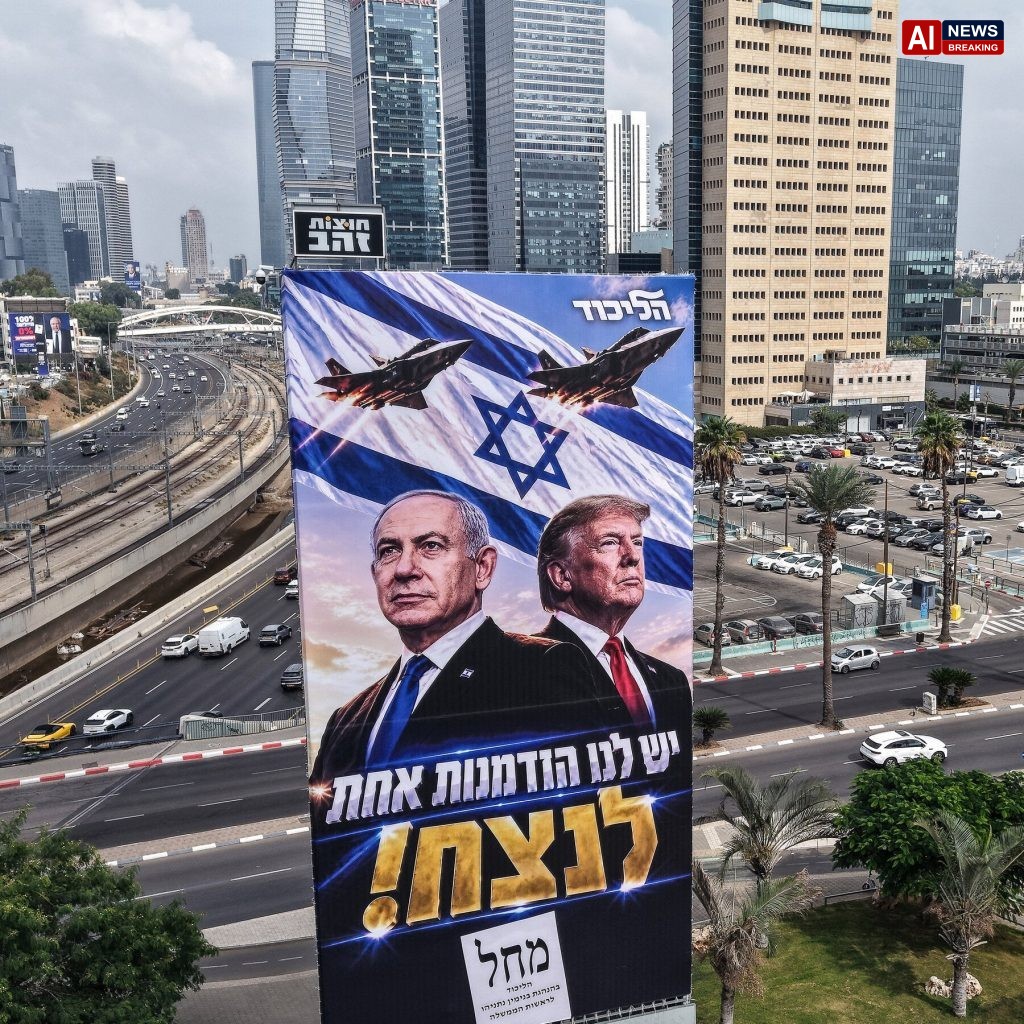
Iran says elections will not change its - AI News Breaking
iran signals shift strategy:
Iran’s strategic calculus has hardened in recent months, as Tehran prepares for a future in which regional rivalries persist regardless of the political outcomes in Washington or Jerusalem. The country’s senior officials, from the Supreme Leader’s office to the Revolutionary Guard’s senior command, have repeatedly warned that Iran will not alter its core policies in response to any shift in the United States’ domestic politics or to the internal dynamics of the Israeli government. This stance, articulated in a series of speeches, interviews and diplomatic communiqués, underscores a belief that Iran’s security and ideological imperatives are largely insulated from external electoral cycles.The backdrop to this confidence is a volatile regional environment..
In the past year, the Gaza conflict has reignited hostilities between Israel and Hamas, drawing renewed international attention to the Israeli‑Palestinian dispute. Simultaneously, the United States has grappled with a divided Congress and an increasingly polarized electorate, while Israel’s own political scene teeters on the brink of another election that could determine whether Benjamin Netanyahu remains prime minister. Tehran’s leadership, however, has signalled that such developments will not translate into a fundamental reassessment of its regional posture.A senior official in the Office of the Supreme Leader, speaking on condition of anonymity, told a Tehran news agency that “the Iranian Republic’s strategic interests are defined by the protection of its sovereignty, the support of the oppressed, and the resistance to external aggression.” He added that these principles are “not subject to the whims of foreign elections.” The message echoed earlier remarks by the commander‑in‑chief of the Islamic Revolutionary Guard Corps (IRGC), who in a televised address warned that “any attempt by the United States to use electoral outcomes as a lever to change Iranian policy will be futile.” Such statements aim to convey a continuity that is meant to reassure domestic constituencies and deter adversaries.Analysts in Washington and Jerusalem have taken note of the rhetoric..
think‑tank specialising in Middle Eastern affairs observed that “Iran’s narrative is designed to project stability and resolve at a time when its own domestic economy is under strain, and when its regional allies are facing their own political uncertainties.” The fellow pointed out that the Iranian economy, still reeling from sanctions re‑imposed after the 2018 U.S. withdrawal from the nuclear deal, is heavily dependent on oil exports and illicit financial networks. By emphasizing a steadfast foreign policy, Tehran hopes to maintain internal legitimacy even as it confronts growing public discontent over inflation and unemployment.In Israel, the political scene is equally turbulent..
Benjamin Netanyahu, leading a coalition government that relies on a mixture of religious parties and right‑wing nationalists, has repeatedly framed Iran as the existential threat that justifies his hard‑line security policies. In a recent rally, he warned that “Iran will continue to pursue its nuclear ambitions and support terror networks, regardless of who sits in the White House or the Knesset.” The prime minister’s remarks are aimed at bolstering his own political standing ahead of the scheduled elections in 2024, where opposition parties promise a more diplomatic approach to Tehran. Yet the electorate’s fatigue with repeated elections and security crises may well sustain Netanyahu’s narrative of a hostile Iran.The United States, meanwhile, is preparing for a midterm election that could reshape the composition of Congress..
While the presidential administration remains committed to a policy of “maximum pressure” on Tehran, lawmakers from both parties have expressed divergent views on the best approach. Some members of the House Foreign Affairs Committee have advocated for a return to diplomatic engagement, citing the stalled nuclear talks as a missed opportunity. Others, particularly in the Senate, have called for an expansion of sanctions targeting Iran’s missile program and its support for proxy groups in Lebanon, Syria and Iraq..
Despite these debates, the prevailing consensus among senior U.S. officials is that the core objectives of curbing Iran’s nuclear capabilities and limiting its regional influence will persist, regardless of which party controls the Senate.The ongoing negotiations over the 2015 nuclear agreement, formally known as the Joint Comprehensive Plan of Action, remain in limbo. Diplomatic channels, though intermittently active, have yet to produce a breakthrough that could lift sanctions in exchange for verifiable restrictions on Iran’s uranium enrichment..
Tehran’s delegation, led by its chief nuclear negotiator, has repeatedly asserted that the nation will not abandon its right to enrich uranium for peaceful purposes, a stance that the United States and Israel interpret as a cover for weapons development. The stalemate has reinforced the belief in Tehran that its security doctrine must remain robust, as external diplomatic avenues appear unreliable.Regional allies of Iran, most notably the Syrian government and Lebanese Hezbollah, have also reinforced Tehran’s resolve. In Damascus, Syrian officials have praised Iran’s “unwavering support” during the country’s civil war and have signalled that any shift in Iranian policy would jeopardise the fragile balance that has allowed Assad’s regime to survive..
Likewise, Hezbollah’s leadership in Beirut has warned that any attempt by the United States or Israel to force Iran into concessions would be met with “all‑out resistance.” These statements serve a dual purpose: they reassure Tehran’s allies of continued backing, and they convey to external powers that Iran’s regional network remains intact and operational.Public sentiment inside Iran reflects a mixture of nationalist pride and growing frustration. Opinion polls conducted by a domestic research institute indicate that a majority of Iranians view the United States as a primary adversary, yet a sizable proportion express concern over the country’s economic hardships. Younger Iranians, many of whom are university‑educated and active on social media, have voiced criticism of the regime’s foreign policy priorities, arguing that resources would be better allocated to domestic development..
Nevertheless, the state‑controlled media’s emphasis on external threats and the glorification of resistance narratives continue to shape public perception, reinforcing the government’s message that Iran must remain vigilant irrespective of external political changes.The international community’s response to Iran’s steadfast posture has been cautiously pragmatic. European Union members, while maintaining sanctions, have periodically offered to act as mediators in a revival of the nuclear talks, hoping to prevent further destabilisation of the region. Russia and China, both of which have strategic interests in Iran’s energy sector and its role as a counterbalance to U.S..
influence, have reiterated their willingness to support Tehran against what they describe as “unilateral pressure.” These diplomatic overtures, however, have yet to translate into concrete policy shifts that could alter Iran’s long‑term strategic direction.In sum, Tehran’s leadership appears convinced that its fundamental security objectives are non‑negotiable and insulated from the vicissitudes of foreign elections. Whether it is the prospect of a new U.S..
Updated: October 31, 2026
Iran’s senior leadership insists its security and ideological goals will stay unchanged regardless of U.S. elections or Israeli political shifts, using the stance to bolster domestic legitimacy and reassure regional allies. Meanwhile, Washington, Jerusalem and European powers debate policy options, but Tehran remains resolute, keeping its nuclear and regional ambitions intact.
Iran’s hard‑line posture reveals a calculated gamble: by anchoring its foreign policy to immutable ideological pillars, Tehran seeks to mask domestic economic strain and preserve regime legitimacy, even as regional rivals and U.S. policymakers shuffle.
Consequently, any diplomatic breakthrough will likely require pressure points that cut through Tehran’s “