 Tamil Nadu CM orders Chennai flood‑prevention review.
  India and Bangladesh work
  Shikhar Mohan in India A squad for last two four-dayers against New Zealand A
  Belagavi police arrest two MES leaders.
  Arms Race Intensifies in Korea as the North Is Emboldened by Russia Alliance
 Iran warns Gulf states oil exports will halt if they join US-led ‘economic war’
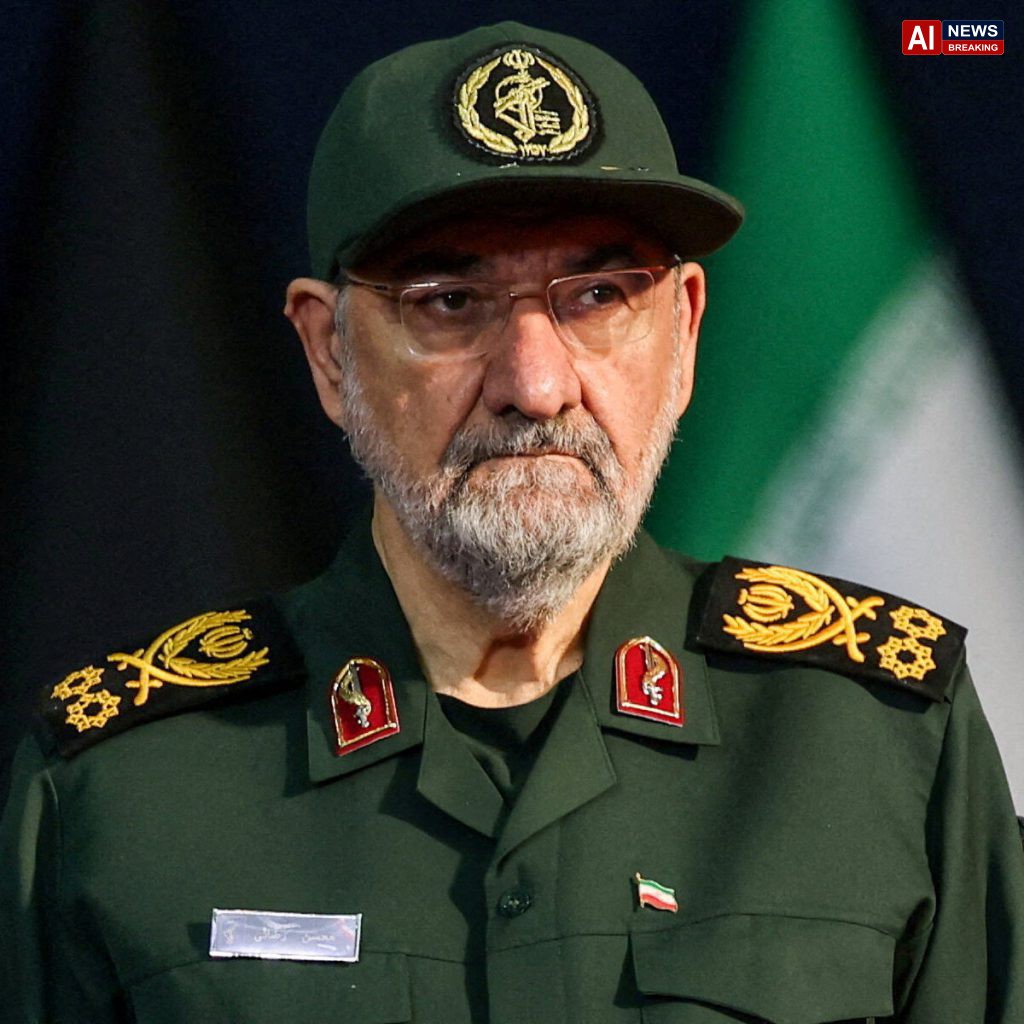
Iran warns Gulf states oil exports will halt if they join US-led 'economic war' - AI News Breaking
The geopolitical landscape of the Middle East has been thrust into a state of heightened tension following a stark warning issued by Iran’s newly appointed National Security Adviser, Mohsen Rezaei. In a message that resonates with the severity of potential conflict, Rezaei pledged to ensure that not a single drop of oil would leave the region if Gulf states were to align themselves with what Iran perceives as an economic war orchestrated by former United States President Donald Trump. This declaration marks a significant escalation in rhetoric from Tehran, signaling a readiness to employ severe economic and potentially military measures to safeguard its strategic interests and those of its allies against perceived external aggression.Rezaei, a veteran commander of the Islamic Revolutionary Guard Corps, brings a history of hard-line policy and military pragmatism to his new role..
His appointment reflects Iran’s broader strategic shift towards a more confrontational stance under the current administration, one that prioritizes sovereignty and regional dominance over diplomatic compromise. The specific mention of Trump, who is actively campaigning for a return to the White House, suggests that Iran is preparing for a scenario where the United States might reimpose stringent sanctions and coordinate a broader coalition against Tehran. This preemptive warning serves both as a deterrent to regional neighbors and as a domestic signal of resolve to Iran’s populous and conservative base.The core of Rezaei’s warning lies in the potential closure of critical maritime chokepoints that facilitate the majority of global oil shipments..
The Strait of Hormuz, situated between the Persian Gulf and the Gulf of Oman, remains the focal point of this anxiety. Approximately twenty percent of the world’s total energy supply passes through this narrow waterway daily. By threatening to halt oil exports entirely, Iran is not merely threatening its own revenue streams, which are heavily dependent on hydrocarbon sales, but is also leveraging the vulnerability of the global economy..
The implication is clear: any attempt to isolate Iran economically through a US-led coalition will result in a energy crisis that transcends regional boundaries, affecting consumers and industries worldwide.For the Gulf Cooperation Council (GCC) states, this ultimatum presents a profound diplomatic and economic dilemma. Nations such as Saudi Arabia, the United Arab Emirates, and Oman have historically maintained complex relationships with both Washington and Tehran. While they share security concerns with the United States regarding Iran’s nuclear ambitions and ballistic missile programs, they are also acutely aware of the economic devastation that would follow a disruption in oil supplies..
Many of these nations have recently pursued efforts to normalize relations with Iran, seeking to stabilize the region and diversify their economic partnerships. Rezaei’s warning threatens to undo these delicate diplomatic advances, forcing Gulf leaders to recalibrate their foreign policy positions in the face of potential coercion.The timing of this statement coincides with increased geopolitical maneuvering in the region, as global powers vie for influence in the post-Afghanistan and post-Syria order. Iran has sought to expand its sway through proxy networks in Lebanon, Yemen, Iraq, and Syria, creating a crescent of influence that extends from the Mediterranean to the Persian Gulf..
The United States, under the Trump administration, previously adopted a maximum pressure campaign aimed at crippling Iran’s economy. Should Trump return to power, it is widely anticipated that this strategy would be intensified, potentially involving closer military integration with regional allies. Rezaei’s comments suggest that Iran views such a move as an existential threat to its national security and its ability to project power abroad.Analysts note that the threat to block oil shipments is not without precedent..
During periods of high tension, particularly in 2019 and 2020, Iran demonstrated its capability to disrupt shipping lanes through attacks on commercial vessels and infrastructure. However, fully closing the Strait of Hormuz would constitute an act of war with catastrophic global consequences. Most military experts agree that such an action would likely trigger an immediate and overwhelming response from the United States and its allies..
Therefore, the statement may be interpreted as a form of strategic ambiguity, designed to raise the cost of any potential economic coercion without necessarily committing to an all-out military confrontation.The domestic political context in Iran also plays a crucial role in understanding the intensity of this rhetoric. Facing significant internal challenges, including economic inflation, scarcity of basic goods, and widespread social discontent, the Iranian leadership often resorts to external nationalism to consolidate internal support. By positioning itself as the defender of regional sovereignty against Western imperialism, the government aims to unify its populace and divert attention from domestic failures..
Rezaei’s hard-line stance is thus both a foreign policy instrument and a domestic political tool, reinforcing the narrative that Iran stands alone against a hostile international community.International markets have reacted with a mix of concern and skepticism to Rezaei’s statements. Oil prices, which are inherently volatile, experienced minor fluctuations as traders assessed the credibility of the threat. Major consuming nations, including China, India, and Japan, which rely heavily on Middle Eastern oil, have issued calls for calm and dialogue..
These nations have a vested interest in maintaining the free flow of commerce and are likely to oppose any actions that disrupt supply chains. Their diplomatic engagement with Iran aims to de-escalate tensions and ensure that economic disputes do not spill over into kinetic conflict.The role of the United States in this dynamic remains pivotal. While Trump has yet to assume office, his administration’s previous actions have left a lasting impact on regional security architectures..
The withdrawal from the Joint Comprehensive Plan of Action (JCPOA), commonly known as the Iran nuclear deal, destabilized the diplomatic process that had previously constrained Iran’s nuclear program. Current discussions among US policymakers and global leaders focus on how to address Iran’s nuclear advancements without triggering a broader regional war. The warning from Rezaei complicates these efforts, as it raises the stakes of any future negotiations and limits the diplomatic space available for compromise.Regional security mechanisms have also come under scrutiny in the wake of these developments..
The GCC has historically struggled to present a unified front on security matters, often balancing between reliance on US security guarantees and the desire for regional autonomy. The threat of an economic war led by the United States forces these nations to reconsider their strategic alliances. Some argue that the Gulf states must develop stronger regional defense mechanisms to counter Iranian coercion, while others advocate for renewed diplomatic engagement to mitigate the risk of escalation..
The outcome of this balancing act will significantly influence the future stability of the Middle East.Humanitarian and economic implications of a potential blockade extend far beyond the immediate geopolitical theater. A prolonged disruption in oil supplies would lead to soaring energy costs globally, exacerbating inflationary pressures in major economies already struggling with post-pandemic recovery and other global crises. Supply chain disruptions would affect industries ranging from transportation to manufacturing, causing ripple effects that could stall economic growth worldwide..
Furthermore, the instability in the region could lead to increased migration flows, security threats from extremist groups, and a diversion of resources from development to defense.As the situation evolves.
Updated: August 23, 2026
Insight: Rezaei’s threat weaponizes global energy dependency, forcing Gulf allies into a loyalty test that prioritizes survival over stability.
By staking Tehran’s security on the Strait of Hormuz, Iran turns regional diplomacy into a high-stakes hostage situation where peace pays the highest price.