 Tao Tokyo Spring 2027
 Karnataka SIR: Teaching on the back burner
 Trump administration offers mixed messages on limits to Ukraine’s Starshield access
 US Treasury proposes a rule to crack down on high-tech investments in China, other adversaries
 Calley Means, a key MAHA advocate, resigns as a top RFK Jr. adviser
Jaishankar highlights shared aspirations, self-reliance in India-Africa partnership
**
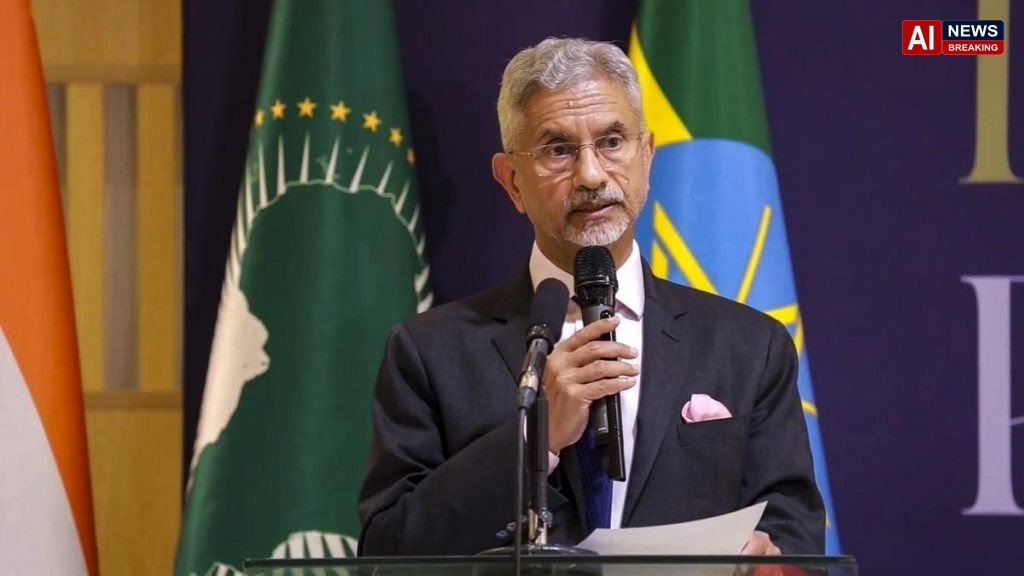
Jaishankar highlights shared aspirations, self-reliance in India-Africa partnership - AI News Breaking
India’s foreign minister, Dr S. Jaishankar, concluded a three‑nation tour of Africa on Monday with a visit to Ethiopia, arriving in Addis Ababa after stops in Côte d’Ivoire and Ghana. The trip, the first by an Indian cabinet minister to the Horn of Africa in more than a decade, was framed as a “strategic outreach” to deepen ties with a continent that India sees as a partner in its quest for greater self‑reliance and a multipolar world order. In a series of meetings with Ethiopian officials, Jaijeshankar reiterated that the shared aspirations of the two nations—ranging from economic development to climate resilience—form the bedrock of a partnership that is increasingly anchored in mutual benefit rather than traditional aid models.In a formal welcome ceremony, Ethiopian Prime Minister Abiy Ahmed highlighted the historic bonds between the two countries, tracing them back to the anti‑colonial solidarity of the 1960s..
“Our peoples have stood together in the struggle for freedom and dignity,” Abiy said, before turning to the future. He underscored Ethiopia’s ambition to become a regional hub for manufacturing and technology, citing recent reforms aimed at improving the business climate, expanding renewable energy capacity and strengthening logistics corridors linking the Red Sea to the interior. Those goals, he argued, align closely with India’s “Make in India” and “Atmanirbhar Bharat” (self‑reliant India) initiatives, which seek to diversify supply chains and reduce dependence on any single market.Jaishankar’s remarks echoed that sentiment..
He stressed that India’s engagement with Africa is no longer limited to occasional diplomatic gestures, but is evolving into a comprehensive partnership that spans trade, investment, capacity building and people‑to‑people exchanges. “We share a vision of inclusive growth, sustainable development and a rules‑based international system that respects the sovereignty of all nations,” he told a gathering of Ethiopian business leaders and civil‑society representatives. The minister highlighted several ongoing projects, including a joint venture in agro‑processing that links Indian fertilizer technology with Ethiopian grain producers, and a memorandum of understanding on digital connectivity that will see Indian firms assist in expanding Ethiopia’s broadband footprint.Trade figures presented during the talks underscore the growing economic interdependence..
In the 2023‑24 fiscal year, bilateral trade between India and Ethiopia crossed the US$1.3 billion mark, with India exporting pharmaceuticals, engineering goods and textiles, while importing coffee, pulses and leather. Both sides expressed a desire to double that volume within the next five years, a target that will require addressing non‑tariff barriers, streamlining customs procedures and improving logistics infrastructure. Jaishankar announced the establishment of an India‑Ethiopia Business Council, chaired jointly by senior officials from the ministries of commerce in both countries, to act as a platform for regular dialogue and problem‑solving.Beyond commerce, the minister placed a strong emphasis on self‑reliance as a shared strategic imperative..
He pointed to India’s experience in building indigenous capacities in sectors such as defense, space and renewable energy, and offered Ethiopia access to technology transfer arrangements that could accelerate its own industrialisation agenda. A notable example discussed was the prospective collaboration on solar‑powered irrigation systems, leveraging Indian expertise in low‑cost photovoltaic solutions to boost agricultural productivity in Ethiopia’s arid regions. Such projects, Jaishankar argued, not only enhance food security but also create jobs and reduce vulnerability to climate‑induced shocks.The climate agenda featured prominently in the bilateral dialogue..
Both countries, members of the G77 and the International Solar Alliance, have pledged to increase the share of renewable energy in their national mixes. Ethiopia, which already generates over 90 percent of its electricity from hydropower, is exploring diversification into wind and solar to mitigate the risks of drought and fluctuating water levels. India, on its part, is eager to export its solar manufacturing capacity and share its experience in large‑scale solar parks..
During the visit, Jaishankar and Abiy signed a joint declaration to cooperate on climate research, capacity building for climate‑smart agriculture and the establishment of a joint task force to monitor progress on the Paris Agreement commitments.Cultural and educational links also received attention. The minister announced the expansion of the Indian Technical and Economic Cooperation (ITEC) programme for Ethiopian students, increasing the annual scholarship quota by 30 percent. Additionally, a new language centre dedicated to teaching Hindi in Addis Ababa will be inaugurated later this year, reflecting a broader strategy to deepen people‑to‑people ties..
“Understanding each other’s cultures is the foundation of any lasting partnership,” Jaishankar remarked, noting that the Indian diaspora in Ethiopia, though modest in size, has been active in trade and education for several decades.Security cooperation, while not the headline of the visit, featured in closed‑door sessions between defense officials. Both nations share concerns over maritime piracy in the Gulf of Aden, the proliferation of illicit arms and the threat of radicalisation in fringe areas. Jaishankar proposed regular naval exchanges and joint training exercises to enhance maritime domain awareness, a suggestion welcomed by Ethiopia’s defence minister, who highlighted the country’s recent investment in a modern navy stationed at the strategic port of Djibouti.The visit concluded with a press conference that underscored the broader geopolitical context of the partnership..
Jaishankar warned against the perils of a fragmented world order, urging African nations to assert their agency in shaping global norms. “India stands with Africa in championing a multipolar world where no single power can dictate the rules,” he said, alluding to the shifting dynamics involving the United States, China and the European Union. The minister’s statements were met with cautious optimism from Ethiopian journalists, who noted the potential for concrete outcomes but also reminded readers that implementation often lags behind rhetoric.As Jaishankar prepares to depart Ethiopia for the next leg of his diplomatic itinerary, the tone of his engagements suggests a deliberate pivot towards deeper, more resilient partnerships rooted in shared aspirations of self‑reliance..
Whether the promises articulated in Addis Ababa translate into measurable gains for both economies will depend on sustained political will, effective coordination and the ability to navigate the complex web of global trade and security challenges that define the 21st‑century international landscape..
Updated: October 10, 2026
Summary: India’s foreign minister wraps up a three‑nation African tour in Ethiopia, pledging expanded trade, tech‑transfer and climate cooperation to double bilateral commerce and bolster Ethiopia’s push for manufacturing and renewable energy. The visit underscores a shift toward a deeper, mutually‑beneficial partnership rooted in self‑reliance and a shared vision for a multipolar world.
India’s Ethiopia push signals a calculated bid to weave a “self‑reliant” supply chain across the Horn, giving New Delhi a foothold in a region where China’s infrastructure clout has long dominated.
If the promised tech transfers and business council survive bureaucratic friction, they could turn Addis