 Australia Investigates OpenAI Hack on Public Health Care Site
  Tech leaders to UN: For the sake of humanity, please control the AI technology we created
  Gulf nations have found ways to keep oil flowing
  France deploys patrol fleet to curb Channel migrant crossings
  From a Nepal in Pain, a Young Leader Makes a Case for Climate Reparations
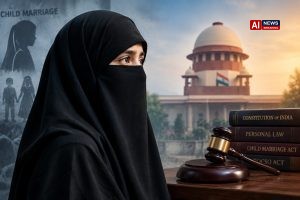
 Jammu and Kashmir Statehood Demand: Why the 7-Year Wait After Article 370 Abrogation Continues
The demand for statehood in Jammu and Kashmir has acquired renewed significance, representing political representation, greater accountability, and institutional autonomy, as the region continues to grapple with the consequences of the abrogation of Article 370 seven years ago.
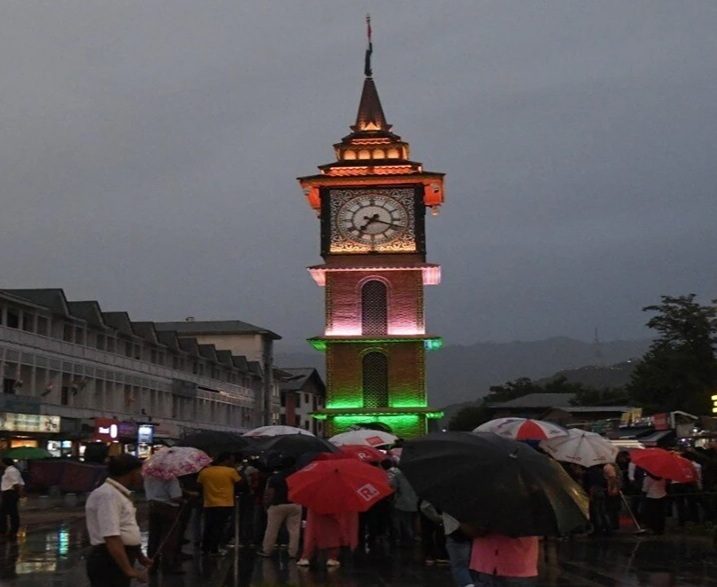
jammu kashmir statehood demand:
Jammu and Kashmir’s journey since the dramatic constitutional changes of August 2019 remains one of the most consequential political developments in contemporary India. Seven years after the abrogation of Article 370, the region continues to grapple with a fundamental political question: when, and under what conditions, will Jammu and Kashmir regain full statehood?
The demand has acquired renewed significance because statehood is not simply an administrative question. For many people in the region, it represents political representation, greater accountability, institutional autonomy and a return to a governance structure in which elected representatives exercise broader powers over matters affecting everyday life.
The political landscape of Jammu and Kashmir changed fundamentally in August 2019 when the Union government removed the special constitutional provisions associated with Article 370 and reorganised the former state into two Union Territories — Jammu and Kashmir, with a legislature, and Ladakh, without one.
The move marked a major departure from the constitutional and political arrangement that had existed for decades. It also triggered intense political debate, security restrictions and uncertainty across the region. Supporters of the government’s decision described it as a historic step toward greater integration and development, while critics argued that the decision weakened the region’s political autonomy and should have been accompanied by a clear and time-bound roadmap for restoring statehood.
Seven years later, that question remains at the centre of Jammu and Kashmir’s political discourse.
From special status to Union Territory
To understand the current demand for statehood, it is necessary to examine the constitutional history of Jammu and Kashmir.
Following the end of British rule in 1947, Jammu and Kashmir acceded to India under circumstances shaped by conflict, partition and the first India-Pakistan war. The state’s constitutional relationship with India subsequently developed through a special arrangement that eventually found expression in Article 370 of the Indian Constitution.
Article 370 provided Jammu and Kashmir with a distinctive constitutional position and restricted the automatic application of many provisions of the Indian Constitution to the state. Over time, however, the scope of this special arrangement was progressively altered through constitutional orders and political developments.
For decades, Article 370 became an important part of the political identity of Jammu and Kashmir. Supporters viewed it as a constitutional guarantee reflecting the state’s historical circumstances and distinct political character. Opponents argued that the arrangement created unnecessary constitutional separation and contributed to unequal development and political instability.
That long-running disagreement reached a decisive point in August 2019.
The Union government announced measures that effectively ended Jammu and Kashmir’s special constitutional status and reorganised the state. The former state was divided into the Union Territories of Jammu and Kashmir and Ladakh.
The change transformed not only the constitutional framework but also the structure of governance.
Why statehood matters
The demand for statehood is fundamentally different from the earlier demand for restoration of Article 370.
Statehood does not necessarily mean a return to the pre-2019 constitutional arrangement. Rather, it concerns the status of Jammu and Kashmir within India’s federal structure.
A Union Territory generally has a different relationship with the Union government from that of a state. In Jammu and Kashmir’s case, the presence of a legislature adds another layer to the institutional structure, but important areas of administration remain subject to greater Union control than would normally be the case in a full-fledged state.
For political parties and civil society groups demanding restoration of statehood, this distinction is crucial.
They argue that elected representatives should have greater authority over governance and that democratic accountability is strengthened when decision-making is closer to the people.
The statehood debate therefore extends beyond constitutional terminology. It is about who exercises political power, how public institutions respond to citizens and how much authority elected representatives possess.
The political cost of prolonged uncertainty
The passage of seven years without restoration of statehood has also created a sense of political uncertainty.
The region has undergone significant institutional changes since 2019. Political parties have had to adapt to a new administrative framework, while voters have had to reconsider the meaning and scope of electoral politics under the Union Territory system.
For ordinary residents, the question is often less theoretical.
Governance affects employment, education, infrastructure, policing, land administration, investment, tourism and access to public services. When political authority is divided between elected institutions and the Union administration, questions naturally arise about responsibility and accountability.
Who should voters hold responsible for major policy decisions?
Which institution should have the final say?
How much authority should an elected government possess?
These questions have become central to the debate over statehood.
Elections changed the political conversation
The return of electoral politics has been an important development in Jammu and Kashmir’s post-2019 political landscape.
After years of political uncertainty and institutional transition, elections provided residents with an opportunity to express their views through the democratic process.
The participation of political parties and voters demonstrated that electoral politics remains an important instrument through which the people of the region seek to influence governance.
But elections also exposed a structural tension.
An elected government can provide political representation, yet the powers available to that government are not identical to those available to a state government.
This creates an unusual situation in which voters elect representatives while the broader constitutional structure remains that of a Union Territory.
For supporters of statehood, this is precisely why restoration has become an important demand.
They contend that democratic representation should ultimately be matched by adequate constitutional authority.
The identity question
The debate over Jammu and Kashmir’s future is also closely connected to questions of identity.
The region is not politically or culturally homogeneous. Jammu, the Kashmir Valley and the areas of the former state that were reorganised separately have distinct histories, social structures and political priorities.
Consequently, the demand for statehood cannot be understood through a single political lens.
Different communities have different expectations from the political system.
Some residents emphasise security, economic development and integration with the rest of India. Others place greater emphasis on political autonomy, local representation and protection of regional identity.
There are also differences between Jammu and the Kashmir Valley over political priorities and perceptions of governance.
A sustainable political framework therefore has to accommodate competing expectations rather than treating the region as a single political constituency.
Security remains a central consideration
No discussion of Jammu and Kashmir can ignore the security dimension.
The region has experienced decades of militancy, terrorism, cross-border tensions and political violence. Security concerns have consequently played a major role in decisions made by successive governments.
The Union government’s approach after 2019 has been closely associated with the argument that stronger administrative integration and enhanced security mechanisms are necessary to create conditions for long-term stability.
Supporters of the post-2019 framework point to changes in the security environment, investment initiatives, infrastructure projects and efforts to expand tourism and economic activity.
However, critics argue that security and democratic governance should not be presented as mutually exclusive choices.
They maintain that durable peace requires both security and political legitimacy.
The statehood debate therefore raises an important policy question: can security objectives and greater democratic autonomy be pursued simultaneously?
For many observers, the answer is yes.
Development versus political representation
One of the most persistent arguments surrounding Jammu and Kashmir is whether economic development should precede political restoration or whether the two should move forward together.
The Union government and its supporters have emphasised infrastructure, tourism, connectivity, investment and administrative reforms.
The argument is that improved economic conditions can contribute to stability and create new opportunities for the region’s younger population.
Critics, however, argue that development cannot substitute for political representation.
A new road, tourism project or infrastructure investment may improve material conditions, but it does not necessarily resolve questions concerning political power or constitutional status.
This distinction is important.
Economic development and statehood address different dimensions of governance. One concerns economic opportunity and public infrastructure; the other concerns political authority and institutional representation.
Treating one as a replacement for the other risks overlooking the complexity of the region’s aspirations.
The role of the Centre
At the heart of the statehood debate is the relationship between Jammu and Kashmir and the Union government.
The Centre has played a decisive role in the region’s post-2019 political transition. The reorganisation itself was undertaken through Parliament and constitutional measures initiated by the Union government.
The question now is how and when the next stage of that transition should occur.
Restoring statehood would represent a major institutional shift. It would transfer greater authority to elected state-level institutions and alter the balance between the Union administration and the local government.
The timing of such a decision is therefore politically sensitive.
The government has linked political restoration to broader considerations including security and stability. Opposition parties and regional political groups have repeatedly argued for a clear roadmap and a restoration of statehood at the earliest possible opportunity.
The disagreement is consequently not only about whether statehood should return but also about the conditions and timetable for doing so.
A question of democratic confidence
For many residents, the statehood debate is also about confidence in democratic institutions.
Political systems derive legitimacy not only from elections but also from the extent to which citizens believe elected institutions possess meaningful authority.
If citizens vote but perceive that major decisions remain concentrated elsewhere, political dissatisfaction can emerge even when elections are conducted successfully.
Restoring statehood could therefore have significance beyond administrative restructuring.
It could signal that the region has moved into a new political phase in which democratic institutions are considered sufficiently stable to exercise broader constitutional powers.
At the same time, any restoration would need to address the concerns of different regions and communities.
A return to statehood without adequate institutional safeguards could simply reproduce old political tensions in a new form.
Jammu’s perspective cannot be ignored
The political debate surrounding Jammu and Kashmir is often dominated by developments in the Kashmir Valley, but Jammu’s perspective is equally important.
Jammu has its own political history, demographic composition and development priorities. Political expectations in the region do not always align with those in the Valley.
Any future statehood arrangement will therefore have to address regional balance.
Questions surrounding representation, administrative distribution, employment, development funding and political power are likely to remain significant.
For statehood to become a genuinely stabilising force, residents across the region must have confidence that the political system will treat different communities fairly.
That requires more than restoring a constitutional label.
It requires institutional mechanisms that can accommodate regional diversity.
The youth factor
Young people are another critical element in the statehood debate.
Jammu and Kashmir has a large young population whose expectations increasingly centre on education, employment, entrepreneurship, digital connectivity and opportunities beyond traditional political divisions.
For this generation, the political debate is not necessarily confined to Article 370 or the constitutional history of the region.
Their concerns are often more immediate.
Can they find meaningful employment?
Can businesses attract investment?
Can tourism create stable livelihoods?
Can educational institutions provide competitive opportunities?
Can the political system offer stability without limiting democratic participation?
These questions will shape the region’s future as much as constitutional debates.
A successful political settlement will therefore need to connect institutional reform with tangible improvements in economic and social opportunities.
Statehood as a test of India’s federal model
The Jammu and Kashmir question also has implications beyond the region.
India’s constitutional system is built around a federal structure in which states exercise substantial authority while remaining part of the Union.
The transformation of a state into Union Territories generated an important national debate about the relationship between federalism and Parliament’s constitutional powers.
The eventual restoration of statehood, if and when it occurs, could therefore become an important precedent in India’s evolving federal framework.
It would raise broader questions about when a state can be reorganised, under what conditions statehood can be restored and how democratic institutions should function during periods of constitutional transition.
Jammu and Kashmir is consequently not only a regional political issue.
It is also a test of India’s ability to balance national integration with regional democratic representation.
The unresolved promise
The central frustration among advocates of statehood is the absence of a definitive timeline.
A prolonged transition can generate uncertainty even when the broader political environment becomes more stable.
For residents, businesses and political institutions, clarity can be as important as the final decision itself.
If restoration is intended, a transparent roadmap could provide political certainty.
If additional conditions must be met, those conditions could be clearly articulated.
The absence of a defined timetable, however, allows the issue to remain permanently unresolved.
That uncertainty can itself become a source of political tension.
What could a future statehood framework look like?
A future restoration of statehood would not necessarily mean simply recreating the pre-2019 political system.
The region has changed significantly since then.
A new framework could potentially combine statehood with stronger institutional safeguards, greater transparency, improved local governance and mechanisms for addressing regional disparities.
The challenge would be to create a system that is both democratically accountable and capable of addressing legitimate security concerns.
That would require cooperation among the Union government, elected representatives, political parties, civil society and citizens.
It would also require recognition that Jammu, the Kashmir Valley and other communities may have different priorities.
A successful political settlement cannot be imposed solely from above.
Nor can it emerge solely from political demands at the regional level.
It will require negotiation, institutional confidence and a willingness to accommodate competing interests.
The road ahead
Seven years after the events of August 2019, Jammu and Kashmir stands at an important political crossroads.
The region has moved through constitutional reorganisation, administrative transition and the restoration of electoral politics. Yet the question of full statehood remains unresolved.
For supporters, statehood represents democratic dignity, political accountability and greater local control.
For the Union government and its supporters, the priority remains maintaining security, stability and the developmental gains achieved since 2019.
These objectives do not necessarily have to conflict.
The long-term challenge is to establish a political framework in which security and democratic representation reinforce rather than undermine each other.
Jammu and Kashmir’s future will ultimately depend on whether the political system can convert constitutional change into durable public confidence.
Restoring statehood alone will not solve every problem. Nor will continued Union Territory status automatically resolve questions of identity, representation or development.
But a clear political roadmap could help address one of the region’s most persistent uncertainties.
The demand for statehood has survived because it speaks to a broader question: how should a region with a complicated history, deep political divisions and legitimate security concerns be governed in a democratic federation?
That question has no simple answer.
But seven years after the constitutional transformation of Jammu and Kashmir, it remains one of India’s most important unresolved political debates.
The Jammu and Kashmir statehood debate is ultimately about finding a sustainable balance between security, federalism, democratic representation and regional aspirations. The post-2019 period has demonstrated that constitutional restructuring can fundamentally alter governance, but institutional change alone cannot eliminate political expectations. The next phase will therefore require a framework that gives elected institutions meaningful authority while preserving India’s national-security interests. From an AI perspective, the most important indicator to watch is not merely whether statehood is restored, but whether the eventual political arrangement improves institutional accountability, regional representation, economic opportunity and public trust simultaneously. A durable settlement will depend less on the symbolism of statehood and more on whether citizens across Jammu and Kashmir believe that the institutions governing them are legitimate, responsive and capable of representing their interests.