Europe warns of Russia’s hybrid attacks but struggles to counter them
  Former chief election commissioner calls SIR scheme illegal.
  A Corruption Scandal Is Reshaping Brazil’s Presidential Election
  US citizen injured in Illinois after ICE agents mistook him for fugitive, tried to arrest him
  At 10 years old, Smithsonian’s Black museum is undaunted amid pressure from Trump administration
 J and K Statehood Restoration: Omar Abdullah Says Talks With Amit Shah Won’t Deliver Instant Solution
statehood restoration omar abdullah:
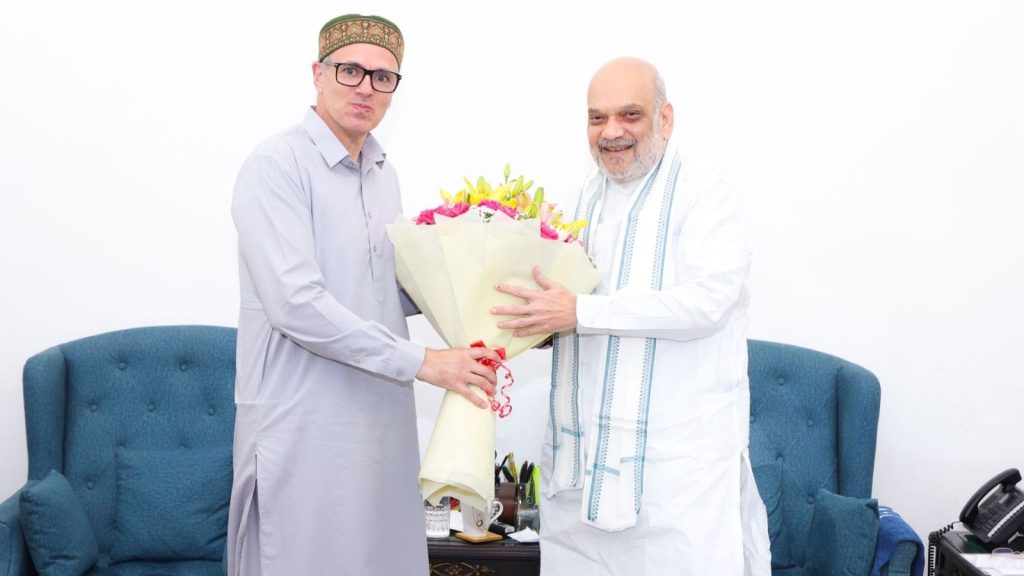
Jammu and Kashmir Chief Minister Omar Abdullah on Monday said the restoration of full statehood to the Union Territory cannot be expected from a single meeting, following his discussion with Union Home Minister Amit Shah in New Delhi. The meeting comes amid growing political pressure in J&K over the Centre’s repeated assurances regarding statehood restoration after the Assembly elections.
Abdullah indicated that discussions with the Centre are ongoing and stressed that the issue requires sustained political engagement rather than immediate announcements.
Omar Abdullah Meets Amit Shah Amid Renewed Push for Statehood
Jammu and Kashmir Chief Minister Omar Abdullah met Union Home Minister Amit Shah in New Delhi on Monday in what is being viewed as a politically significant interaction amid continuing demands for the restoration of full statehood to Jammu and Kashmir.
After the meeting, Omar Abdullah acknowledged that while the issue of statehood was discussed, people should not expect a final resolution from a single round of talks. His remarks reflected both cautious optimism and political realism as the National Conference-led government attempts to navigate relations with the Centre.
Speaking to reporters after the meeting, Abdullah stated that “statehood is not possible in one meeting,” emphasizing that the process would likely require multiple consultations and political consensus-building between Srinagar and New Delhi.
The meeting comes at a crucial time for Jammu and Kashmir, where political parties, civil society groups, and sections of the public have increasingly demanded clarity from the Union government on the timeline for restoring statehood.
Background: From State to Union Territory
The question of Jammu and Kashmir’s statehood remains one of the most sensitive political issues in India since August 5, 2019, when the Narendra Modi-led government revoked Article 370 and Article 35A of the Constitution.
The Centre simultaneously bifurcated the erstwhile state into two Union Territories:
- Jammu and Kashmir (with legislature)
- Ladakh (without legislature)
The move fundamentally altered the constitutional and political structure of the region. While the Centre argued that the decision would improve governance, integration, and development, opposition parties and regional groups criticized it as a dilution of democratic rights and federal principles.
Since then, the restoration of statehood has become a central political demand in Jammu and Kashmir.
The Union government, including Prime Minister Narendra Modi and Home Minister Amit Shah, has repeatedly stated in Parliament and public forums that statehood would be restored “at an appropriate time.” However, no definitive timeline has yet been announced.
Omar Abdullah’s Political Balancing Act
Omar Abdullah, who returned to power after the Assembly elections, has consistently maintained that the restoration of statehood is essential for democratic functioning and administrative autonomy in Jammu and Kashmir.
At the same time, Abdullah has attempted to maintain a working relationship with the Centre, avoiding direct confrontation while continuing to press for constitutional and political guarantees.
His comments after the Shah meeting reflected this calibrated approach.
Rather than framing the talks as a breakthrough or a failure, Abdullah described them as part of a continuing dialogue process. Political observers believe this signals the National Conference government’s strategy of engaging the Centre institutionally while keeping public pressure alive.
Analysts note that Abdullah faces a dual challenge:
- Meeting public expectations for quicker political restoration.
- Maintaining cooperative ties with New Delhi to secure administrative and financial support for the Union Territory.
Why Statehood Matters Politically
The demand for restoring statehood is not merely symbolic. It has deep administrative, constitutional, and political implications.
Administrative Control
As a Union Territory, Jammu and Kashmir’s powers remain significantly curtailed compared to a full-fledged state. Critical areas of governance, especially law and order, remain under the control of the Lieutenant Governor and the Union Home Ministry.
Regional parties argue that elected representatives cannot effectively govern without full executive authority.
Democratic Legitimacy
Political leaders in J&K contend that restoration of statehood is necessary to rebuild democratic trust after years of central rule.
Many local parties believe elected governments require constitutional authority to address public grievances effectively.
Regional Identity
For many residents, statehood has become tied to questions of political dignity and identity following the abrogation of Article 370.
Even parties that differ ideologically on Article 370 now broadly support the restoration of statehood.
Amit Shah’s Position on Jammu and Kashmir
Union Home Minister Amit Shah has consistently defended the Centre’s 2019 decision, arguing that it brought stability, investment, and reduced militancy in the region.
The BJP maintains that:
- Terror incidents have declined.
- Infrastructure projects have accelerated.
- Tourism has reached record levels.
- Grassroots democracy through Panchayat and local body elections has strengthened governance.
However, the BJP has also reiterated that statehood restoration remains part of the government’s long-term commitment.
In Parliament, Shah previously stated that Jammu and Kashmir would regain statehood “at the right time,” though he stopped short of specifying a deadline.
The Centre’s cautious approach appears linked to security assessments and broader political calculations in the region.
Opposition Parties Intensify Pressure
Opposition parties in Jammu and Kashmir have increased pressure on the Centre over delays in restoring statehood.
The Peoples Democratic Party (PDP), Congress, and several regional organizations have accused the BJP-led government of prolonging uncertainty.
PDP leaders have argued that democracy remains incomplete without full statehood and constitutional protections.
Congress leaders have similarly demanded that the Centre honor its assurances made before the Supreme Court and Parliament.
Even some civil society groups have questioned why elections were conducted if elected representatives continue to operate under restricted administrative powers.
Supreme Court Context
The issue of Jammu and Kashmir’s constitutional restructuring also reached the Supreme Court, which upheld the abrogation of Article 370 in its landmark verdict while simultaneously emphasizing the importance of restoring democratic processes.
The Court noted the Union government’s assurance regarding statehood restoration and urged timely elections and democratic normalization.
That judicial context continues to shape political expectations around the issue.
Public Expectations Rising in J&K
Among ordinary residents, expectations for statehood restoration remain high.
Many citizens believe that:
- Local governance remains weakened under Union Territory status.
- Bureaucratic centralization has increased.
- Political accountability is diluted.
- Employment and developmental decisions need stronger local control.
At the same time, sections of the population prioritize stability and economic recovery over constitutional debates.
This creates a complex political landscape where regional parties must balance emotional issues with governance delivery.
What Happens Next?
While no concrete announcement emerged from the Omar Abdullah–Amit Shah meeting, the interaction signals that discussions between the Centre and the J&K government remain active.
Possible next steps could include:
- Additional rounds of consultations.
- Parliamentary discussions on statehood.
- Administrative reforms before restoration.
- Greater devolution of powers in phases.
Political analysts believe the Centre may wait for further stabilization and electoral consolidation before taking a final decision.
The timing of any announcement may also carry broader national political implications, especially as regional politics in Jammu and Kashmir continues to evolve.
National Political Implications
The statehood issue has implications beyond Jammu and Kashmir itself.
For the BJP, restoring statehood without reversing the 2019 constitutional changes could help reinforce its narrative that integration and normalization have succeeded.
For opposition parties, the delay provides a continuing point of attack against the Centre on federalism and democratic rights.
The issue is also being watched internationally, particularly by observers focused on democratic governance and constitutional processes in conflict-sensitive regions.
AI Insight
The Omar Abdullah–Amit Shah meeting highlights the gradual and carefully managed nature of New Delhi’s approach toward Jammu and Kashmir’s political future. While the Centre continues to emphasize security, governance, and stability, regional leadership is increasingly under pressure to deliver visible constitutional progress. Omar Abdullah’s acknowledgment that statehood cannot emerge from a single meeting reflects political realism, but it also underscores growing impatience among voters. The future trajectory of Jammu and Kashmir will likely depend on how effectively the Centre balances security concerns with democratic restoration. Statehood has evolved from a procedural issue into a larger test of federal trust, political legitimacy, and the long-term integration strategy pursued after the abrogation of Article 370.