Trump administration offers mixed messages on limits to Ukraine’s Starshield access
 US Treasury proposes a rule to crack down on high-tech investments in China, other adversaries
 Calley Means, a key MAHA advocate, resigns as a top RFK Jr. adviser
 Spotify Tightens Family Plan Controls with QR Code Verification
 Use of Chief Minister C. Joseph Vijay’s deep fake videos to collect money: Rajasthan youth moves Madras High Court seeking bail
Judge sentences basketball fixer to six years in prison.
**
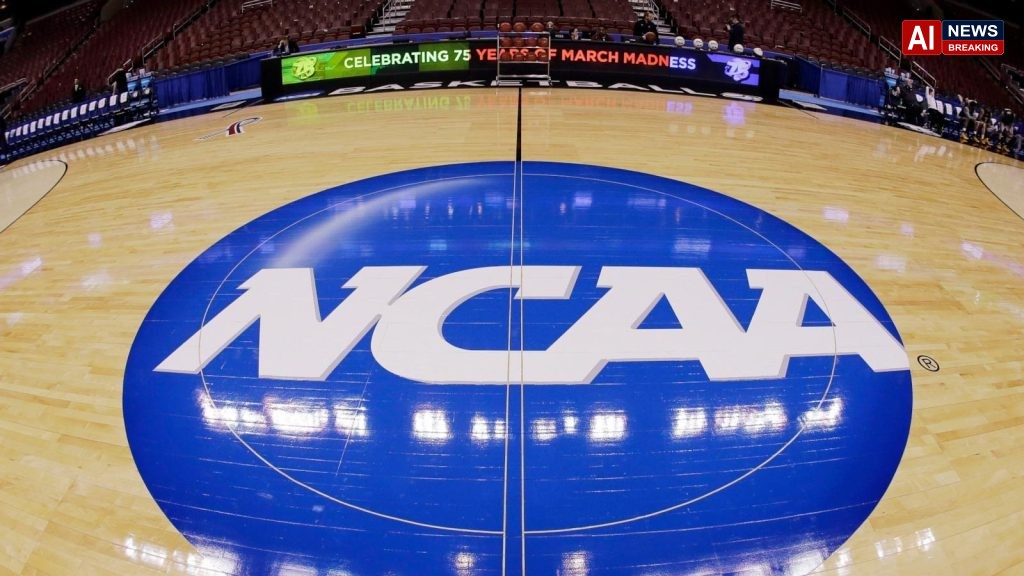
Fixer in lucrative NCAA basketball betting scheme sentenced to 6 years in prison - AI News Breaking
A federal judge in Pennsylvania sentenced Michael “Mickey” Bianchi, 38, to six years’ imprisonment on Thursday for his role in a multi‑state scheme that manipulated the outcomes of NCAA men’s basketball games for profit. The conviction follows a two‑year investigation by the United States Attorney’s Office for the Eastern District of Pennsylvania, which uncovered a sophisticated network that exploited loopholes in college sports betting markets and leveraged insider information to place wagers on predetermined results. Bianchi, described by prosecutors as the “fixer” at the heart of the operation, orchestrated the coordination between players, coaches and betting syndicates, ensuring that the games he targeted produced the exact scores needed to trigger high‑paying parlays.The indictment, unsealed in March 2024, alleged that Bianchi recruited at least six Division I athletes from schools in the Northeast and Midwest, offering them cash payments ranging from $5,000 to $15,000 per game in exchange for influencing play on the court..
In several instances, the athletes were instructed to miss shots, commit turnovers or deliberately foul opponents during critical moments, actions that were designed to alter point spreads without drawing immediate suspicion. Court documents reveal that Bianchi communicated with the players via encrypted messaging apps, often using coded language to mask the illicit nature of the instructions.Financial investigators traced more than $3.2 million in betting activity linked to the scheme, much of it placed through offshore accounts and online sportsbooks that operate with limited regulatory oversight. The money was funneled through a network of “middlemen” who placed the actual wagers, while Bianchi received a cut of the winnings in the form of cryptocurrency and wire transfers to offshore entities..
The prosecution presented evidence that Bianchi’s operation generated an estimated $1.1 million in net profit over a 12‑month period, a figure that underscores the lucrative appeal of manipulating college sports, where the absence of direct player compensation creates vulnerabilities.During the trial, former teammates of the accused athletes testified that they had observed unusual behavior on the court, including players repeatedly taking questionable shots or appearing to “hold back” during key possessions. One witness, a former guard at a mid‑Atlantic university, recounted how a teammate was instructed to “take the easy three” in the final seconds of a game that ultimately decided a conference tournament seeding. Although the guard was not aware of the broader conspiracy, his testimony helped establish a pattern of deliberate on‑court actions that aligned with the betting outcomes.The defense argued that Bianchi’s actions did not constitute a “rigging” of games but rather a form of “player assistance” that fell short of criminal conduct, citing the lack of a formal agreement between the players and betting entities..
However, the jury rejected this narrative after a three‑day deliberation, finding Bianchi guilty on all counts of conspiracy to commit wire fraud, illegal gambling, and bribery of public officials, given that some of the coaches implicated were public employees of state universities. The judge, who declined to name the presiding magistrate, emphasized that the sentence reflected both the seriousness of the fraud and the need to deter future interference in collegiate athletics.In a statement released after sentencing, U.S. Attorney for the Eastern District of Pennsylvania, Vanessa Ruiz, said the case sent a clear message that “any attempt to corrupt the integrity of college sports will be met with the full weight of the law.” She added that the Department of Justice would continue to work with the NCAA, state athletic commissions and law‑enforcement agencies to develop stronger safeguards against betting‑related corruption..
The NCAA, for its part, announced plans to expand its compliance education program for student‑athletes, focusing on the risks posed by illicit gambling and the importance of reporting suspicious approaches.The ramifications of the case extend beyond the immediate participants. Analysts note that the exposure of this betting ring may prompt tighter regulation of online sportsbooks, many of which currently operate under a patchwork of state‑level licensing regimes. A spokesperson for the Federal Trade Commission indicated that the agency is reviewing the findings to assess whether additional consumer protection measures are warranted, particularly concerning the use of cryptocurrency in illegal gambling operations..
Meanwhile, legislators in several states have introduced bills aimed at increasing transparency in college sports betting, including mandatory reporting of large wagers placed on collegiate games and harsher penalties for individuals found to be coordinating with athletes.Bianchi’s sentencing also reignited debate within the NCAA regarding the ongoing controversy over athlete compensation. Critics of the current amateurism model argue that the financial incentives presented by illicit betting operations highlight the pressures faced by student‑athletes who receive no direct remuneration for their performance. Proponents of reform contend that allowing athletes to profit from their own likenesses and future earnings could reduce the allure of underground schemes..
The NCAA’s executive vice president, Martin Jarmond, responded to the incident by reiterating the organization’s commitment to preserving “the purity of competition” while acknowledging that “the evolving landscape of sports wagering requires vigilant oversight and adaptive policy.”Legal experts predict that the case could set a precedent for future prosecutions involving sports‑related fraud. Professor Elena Martinez of Georgetown Law, who specializes in criminal law and sports regulation, noted that “the combination of sophisticated money‑laundering techniques, the use of digital currencies, and the exploitation of non‑professional athletes creates a perfect storm for federal intervention.” She warned that as betting markets continue to expand, law‑enforcement agencies will likely develop specialized units to monitor and investigate similar schemes, potentially leading to more aggressive enforcement actions.As Bianchi begins his term at the Federal Correctional Institution in Terre Haute, Indiana, the broader college basketball community is left to grapple with the fallout. Coaches, administrators and compliance officers are reevaluating internal controls, while the NCAA prepares to release a revised set of guidelines aimed at fortifying the sport’s integrity..
The case serves as a stark reminder that the convergence of high‑stakes gambling, vulnerable athletes and digital finance can undermine the foundational principles of amateur competition, prompting a renewed call for systemic change across the collegiate athletics landscape..
Updated: October 14, 2026
A Pennsylvania federal judge sentenced Michael “Mickey” Bianchi to six years in prison for running a multi‑state scheme that bribed college basketball players and coaches to manipulate game outcomes and cash in on high‑paying bets. The case, which uncovered $3.2 million in illicit wagering and $1.1 million in profits, highlights growing concerns over gambling corruption in amateur sports and could spur tighter regulations and reforms.
Insight: The judge’s sentence sends a brutal wake‑up call to a system built on unpaid talent and unchecked betting—proof that the lure of cash can override the very notion of fair play.
If the NCAA continues to guard only the surface of its games, these underground rings will keep finding looph