Indonesia denies foreign claim to rescued orangutans
 Turkey hosts COP31 climate talks in Antalya.
 Pope meets Argentine bishops.
 APOD: 2026 November 8 – Major Fireball Meteor
 Indonesian Horror Hit ‘Pabrik Gula’ Gets 2028 Sequel as MD Entertainment Lines Up Three Imax Films
Karnataka Council polls: Setback to Congress raises questions over leadership and strategy for 2028 Assembly elections
**
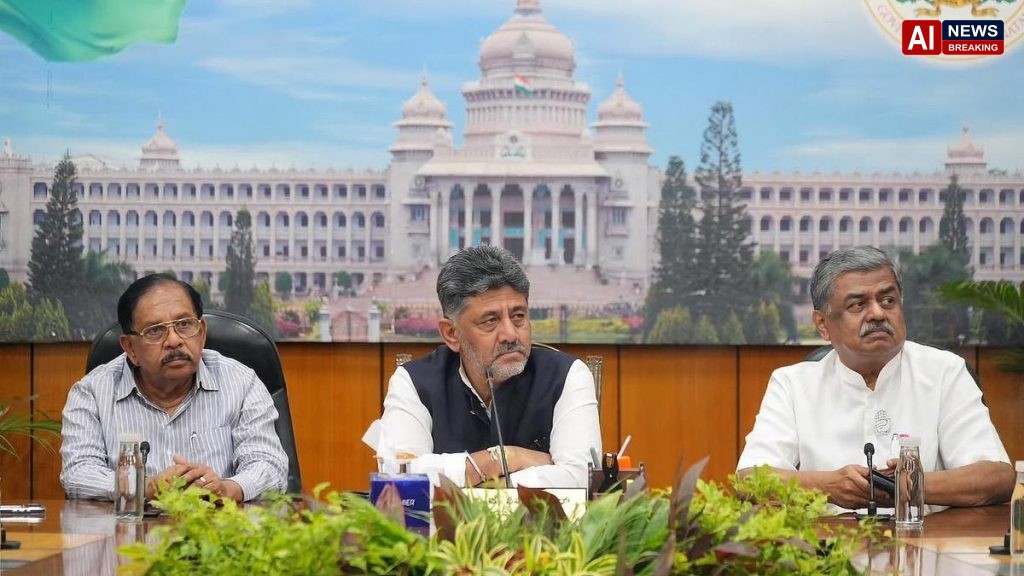
Karnataka Council polls: Setback to Congress raises questions over leadership and strategy for 2028 Assembly elections - AI News Breaking
karnataka council polls setback:
The recent Karnataka Legislative Council elections have delivered a sharp rebuke to the Indian National Congress, which failed to secure any of the four seats contested, while the BJP‑JD(S) alliance swept all of them. The result marks a significant setback for a party that had entered the contest with expectations of at least a modest foothold, and it raises pressing questions about the Congress’s leadership, organisational cohesion and strategic direction ahead of the 2028 state assembly poll. Analysts and party insiders alike are now dissecting the factors that contributed to the outcome, from candidate selection and campaign messaging to the lingering impact of intra‑party dissent that manifested during the earlier council vote.The council election, held under a mixed electoral system that includes votes from MLAs, local authorities and graduates, has historically served as a barometer of party strength in the state..
This cycle, however, was coloured by the aftershocks of a previous episode of cross‑voting, in which a number of Congress legislators cast their ballots for opposition candidates, prompting accusations of defections and a loss of confidence in party discipline. Although the BJP‑JD(S) bloc managed to contain further defections, the episode vulnerabilities within the Congress ranks that were never fully remedied before the latest poll. The inability to recoup those losses suggests that the party’s internal fissures remain a liability that could prove decisive in the forthcoming assembly contest.A central element of the Congress’s predicament appears to be its leadership vacuum at both the state and national levels..
Karnataka’s chief ministerial aspirant, former chief minister Siddaramaiah, has been conspicuously absent from the campaign trail, while the party’s state president, D.K. Shivakumar, has struggled to project a cohesive narrative that resonates with the electorate. Observers note that the lack of a clear, charismatic figurehead has allowed the BJP‑JD(S) alliance to dominate the media discourse, positioning themselves as the only viable alternative to a fragmented opposition..
This leadership deficit is compounded by the fact that senior Congress legislators who were expected to rally grassroots support have either been sidelined or have defected, further eroding the party’s organisational base.Strategically, the Congress’s campaign message appears to have faltered in articulating a compelling vision for Karnataka’s future. While the party highlighted issues such as unemployment, agrarian distress and water scarcity, its rhetoric was often generic and failed to differentiate itself from the narratives advanced by the ruling BJP and its junior partner, JD(S). In contrast, the alliance’s campaign was tightly coordinated, with BJP and JD(S) leaders jointly addressing local bodies and leveraging their combined resources to canvass voters across urban and rural constituencies..
The synergy between the two parties not only amplified their reach but also projected an image of unity that the Congress could not match.The role of cross‑voting in the earlier council election cannot be understated. Reports indicate that a small but decisive group of Congress MLAs voted for the BJP‑JD(S) candidates, citing disillusionment with the party’s internal functioning and a perception that the alliance offered a more stable governance model. This episode sowed doubt among party workers about the reliability of elected representatives and created a narrative of opportunism that the opposition exploited..
The recent council results, in which the alliance secured a clean sweep, appear to vindicate those concerns and underscore the difficulty the Congress faces in rebuilding trust within its own ranks.Local bodies, which form a substantial portion of the council electorate, also tilted heavily toward the alliance. Municipal and panchayat officials, many of whom have benefited from state‑level development projects championed by the BJP, cited continuity and delivery of public services as key reasons for their support. The Congress, on the other hand, has struggled to demonstrate comparable achievements at the grassroots level, leading to a perception that it remains a party of the past rather than a catalyst for contemporary development..
This perception was reinforced by the alliance’s focused outreach programmes, which included targeted welfare schemes and infrastructure promises that resonated with local administrators.The implications of the council election extend beyond the immediate loss of seats. The BJP‑JD(S) alliance’s performance is likely to embolden it to intensify its criticism of the state government, which is currently led by a coalition of the Congress and JD(S). While the two partners have managed to stay together through a series of power‑sharing arrangements, the alliance’s newfound confidence may translate into more aggressive legislative tactics, further polarising the political environment..
For the Congress, the challenge will be to navigate this heightened opposition while attempting to re‑assert its relevance before the next assembly election.Looking ahead to 2028, the Congress must address both structural and perceptual hurdles if it hopes to reverse its fortunes. Rebuilding a disciplined cadre of legislators, preventing further defections and fostering a culture of internal accountability will be essential steps. Moreover, the party needs to cultivate a fresh generation of leaders capable of articulating a forward‑looking agenda that connects with young voters and addresses the evolving socioeconomic landscape of Karnataka..
Without such renewal, the risk of repeated electoral marginalisation remains high.The alliance’s victory also prompts a reassessment of the JD(S)’s role in Karnataka politics. Historically a kingmaker, the party has now demonstrated an ability to translate its regional influence into tangible electoral gains when paired with the BJP. This partnership may encourage the JD(S) to negotiate a more prominent position in future power‑sharing arrangements, potentially reshaping the state’s political calculus..
For the Congress, this development underscores the necessity of forging strategic alliances of its own, perhaps with smaller regional outfits, to counterbalance the BJP‑JD(S) bloc’s growing dominance.In sum, the Karnataka council polls have delivered a clear signal: the Congress is at a crossroads, confronting leadership vacuums, organisational disarray and a compelling narrative from its opponents. The party’s response in the coming months—whether through decisive internal reforms, a revitalised policy platform or strategic coalition‑building—will determine its trajectory toward the 2028 assembly elections. As the political landscape sharpens, Karnataka’s electorate appears poised to reward parties that can present coherent governance alternatives, while penalising those that remain mired in internal conflict and strategic inertia..
Updated: October 28, 2026
The BJP‑JD(S) alliance swept all four Karnataka Legislative Council seats, leaving Congress without representation and exposing its leadership void and internal discord. The defeat intensifies scrutiny of the party’s organisation and strategy as it gears up for the 2028 state assembly election.
Insight: The council sweep exposes Congress’s existential crisis: leadership paralysis and internal defections have eroded its credibility, turning Karnataka’s electorate into a warning sign for 2028.
If the party cannot forge a unifying narrative or a fresh coalition, the BJP‑JD(S) axis will likely cement its dominance, relegating Congress to a perpetual opposition footnote.