Europe warns of Russia’s hybrid attacks but struggles to counter them
  Former chief election commissioner calls SIR scheme illegal.
  A Corruption Scandal Is Reshaping Brazil’s Presidential Election
  US citizen injured in Illinois after ICE agents mistook him for fugitive, tried to arrest him
  At 10 years old, Smithsonian’s Black museum is undaunted amid pressure from Trump administration
 Karnataka Rakshana Vedike condemns CWRC water release recommendation for Tamil Nadu
** The Karnataka Rakshana Vedike has condemned the CWRC’s recommendation to release water to Tamil Nadu, citing betrayal of Karnataka’s rights to the Cauvery waters. The organisation argues that the agreement made in 1991 is outdated and does not take into account the changing needs of Karnataka, which is facing a severe drought situation. Protests have taken place across Karnataka, with thousands of people calling for the CWRC’s decision to be overturned.
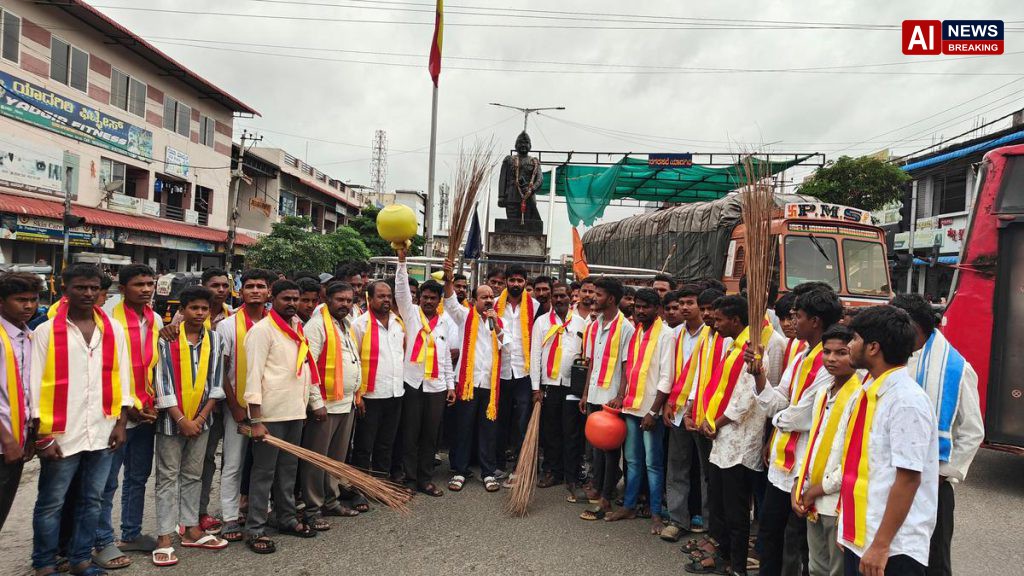
Karnataka Rakshana Vedike condemns CWRC water release recommendation for Tamil Nadu. - AI News Breaking
The Karnataka Rakshana Vedike, a prominent organisation that advocates for the rights of Kannadigas, has strongly condemned the recommendation made by the Cauvery Water Regulatory Committee (CWRC) to release 9,000 cusecs of water to Tamil Nadu. The organisation claims that this move is a clear betrayal of the faith and trust of the people of Karnataka, who had expected the CWRC to uphold their rights to the Cauvery waters. The CWRC’s recommendation was made on Monday, citing the existing agreement between Karnataka and Tamil Nadu over the sharing of the Cauvery waters..
However, the Karnataka Rakshana Vedike argues that this agreement was made in 1991, and does not take into account the changing needs of Karnataka, which is facing a severe drought situation. The organisation claims that the waters should be reserved for the people of Karnataka, who are struggling to access even basic necessities. The Karnataka Rakshana Vedike has been at the forefront of the pro-Kannada movement, which has been agitating for greater autonomy and rights for Kannadigas..
The organisation’s leaders have been vocal in their criticism of the CWRC’s recommendation, accusing it of being biased in favour of Tamil Nadu. They argue that the CWRC has failed to consider the long-term interests of Karnataka, and has instead prioritised the short-term needs of Tamil Nadu. The CWRC’s recommendation has sparked widespread outrage among Kannadigas, who see it as a major betrayal..
Protests have taken place across Karnataka, with thousands of people calling for the CWRC’s decision to be overturned. The Karnataka Rakshana Vedike has vowed to continue its agitation, saying that it will not give up until the CWRC’s decision is reversed and the needs of Karnataka are met. The CWRC’s recommendation has also been met with criticism from other quarters, with many experts accusing it of being flawed..
They point out that the CWRC’s formula for sharing the Cauvery waters is based on outdated data, and does not take into account the changing needs of Karnataka. They argue that the CWRC should have taken a more nuanced approach, taking into account the long-term implications of its decision. The controversy over the CWRC’s recommendation has once again highlighted the deep-seated tensions between Karnataka and Tamil Nadu over the sharing of the Cauvery waters..
The issue has been a major point of contention for decades, with both states often locking horns over the allocation of the waters. The Karnataka Rakshana Vedike sees the CWRC’s recommendation as a major victory for Tamil Nadu, and a major setback for Karnataka. The Karnataka Rakshana Vedike has been working closely with the state government to protest the CWRC’s decision..
The organisation has written to the Prime Minister of India, urging him to intervene and ensure that the CWRC’s decision is overturned. The organisation has also launched a social media campaign, using the hashtag #JusticeForKarnataka to raise awareness about the issue. The CWRC’s recommendation has also sparked a heated debate in the Karnataka state assembly..
Lawmakers from the ruling party have come out in support of the CWRC’s decision, saying that it is in line with the existing agreement between Karnataka and Tamil Nadu. However, opposition parties have accused the government of caving in to external pressure, and have vowed to continue their agitation against the CWRC’s decision. The Karnataka Rakshana Vedike has also launched a direct action campaign, calling for people to boycott Tamil Nadu products and services until the CWRC’s decision is overturned..
The organisation has claimed that this campaign has been a huge success, with many people across Karnataka responding to their call. However, not everyone is in support of the boycott, with some arguing that it is an extreme response to a complex issue. The controversy over the CWRC’s recommendation has once again highlighted the need for a more durable and just solution to the Cauvery waters controversy..
Many experts have called for a review of the existing agreement, and the creation of a new mechanism for sharing the waters. They argue that this would help to prevent similar disputes in the future, and ensure that the needs of both Karnataka and Tamil Nadu are met. The Karnataka Rakshana Vedike has vowed to continue its agitation until the CWRC’s decision is overturned..
The organisation has called upon the people of Karnataka to come out in large numbers and support their cause, saying that it is a matter of great urgency and importance. The organisation has also urged the state government to take a stronger stance, saying that it should not cave in to external pressure. The outcome of the CWRC’s recommendation is currently uncertain, with the Supreme Court of India yet to hear the matter..
However, the Karnataka Rakshana Vedike remains confident that justice will be done, and that the CWRC’s decision will be overturned. The organisation has vowed to continue its fight for the rights of Kannadigas, saying that it will not rest until the matter is resolved in their favour. The controversy over the CWRC’s recommendation has highlighted the deep-seated tensions between Karnataka and Tamil Nadu over the sharing of the Cauvery waters..
It remains to be seen how the issue will be resolved, but one thing is certain – the people of Karnataka will continue to fight for their rights, and the CWRC’s decision will be closely watched in the days and weeks to come..
The CWRC’s recommendation has exposed the deep-seated mistrust between Karnataka and Tamil Nadu, highlighting the need for a more nuanced approach to sharing the Cauvery waters. As the controversy unfolds, it’s clear that the fate of the Cauvery waters will be a defining moment for the region’s politics and its people’s sense of identity.