Europe warns of Russia’s hybrid attacks but struggles to counter them
  Former chief election commissioner calls SIR scheme illegal.
  A Corruption Scandal Is Reshaping Brazil’s Presidential Election
  US citizen injured in Illinois after ICE agents mistook him for fugitive, tried to arrest him
  At 10 years old, Smithsonian’s Black museum is undaunted amid pressure from Trump administration
 Khamenei’s Funeral Draws Mourners Across Iran’s Regional Network as Supporters Rally from Lebanon to Pakistan
The funeral of Iran’s former Supreme Leader Ayatollah Ali Khamenei has become a regional event, with mourning ceremonies extending beyond Iran’s borders to Lebanon, Iraq, Pakistan, and Yemen, showcasing Tehran’s extensive political and ideological influence across the Middle East and South Asia.
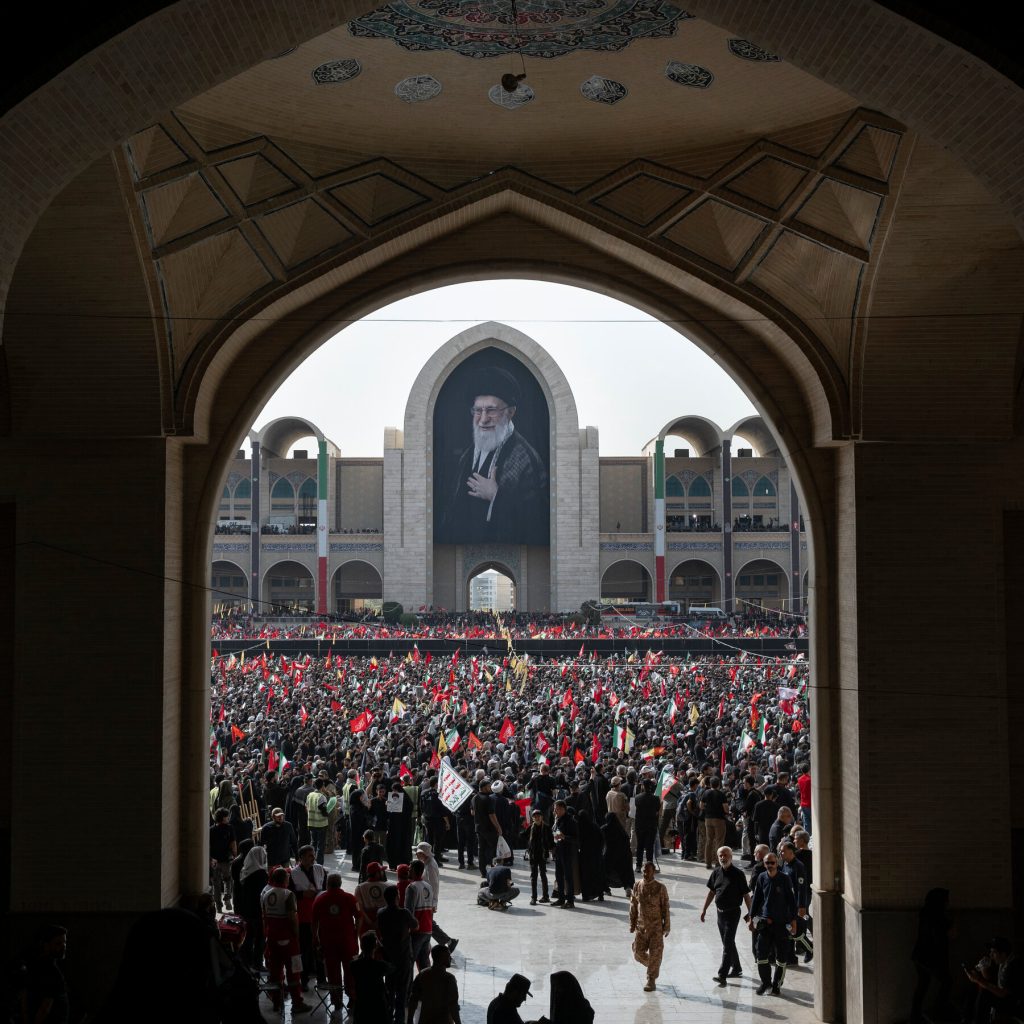
khameneis funeral draws mourners:
The funeral of Iran’s former Supreme Leader Ayatollah Ali Khamenei has become a regional event, with mourning ceremonies extending well beyond Iran’s borders. From Lebanon and Iraq to Pakistan and Yemen, supporters of Tehran-backed groups have organized rallies and memorial gatherings, highlighting the extensive political, religious and ideological influence Iran has built across the Middle East and South Asia.
The funeral ceremonies for Iran’s former Supreme Leader Ayatollah Ali Khamenei have evolved into a powerful regional display of solidarity, with mourners gathering not only across Iran but also in several countries where Tehran has cultivated deep political, religious and strategic ties. While millions have attended processions inside Iran, memorial events stretching from Lebanon to Pakistan have underscored the enduring reach of Iran’s network of allies and supporters, even as the country navigates one of the most significant leadership transitions in its modern history.
The days following Khamenei’s death have witnessed extraordinary scenes throughout Iran. Major cities including Tehran, Mashhad, Qom, Isfahan and Shiraz have hosted massive funeral processions attended by government officials, military commanders, clerics and ordinary citizens. Iranian state media has broadcast continuous coverage of crowds lining streets, carrying portraits of the late leader, waving national flags and chanting slogans in tribute to the man who shaped Iran’s domestic and foreign policies for decades.
For the Iranian leadership, the funeral has served not only as a period of national mourning but also as a demonstration of political continuity. Senior officials have repeatedly emphasized that the Islamic Republic’s institutions remain stable and that Iran’s strategic priorities will continue despite the loss of its highest-ranking political and religious authority.
However, the significance of the funeral extends far beyond Iran’s borders.
Across the Middle East, organizations closely aligned with Tehran have organized their own memorial ceremonies, highlighting the regional influence that Iran has cultivated over several decades. These gatherings have ranged from religious services and public marches to political speeches praising Khamenei’s leadership and reaffirming commitments to the alliances he helped build.
Lebanon has witnessed some of the largest gatherings outside Iran. Supporters of Hezbollah assembled in Beirut and southern Lebanon, where banners featuring Khamenei’s portrait adorned streets and public squares. Speakers at commemorative events described him as a central figure in what Iran refers to as the “Axis of Resistance”—a network of governments, political parties and armed groups opposed to Israel and Western influence in the region.
Hezbollah leaders praised Khamenei for providing ideological guidance and political backing during periods of conflict, particularly following Israel’s military campaigns in Lebanon. Memorial events included Quran recitations, speeches by senior clerics and moments of silence observed by thousands of supporters.
In neighboring Iraq, funeral ceremonies drew large crowds in cities with significant Shia populations, including Najaf, Karbala and Baghdad. Several influential political parties and militia groups associated with Iran organized public commemorations, describing Khamenei as a symbol of resistance and religious leadership.
Religious seminaries in Najaf also held prayers in remembrance of the late Iranian leader, reflecting the longstanding religious ties between Iraq’s Shia institutions and Iran. While Iraq’s political landscape remains diverse, many Shia organizations maintain close relations with Tehran, making the funeral an important symbolic event for their supporters.
Yemen’s Houthi movement, another key member of Iran’s regional alliance, also paid tribute to Khamenei through public gatherings and official statements. Houthi officials praised his support for their movement and described his death as a loss for what they called the struggle against foreign intervention in the Middle East.
The funeral has also resonated beyond the Arab world.
In Pakistan, numerous Shia organizations organized mourning processions and prayer meetings in cities including Karachi, Lahore, Islamabad, Quetta and Parachinar. Participants carried black flags, displayed photographs of Khamenei and recited religious elegies during peaceful commemorations.
Local authorities maintained heightened security around several events to prevent tensions and ensure public order. While the gatherings remained largely peaceful, officials monitored the situation carefully due to Pakistan’s complex sectarian environment.
Religious leaders participating in the ceremonies described the events as expressions of solidarity with the global Shia community rather than political demonstrations. Nevertheless, analysts noted that the scale of participation illustrated Iran’s enduring religious influence among sections of Pakistan’s Shia population.
Smaller memorial gatherings were also reported in Afghanistan, Bahrain and parts of Syria, where communities and organizations aligned with Tehran paid tribute to the former Supreme Leader.
For many of these groups, Khamenei represented more than Iran’s highest political authority. Over the course of more than three decades, he became a symbol of Iran’s regional strategy, which combined religious influence, political alliances and military partnerships to expand Tehran’s presence throughout the Middle East.
His leadership coincided with the strengthening of relationships with Hezbollah in Lebanon, various Iraqi militia organizations, the Syrian government, Palestinian militant groups and Yemen’s Houthi movement. Collectively, these organizations have played central roles in regional conflicts and have become key elements of Iran’s foreign policy.
The funeral ceremonies have therefore become an opportunity for these allies to publicly reaffirm their commitment to the relationships established during Khamenei’s tenure.
Inside Iran, authorities have emphasized national unity throughout the mourning period. State television has shown extensive footage of mourners gathering in public squares, attending prayers and participating in funeral marches stretching for kilometers through central Tehran.
Government offices, schools and many businesses suspended normal operations during the official mourning period, while religious institutions across the country organized Quran recitations and special prayer services.
The funeral procession has attracted high-ranking Iranian officials, members of the Islamic Revolutionary Guard Corps (IRGC), senior military commanders and representatives from friendly governments.
Observers say such ceremonies serve multiple purposes beyond honoring the deceased. They reinforce political legitimacy, demonstrate institutional stability and project an image of unity both domestically and internationally.
For Iran’s regional partners, participation in funeral events also sends a strategic message.
Public displays of solidarity indicate that the alliances forged over decades remain intact despite the transition in Iran’s leadership. At a time when tensions continue across the Middle East—including ongoing conflicts involving Israel, Hezbollah, Yemen and various regional actors—the gatherings project an image of resilience among groups aligned with Tehran.
Analysts caution, however, that symbolic demonstrations do not necessarily indicate the future direction of Iran’s foreign policy. Much will depend on how the country’s new leadership manages domestic priorities, international sanctions, economic challenges and relations with neighboring countries.
Even so, the widespread regional response reflects the significant role Khamenei played in shaping Iran’s geopolitical identity. Throughout his leadership, Iran invested heavily in building networks based on shared religious identity, political cooperation and strategic interests. Those relationships are now being publicly reaffirmed through memorial ceremonies taking place across multiple countries.
The funeral has also attracted considerable international attention, with governments closely watching both the leadership transition and the scale of public participation. Diplomats and security analysts view the ceremonies as an opportunity to gauge public sentiment inside Iran and assess the continued cohesion of Tehran’s regional alliances.
For supporters attending the gatherings, however, the ceremonies are deeply personal. Many participants describe Khamenei as a religious guide whose influence extended beyond politics. Others see the memorial events as an affirmation of shared ideological values and longstanding partnerships.
As the week-long mourning period approaches its conclusion, Iran is preparing for the final burial ceremony in the holy city of Mashhad, one of the most sacred sites in Shia Islam. Authorities expect hundreds of thousands more mourners to attend, marking the culmination of one of the largest state funerals in the country’s recent history.
Whether viewed as a religious occasion, a political demonstration or a regional show of solidarity, the funeral of Ayatollah Ali Khamenei has become a defining moment for Iran and its allies. The ceremonies have highlighted not only the legacy of a leader who dominated Iranian politics for decades but also the enduring influence of the regional networks that continue to shape the Middle East’s complex geopolitical landscape.
Ayatollah Ali Khamenei’s funeral has evolved into more than a national farewell—it has become a barometer of Iran’s regional influence. The participation of supporters from Lebanon, Iraq, Yemen, Pakistan and other countries illustrates the depth of Tehran’s ideological and strategic partnerships built over decades. While leadership transitions often create uncertainty, the widespread memorial gatherings suggest that Iran’s regional alliances remain cohesive, at least symbolically. Going forward, how the new leadership manages these relationships will be a critical factor in determining the balance of power across the Middle East and the future of the so-called “Axis of Resistance.”