 12-member U.P. family rescued from alleged bonded labour in Hyderabad
  Ex-IAS officer found dead at home in Bhopal
  Malaysia Begins Repatriation of Migrants to War-Torn Myanmar Despite Critics’ Warnings
  Ex-NFL star Antonio Brown set to appear in Miami court for expected plea agreement
 Malaysia Begins Repatriation of Migrants to War-Torn Myanmar Despite Critics’ Warnings
**
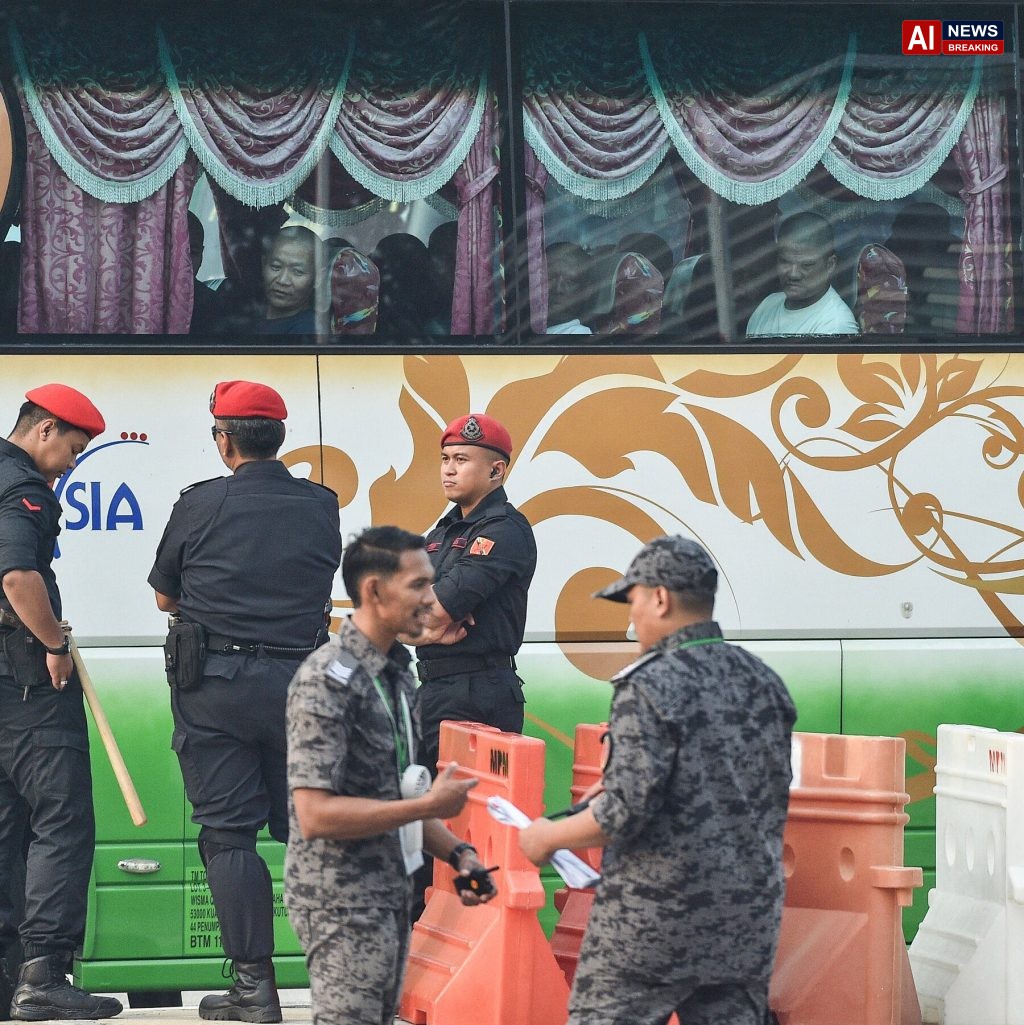
Malaysia Begins Repatriation of Migrants to War-Torn Myanmar Despite Critics’ Warnings - AI News Breaking
malaysia begins repatriation migrants:
KUALA LUMPUR – The Malaysian government has begun a programme to return undocumented migrants from Myanmar who have expressed a desire to go back, despite warnings from human‑rights groups that the move could expose them to renewed conflict and persecution. The operation, launched in early September, is being carried out by the Immigration Department in cooperation with the United Nations High Commissioner for Refugees (UNHCR) and the International Organization for Migration (IOM), and is slated to continue until the end of the year.The repatriation drive follows a surge in arrivals of Myanmar nationals after the military coup of February 2021 and the subsequent escalation of fighting in several states, notably in the north‑east. Malaysia, which hosts an estimated 200,000 to 250,000 undocumented Myanmar migrants, has long struggled to balance domestic political pressure to curb illegal entry with its obligations under international refugee law..
The Home Ministry says the current phase focuses only on those who have voluntarily applied for return and have been screened as not facing a well‑founded fear of persecution.Under the agreed protocol, each applicant must first undergo an interview with UNHCR officials to assess their protection needs. Those deemed to be refugees or asylum‑seekers are to be placed in a separate category and offered resettlement or local integration options, while those classified as economic migrants are processed for voluntary repatriation. The government says that, as of 25 September, 1,842 applications have been received, of which 1,317 have cleared the screening stage and are scheduled for transport to the border towns of Myawaddy and Mae Sot.Critics, however, argue that the screening process is insufficiently rigorous and that the security situation in many parts of Myanmar remains volatile..
Amnesty International and the Malaysian Bar Council have jointly issued a statement urging the authorities to suspend the operation until an independent review can confirm that returnees will not be subjected to arbitrary detention, torture, or forced recruitment by the junta. “The risk of retraumatisation and the possibility of being caught in active combat zones are real and cannot be dismissed lightly,” the statement reads.Government officials counter that the programme is designed to respect the principle of non‑refoulement, noting that “no one will be sent back unless we are certain that they are not at risk of serious harm.” Home Minister Datuk Seri Dr Ahmad Zahid Hamidi told a press conference on 28 September that the decision was taken after extensive consultations with regional partners and that the operation is “transparent, humane and in line with Malaysia’s international commitments.” He added that the repatriation is voluntary, and that migrants retain the right to withdraw their applications at any stage.The logistics of the repatriation have involved chartered flights from Kuala Lumpur International Airport to the Thai border, where IOM staff hand over the migrants to UNHCR representatives before they cross into Thailand. From there, coordinated convoys move the returnees to designated reception centres in Myanmar..
The first batch of 250 individuals arrived in Myawaddy on 2 October, where they were met by local officials and representatives of the Myanmar Ministry of Social Welfare. Observers noted that the arrivals were accompanied by armed security personnel, a detail that has drawn further scrutiny from NGOs concerned about intimidation and the safety of the returnees.Local civil‑society groups in Malaysia have raised concerns about the broader impact of the repatriation on the migrant community still residing in the country. The Malaysian Workers Union (MWU) warns that the operation could create a chilling effect, prompting undocumented workers to avoid reporting abuse or seeking medical care for fear of being flagged for removal..
“When the state signals that it is willing to send people back to a place where they may be killed or imprisoned, it undermines the trust that migrant workers need to access basic services,” said MWU president Tan Sri Abdul Razak. The union has called for a moratorium on all deportations until an independent audit of the process is completed.The situation in Myanmar itself remains fluid. The junta’s armed forces continue to conduct operations against ethnic armed groups in Kayin, Shan and Kachin states, while nationwide protests have largely subsided after a series of crackdowns..
The United Nations Office for the Coordination of Humanitarian Affairs (OCHA) reports that more than 2.5 million people are displaced internally, and that humanitarian access is still restricted in large swathes of the country. In this context, the United Nations High Commissioner for Refugees has reiterated that voluntary repatriation must be “safe, dignified and sustainable,” and has urged all host nations to ensure that returnees are not placed in harm’s way.The Malaysian government maintains that its actions are guided by both humanitarian considerations and the need to manage a growing undocumented population that strains public services. Deputy Minister of Home Affairs Datuk Ahmad Mahamoud emphasized that the country is also working to enhance legal pathways for migrant workers, including a proposed amendment to the Employment Act that would create a points‑based system for low‑skill foreign labor..
He said these reforms aim to reduce the reliance on irregular migration and to protect the rights of those who come legally.International observers will be watching the repatriation closely, as the outcome may set a precedent for how Southeast Asian states handle the complex intersection of migration, conflict and refugee protection. The next scheduled round of returns is set for mid‑October, with officials promising greater transparency and the publication of detailed reports on each case. Whether these assurances will satisfy the concerns of human‑rights advocates remains to be seen, but the debate has already highlighted the delicate balance Malaysia must strike between sovereign immigration control and its obligations under the global refugee regime..
Updated: September 30, 2026
Malaysia has launched a voluntary repatriation programme for Myanmar migrants who wish to return, screening them through UNHCR and IOM to ensure no one is sent back to risk persecution. Human‑rights groups warn the process is risky and call for a halt until an independent review guarantees safety for returnees.
Insight: Malaysia’s “voluntary” repatriation risk‑tunes its diplomatic image: a gesture that could be seen as a humanitarian win while simultaneously signaling to migrants that the state will not hesitate to return them to a war‑torn homeland. This gamble may erode trust among undocumented workers, curtailing their access to services and tightening the state’s grip on a fragile migrant community.