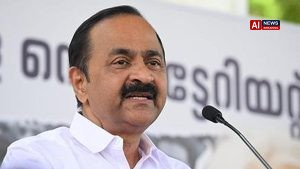
 Important to preserve independence, transparency of Election Commission: Keralam CM Satheesan
  Families Urge Trump to Press Xi to Free Americans Detained in China
  After Jamui, another minor girl molested in Bihar’s Samastipur
  Australia Investigates OpenAI Hack on Public Health Care Site
  Tech leaders to UN: For the sake of humanity, please control the AI technology we created
 Mayawati criticises government UPI fee
**
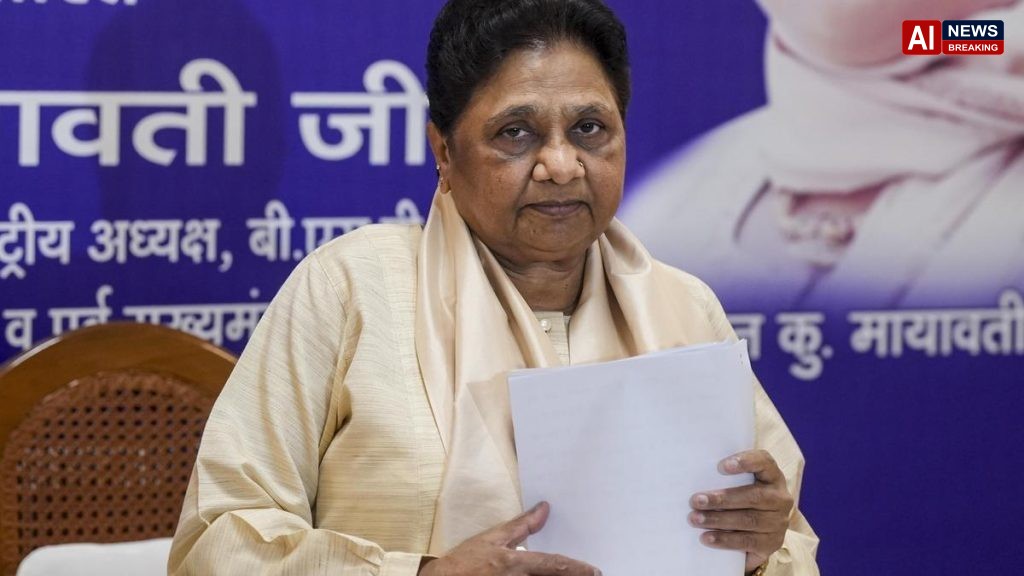
Mayawati criticises government UPI fee - AI News Breaking
Mayawati, the veteran leader of the Bahujan Samaj Party (BSP), has launched a scathing criticism of the Union government’s decision to impose a fee on the Unified Payments Interface (UPI) service, describing it as a “capitalist profiteering attitude” that places an unjust financial burden on ordinary citizens. Speaking at a press conference in Lucknow on Thursday, the former chief minister warned that the move, which effectively treats the fee as a tax, could erode public confidence in a digital payments ecosystem that has been hailed as a catalyst for financial inclusion across India.The fee, announced by the Ministry of Finance earlier this month, requires merchants and service providers to pay a small percentage on each transaction processed through UPI. While the government has framed the charge as a means to offset the operational costs of maintaining the platform and to generate revenue for the exchequer, Mayawati argued that it runs counter to the original intent of UPI – to provide a low‑cost, accessible payment solution for the country’s largely unbanked population..
“When you start charging people for using a system that was built to be free for the masses, you are betraying the very ethos of inclusion that the digital economy promised,” she said.Mayawati’s remarks come at a time when the Indian government is seeking to broaden its fiscal base amid widening fiscal deficits. The Finance Ministry’s spokesperson defended the fee, stating that the cost of running UPI, which now processes over 10 billion transactions a month, is significant and that a modest levy would ensure the platform’s long‑term sustainability without compromising its security or speed. “This is not a tax; it is a service charge that aligns with international best practices for digital payment infrastructures,” the spokesperson told reporters, adding that the fee would be capped at a minimal rate to avoid overburdening small traders.Critics, however, have pointed out that the fee could disproportionately affect small and informal sector businesses that rely heavily on cashless payments to attract customers and manage inventory..
A recent survey conducted by the Confederation of Indian Industry (CII) found that 62 percent of micro‑enterprises consider transaction costs a key barrier to adopting digital payments. If merchants are forced to shoulder additional expenses, the cost is often passed on to consumers, potentially negating the affordability advantage that UPI initially offered.The debate also raises broader questions about the governance model of India’s digital payments landscape. UPI, launched in 2016 by the National Payments Corporation of India (NPCI), quickly became a cornerstone of the country’s push toward a cash‑less economy, with over 300 banks and millions of users joining the network within a few years..
Its open‑architecture design, which allows multiple banks to interoperate on a single platform, has been lauded for fostering competition and driving down transaction costs. Yet, as the system matures, calls for a more structured revenue model have grown louder among policymakers who argue that a purely subsidised model is unsustainable in the long run.Political analysts note that Mayawati’s outspoken stance is consistent with her long‑standing advocacy for the rights of marginalized communities, who she says are the most vulnerable to policy changes that increase living costs. “The BSP has always championed the cause of the poor and the underprivileged,” said Dr..
Anjali Sharma, a political scientist at the Indian Institute of Technology Delhi. “By framing the UPI fee as a ‘capitalist profiteering attitude’, Mayawati is tapping into a broader narrative that the state should protect citizens from market‑driven impositions, especially in essential services like payments.”The BSP’s criticism also aligns with concerns voiced by consumer rights groups, who argue that the fee could undermine the government’s own financial inclusion agenda. The Consumer Unity and Trust Society (CUTS) released a brief last week urging the Ministry of Finance to reconsider the levy, warning that it could reverse the gains made in bringing millions of previously unbanked individuals into the formal financial system..
“A small fee might seem negligible in isolation, but when aggregated over billions of transactions, it translates into a substantial cost burden for the average citizen,” the brief stated.In response to the mounting pressure, the Finance Ministry announced that it would convene a stakeholder meeting next week, inviting representatives from banks, fintech firms, merchant associations, and consumer groups to discuss the fee structure and its implementation timeline. Sources close to the deliberations indicate that the government is prepared to offer exemptions or reduced rates for small merchants and may consider a tiered fee model based on transaction volume.The upcoming dialogue will be closely watched by industry observers, as it could set a precedent for how India balances the need for fiscal revenue with the imperative of maintaining an inclusive digital ecosystem. Some analysts predict that a compromise—such as a lower fee capped at a fraction of a percent for low‑value transactions—could preserve the platform’s accessibility while addressing the government’s cost concerns..
Others caution that any fee, however modest, may signal a shift toward monetising public digital infrastructure, a trend that could have implications for future initiatives in areas like digital identity and e‑governance.Meanwhile, Mayawati has vowed to continue pressing the issue, stating that her party will raise the matter in the Lok Sabha and seek a parliamentary debate on the fairness of imposing additional charges on a service that was originally conceived as a public good. “We will not allow the government to turn a tool of empowerment into a source of profit for private players,” she asserted. “The people of India deserve a payment system that remains free, transparent, and truly inclusive.”The controversy underscores the delicate balancing act facing India’s policymakers: sustaining rapid digital growth while ensuring that the benefits of technology remain evenly distributed across society..
As the nation moves toward its ambitious goal of a cash‑less economy by 2025, the outcome of the UPI fee debate could shape public trust in digital platforms and determine whether economic modernization proceeds hand in hand with social equity..
Updated: September 18, 2026
Insight: Mayawati’s outcry reframes a routine fiscal tweak as a litmus test for India’s commitment to inclusive growth, warning that even modest charges can erode the trust that fuels mass‑adoption of digital tools. If the government concedes to a tiered or exempted fee, it may preserve that