Europe warns of Russia’s hybrid attacks but struggles to counter them
  Former chief election commissioner calls SIR scheme illegal.
  A Corruption Scandal Is Reshaping Brazil’s Presidential Election
  US citizen injured in Illinois after ICE agents mistook him for fugitive, tried to arrest him
  At 10 years old, Smithsonian’s Black museum is undaunted amid pressure from Trump administration
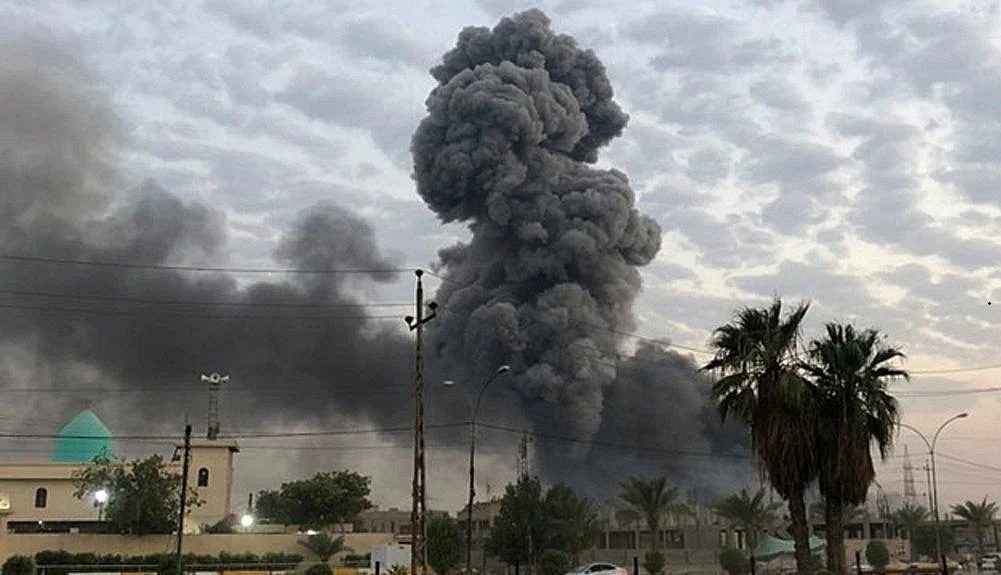
 Middle East Crisis Deepens as US Launches Major Airstrikes on Iran and Tehran Retaliates Across Gulf Region
** The United States has intensified its military campaign against Iran, launching airstrikes near Tehran and prompting swift retaliation from Iranian forces. The escalation has raised fears of a broader Middle East war and sent oil prices surging, as the region teeters on the brink of chaos.
News Summary
- The United States has intensified its military campaign against Iran by launching airstrikes near Tehran, prompting swift retaliation from Iranian forces against US allies in the Gulf.
- The six-day conflict has significantly escalated regional tensions, raising fears of a broader Middle East war involving multiple nations.
- Growing uncertainty surrounding Washington’s strategic objectives has fueled concerns among allies and global observers about the prospects for de-escalation.
US Intensifies Attacks on Iran as Tehran Hits Back at Gulf States Tensions Escalate as Six-Day Fighting Brings Region to Brink of War The US military has significantly increased its aggression towards Iran, launching a series of airstrikes on targets just outside of Tehran, the Iranian capital. This development marks the most intense escalation of violence yet in the ongoing conflict, which began last week with a US drone strike against a top Iranian military commander. The strikes, which hit several key military installations, have been met with swift retaliation from the Iranian military, which has fired a barrage of missiles and drones at US allies in the region..
Chaos and Confusion Continue to Plague US Strategy Despite the increasing intensity of the conflict, the US government remains unclear on its strategy for resolving the crisis. The country’s top officials have issued mixed signals on potential courses of action, ranging from a full-scale military invasion to a continuation of the current proxy war. The uncertainty has led to widespread confusion and chaos, both among US allies and adversaries, and has cast serious doubts on the feasibility of achieving a lasting peace..
Strait of Hormuz Remains Key Flashpoint One of the most pressing flashpoints in the crisis is the strait of Hormuz, a strategic waterway that connects the Persian Gulf to the Arabian Sea. The strait is a vital shipping lane, through which millions of barrels of oil pass every day. The US has warned that it will take all necessary measures to protect the strait, including the use of force, if Iran attempts to block it..
However, Tehran has dismissed US warnings as empty threats, and has hinted that it may indeed attempt to block the strait as a form of reprisal for US aggression. Iranian Military Flexes Muscles as Retaliatory Attacks Hit US Allies Iran’s military has made headlines in recent days with its bold retaliatory attacks against US allies in the region. On Tuesday, Iranian missiles and drones struck several key targets in Saudi Arabia and the United Arab Emirates, including a major oil refinery and a military base..
The attacks were widely condemned by the US and its allies, who have vowed to take punitive action against Iran for its aggression. Peace Deal on the Brink of Collapse The ongoing crisis has cast serious doubts on the interim peace deal struck between the US and Iran last month. The deal, which aimed to achieve a permanent peace by offering concessions on key issues such as nuclear development and sanctions relief, was hailed as a major breakthrough at the time..
However, the past week’s escalation of violence has thrown its viability into question, with many now wondering if the deal will ultimately prove unworkable in the face of rising tensions. US Allies Scramble to Respond to Iranian Aggression US allies in the region are scrambling to respond to Iranian aggression, which has put several key installations and personnel at risk. On Tuesday, the US-led coalition in Iraq announced that it had repelled an Iranian drone attack, while Saudi Arabia has vowed to take all necessary measures to protect its interests in the face of Iranian aggression..
UN Security Council Holds Emergency Meeting The United Nations Security Council has held an emergency meeting to discuss the escalating crisis in the Middle East. The meeting, which brought together representatives from key world powers, was convened in response to the increasing frequency and severity of US and Iranian airstrikes. However, the meeting yielded little progress, with diplomats admitting that the situation is now in a state of crisis..
US Troops on High Alert as Tensions Rise US troops deployed in the region are now on high alert, with commanders warning that they are prepared for any eventuality. The warning follows a recent uptick in attacks against US personnel, which have put several key installations at risk. US officials have vowed to take punitive action against any group or country found to be supporting anti-US aggression..
Regional Players Weigh In as Crisis Deepens Regional players are weighing in as the crisis deepens, with several key nations offering to mediate a resolution to the conflict. On Tuesday, Saudi Arabia announced that it would be hosting a meeting of key Middle Eastern leaders to discuss a potential ceasefire. However, the proposal has yet to receive a positive reception from the US or Iran..
Oil Prices Continue to Surge as Crisis Deepens Oil prices have surged in response to the escalating crisis in the Middle East, with crude reaching a four-year high. The increase is largely driven by concerns over the potential for a full-scale war, which could disrupt global oil supplies and send prices skyrocketing. The impact of the crisis on the global economy remains uncertain, with experts warning that a worst-case scenario could have far-reaching consequences..
Iran’s Nuclear Program Remains a Key flashpoint Iran’s nuclear program remains a key flashpoint in the crisis, with the US and its allies warning that the country’s continued development of nuclear capabilities poses a threat to regional and global security. However, Tehran has dismissed US warnings as baseless, and has vowed to continue its nuclear program, despite US sanctions and pressure. Regional Stability Hangs in the Balance Regional stability hangs in the balance as the crisis continues to spiral out of control..
The potential for a full-scale war has raised concerns among regional players, who fear the consequences of a conflict that could draw in several key nations. Diplomats are scrambling to find a solution to the crisis, but the path forward remains uncertain in the face of rising tensions..
Updated: July 16, 2026
US and Iranian forces have engaged in a six-day battle of airstrikes and retaliatory attacks, bringing the region to the brink of war. Amid the escalating violence, US allies in the region are scrambling to respond and diplomats are struggling to find a solution to prevent a full-scale conflict.
The escalating conflict between the US and Iran has significant implications for global economic stability, as the potential disruption to oil supplies could have far-reaching consequences. As regional players weigh in and diplomatic efforts stall, it’s clear that a peaceful resolution will require a nuanced and multifaceted approach to address the complex web of tensions driving this crisis.