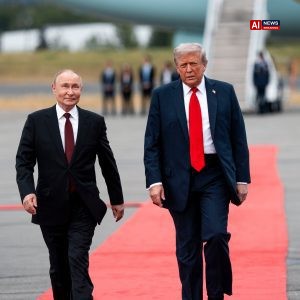
 Karnataka SIR: Teaching on the back burner
  Trump administration offers mixed messages on limits to Ukraine’s Starshield access
  US Treasury proposes a rule to crack down on high-tech investments in China, other adversaries
  Calley Means, a key MAHA advocate, resigns as a top RFK Jr. adviser
  Spotify Tightens Family Plan Controls with QR Code Verification
 Milei intensifies Falklands sovereignty claims amid UK tensions
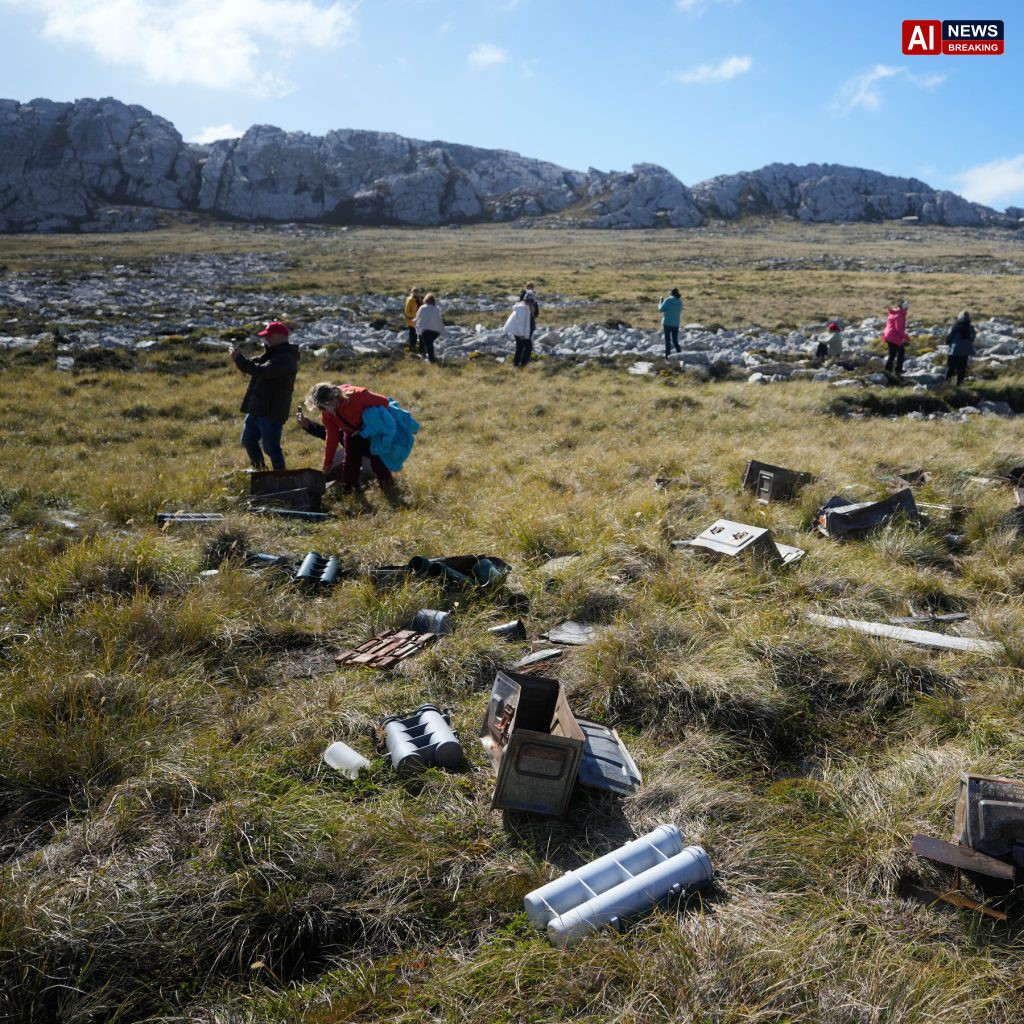
Milei intensifies Falklands sovereignty claims amid UK tensions - AI News Breaking
The diplomatic fault lines running through the South Atlantic have shifted with renewed intensity, as Argentina’s President Javier Milei escalates his rhetoric regarding the Falkland Islands, asserting a firm stance on sovereignty that challenges the status quo. This intensification of claims occurs against a complex geopolitical backdrop where the United States, traditionally a guarantor of regional stability, is navigating the unpredictable foreign policy impulses of its most powerful ally, Donald Trump. The intersection of Buenos Aires’ historical grievances, London’s unwavering defense of its overseas territory, and Washington’s evolving strategic priorities has created a volatile triangle of interest that threatens to destabilize decades of relative calm..
For observers of international relations, the situation represents more than a bilateral territorial dispute; it is a stress test for the western alliance system and a demonstration of how domestic political pressures in major powers can ripple outward to affect distant colonies and their populations.At the heart of this renewed tension is the identity and political leaning of Javier Milei, whose election marked a radical departure from Argentina’s traditional centrism and left-wing governance. An anarcho-capitalist economist by training and a provocateur by nature, Milei has made the recovery of the Falklands, known in Argentina as the Malvinas, a central pillar of his nationalist agenda. Unlike his predecessors, who often balanced economic pragmatism with diplomatic firmness, Milei approaches the issue with a moral absolutism that leaves little room for negotiation..
He has consistently framed the British presence not merely as a colonial relic but as an ongoing injustice that violates international law and Argentine sovereignty. This rhetorical shift has emboldened nationalist factions within Argentina, pushing the issue to the forefront of public discourse and forcing the government to adopt a more confrontational tone in its engagements with London.The British government, led by Prime Minister Rishi Sunak, has responded with characteristic steadfastness, reiterating that the future of the islands rests solely with their inhabitants. London points to the 2013 referendum, in which nearly 99 percent of voters chose to remain a British Overseas Territory, as definitive proof of local self-determination..
This principle of self-determination is the cornerstone of the United Kingdom’s argument, serving as a legal and moral shield against Argentine claims. However, the UK is also keenly aware of the strategic and emotional weight of the issue in Argentina, where the islands have become a sacred symbol of national identity since the failed 1982 war. The British stance is therefore not just a matter of international law but also of domestic politics, as any perception of weakness or compromise on sovereignty could be politically disastrous for any Prime Minister.Complicating this bilateral tension is the role of the United States, which has historically maintained a careful neutrality in the dispute while maintaining strong defense ties with the United Kingdom..
position has long been guided by a desire to maintain good relations with both allies and partners, often urging dialogue without taking sides on the sovereignty question. However, the return of Donald Trump to the political center stage has introduced a variable that defies traditional diplomatic predictability. Trump has previously suggested that the Falklands should be returned to Argentina or that the U.S..
should reconsider its alliance commitments if they are not reciprocated with economic benefits. Such comments, whether made in jest or seriousness, have caused anxiety in London and hope in Buenos Aires, highlighting the fragility of international norms when faced with populist unpredictability.Milei’s strategy appears to be leveraging this ambiguity in Washington to strengthen Argentina’s position. By aligning himself with Trump’s anti-establishment rhetoric, Milei seeks to position Argentina as a natural partner in a broader realignment of global power structures..
This alignment is not limited to the Falklands but extends to trade, energy, and defense cooperation, creating a multifaceted pressure campaign on the United Kingdom. The Argentine president frequently invokes the idea of friendship with the U.S. to argue that Washington should support a peaceful resolution that favors Argentine interests, subtly questioning the legitimacy of British rule..
This approach places the Biden administration, and potentially any future U.S. executive, in a difficult position, caught between honoring treaty obligations with the UK and maintaining goodwill with a key Latin American partner.The economic dimensions of the dispute remain significant, though often overshadowed by the nationalist rhetoric. The Falkland Islands have become increasingly prosperous due to oil exploration in the surrounding waters, which has added a commercial layer to the sovereignty debate..
Argentina has historically opposed oil drilling, arguing that it precedes any resolved sovereignty discussion, but the islands and their partners have pressed ahead, citing their right to exploit natural resources. The discovery of oil has heightened the stakes, making the territory not just a symbolic prize but a resource-rich asset. This economic reality complicates diplomatic efforts, as both sides recognize that any settlement would need to address not only pride and history but also lucrative financial interests that refuse to be ignored.Regional dynamics also play a crucial role in Argentina’s assertiveness..
Milei’s government has worked to isolate Argentina’s diplomatic position from the broader Latin American consensus, which has historically supported Argentina’s claim. By reframing the issue through a lens of free-market ideology and anti-communism, Milei has managed to garner support from right-wing governments in the region, particularly in Chile and Brazil, which are traditionally wary of antagonizing the United Kingdom. This shift in regional alignment reduces the diplomatic cover the UK can seek from neighboring states, leaving it more to direct pressure from Buenos Aires..
The fragmentation of Latin American political blocs thus inadvertently aids Milei’s efforts, allowing him to pursue a more aggressive stance without facing unified regional opposition.The human element of the dispute remains poignant, with the Falkland Islanders continuing to live in the shadow of a conflict that has defined their identity for generations. For the residents, the recent escalation is a source of deep anxiety, as they feel increasingly disconnected from the diplomatic games played by distant capitals. Community leaders have expressed frustration with both London and Buenos Aires, arguing that their right to self-determination is being undermined by the nationalist fervor in Argentina and the strategic calculations in Europe..
The islands’ economy, heavily dependent on tourism and fishing, is sensitive to political instability, and any further deterioration in relations could have tangible negative effects on their livelihoods. The resilience of the islanders has been a defining feature of the last forty years, but the current climate of uncertainty tests that resilience anew.Diplomatic channels remain open, but trust is at an all-time low. Recent meetings between Argentine and British envoys have been described as tense and unproductive, with little progress made on confidence-building measures..
The absence of direct high-level dialogue exacerbates the risk of miscalculation, as both governments rely on public statements to signal their intentions. This reliance on public diplomacy increases the likelihood that minor incidents, such as fishing disputes or naval patrols, could spiral into larger confrontations.
The dispute has metastasized from a territorial quarrel into a geopolitical stress test, where domestic populism in Washington and Buenos Aires actively weaponizes historical grievances against established alliance structures. This erosion of predictability transforms the islands from a colonial relic into a volatile flashpoint where ideological alignment now supersedes diplomatic stability.