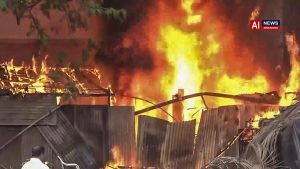
 Major fire breaks out in Mumbai’s Dongri, dousing ops on; one dead in November 7 highrise blaze
 Australia drops Marnus Labuschagne from New Zealand Test squad
 Targeted by U.S., Armed Group Strikes Back in Colombia
 Here’s the full text of Jensen Huang’s memo to Nvidia
Mumbai fire brigade fights
**
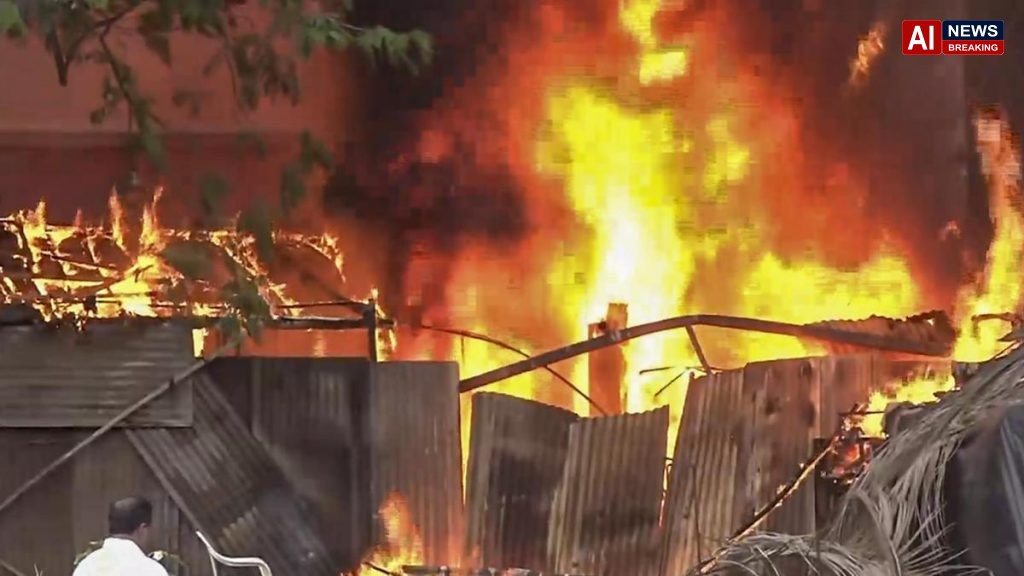
Major fire breaks out in Mumbai's Dongri, dousing ops on; one dead in November 7 highrise blaze - AI News Breaking
A massive blaze erupted in the densely populated Dongri district of Mumbai on the night of 7 November, prompting an urgent response from the city’s fire services and a host of auxiliary agencies. The fire, which broke out in a ten‑storey residential building on Dr. Cooper Road, was classified as a Level‑I call by the Mumbai Fire Brigade at 10.11 p.m., signalling the highest level of emergency response..
Within minutes, dozens of fire‑fighters, police officers, staff from the Brihanmumbai Electric Supply and Transport (BEST), ward officials and the 108 ambulance service were deployed to the site to combat the inferno and coordinate rescue operations. The coordinated effort reflects the city’s standard protocol for high‑rise fires, which require a multi‑agency approach to manage both fire suppression and the evacuation of residents in the cramped, maze‑like streets of the old city.Initial reports indicated that the fire originated on the fourth floor of the building, where a short circuit was suspected to have ignited a pile of stored household items. Witnesses described a sudden surge of flames that quickly spread through the wooden staircases and narrow corridors, creating a chimney effect that propelled smoke and heat upwards through the remaining floors..
The fire’s rapid ascent was exacerbated by the building’s age and the prevalence of makeshift modifications, a common feature in many of Mumbai’s older structures where residents add extensions without formal approvals. By the time fire crews arrived, thick black smoke billowed from the windows, and the fire had already engulfed the upper levels, casting an orange glow over the surrounding neighbourhood.The Mumbai Fire Brigade, operating under the state’s Directorate of Fire Services, dispatched three fire tenders, two water tankers and a specialist rescue unit equipped with cutting tools and breathing apparatus. The brigade’s senior officer on the scene, Deputy Superintendent R..
Sharma, explained that the Level‑I designation required the deployment of all available resources, including a standby rescue helicopter, although adverse weather conditions later forced the aircraft to remain on the ground. “Our priority is to contain the fire, prevent further spread to adjacent buildings and ensure the safety of any occupants who may still be trapped,” Sharma said in a brief statement to the press. The brigade’s rapid mobilisation is part of a broader city‑wide strategy that was revised after the 2017 fire in the same district, which claimed several lives and critical gaps in emergency response coordination.Police units from the local station set up a perimeter around the blaze to manage traffic and prevent unauthorised entry, a measure that also allowed emergency vehicles unimpeded access..
The Mumbai Police’s Crime Branch, which monitors incidents of arson and negligence, sent a team to investigate the cause of the fire while simultaneously supporting the fire brigade’s operations. In addition, the ward’s elected representative, Councillor Anita Deshmukh, arrived on the scene to liaise with the authorities and address the concerns of residents displaced by the fire. “We are providing temporary shelter in community centres and distributing food and water to those affected,” Deshmukh said, adding that the local municipal corporation had activated its disaster relief fund to cover immediate needs.The involvement of BEST, Mumbai’s municipal transport authority, was limited to providing a temporary shuttle service for residents who had been evacuated from the building and the surrounding lanes..
The service, which ran on a modified route along Dr. Cooper Road, aimed to reduce the strain on private vehicles and ease congestion caused by the influx of onlookers and media crews. While BEST’s role in fire emergencies is generally logistical, its participation underscores the city’s integrated approach to crisis management, where transport, health and law‑enforcement agencies work in tandem to mitigate secondary impacts of large‑scale incidents.The 108 ambulance service, a state‑run emergency medical response unit, had several ambulances stationed at the site within minutes of the fire’s onset..
Medical personnel attended to individuals suffering from smoke inhalation, burns and panic‑induced injuries. Among the casualties was a 42‑year‑old male resident who was found unconscious on the fifth floor and later pronounced dead at the hospital due to severe burns and respiratory failure. His death marks the first fatality recorded in the ongoing blaze, although officials cautioned that the death toll could rise as more victims are examined for hidden injuries..
“We are conducting a thorough medical assessment of all rescued individuals, many of whom are exhibiting signs of carbon monoxide poisoning,” said Dr. Priya Nair, the chief medical officer of the 108 service.Neighbouring buildings were evacuated as a precaution, with over 300 residents temporarily relocated to nearby schools and community halls. The fire’s proximity to a densely packed market area raised concerns about the potential for the flames to leap across narrow alleys and ignite adjacent structures..
To prevent such a scenario, fire crews focused on creating firebreaks by demolishing compromised walls and using high‑pressure water jets to cool the façades of nearby buildings. Their efforts appear to have averted a wider conflagration, though some experts argue that the city’s building codes and enforcement mechanisms need further strengthening to reduce the likelihood of similar events recurring.The incident has reignited a long‑standing debate about the safety of Mumbai’s informal housing stock, particularly in heritage‑rich districts where many structures predate modern fire safety standards. Urban planners and fire safety advocates have long warned that the combination of ageing electrical wiring, illegal floor extensions and the storage of flammable materials in residential spaces creates a volatile environment..
In a recent report, the National Disaster Management Authority (NDMA) highlighted that Mumbai accounts for a disproportionate share of high‑rise fire incidents in India, attributing the trend to rapid urbanisation and inadequate retrofitting of older buildings.City officials have pledged a comprehensive audit of fire safety compliance in the Dongri area, with the fire brigade set to issue notices to any premises found lacking functional fire alarms, extinguishers or emergency exits. The municipal corporation’s chief engineer, Arvind Patil, announced that a rapid‑response team would be deployed within the next 48 hours to assess structural integrity and recommend remedial measures. “We cannot afford to wait for another tragedy,” Patil asserted, noting that the city’s fire department has already increased its budget for fire‑prevention campaigns and community training programmes.The fire also highlighted the challenges faced by emergency responders in navigating Mumbai’s narrow lanes and congested streets, which often impede the swift arrival of heavy fire‑fighting equipment..
In response, the fire brigade has been trialling the use of smaller, more manoeuvrable fire‑fighting vehicles, as well as exploring the feasibility of deploying drone technology to provide aerial assessments in real time. While these initiatives are still in pilot stages, officials expressed optimism.
Updated: November 9, 2026
The Dongri blaze exposes how Mumbai’s labyrinthine old quarters turn routine electrical faults into deadly infernos, proving that cramped streets and DIY extensions are as much a fire hazard as any spark. Until the city enforces retrofits and re‑thinks building density, each high‑rise fire will test the