 Ambush of Salvadoran Soldiers Escalates Haiti’s Anti-Gang Mission
 Oil prices extend rally to near six-month high amid Houthi attacks on Saudi Arabia
 Arraial’s evangelical voters back Bolsonaro
 Kerala High Court rejects petition to halt reconstitution of State Waqf Board.
Nana Patekar Dies at 75: Veteran Actor’s Death, Career, Tributes and State Funeral | AI News Breaking
**
Nana Patekar Dies at 75: Veteran Actor's Death, Career, Tributes and State Funeral AI News Breaking - AI News Breaking
nana patekar dies veteran:
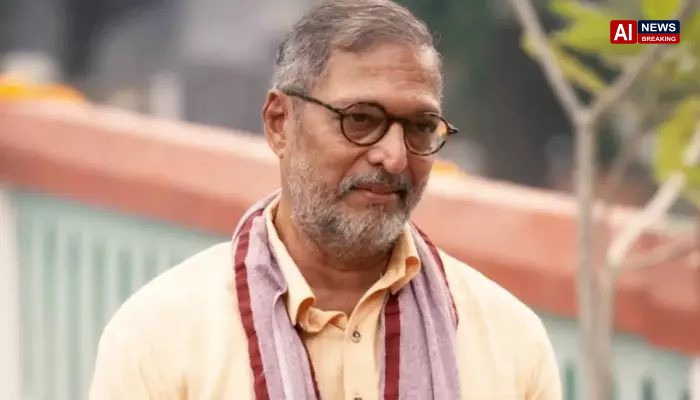
Nana Patekar death: Veteran Indian actor Nana Patekar died at the age of 75 on October 8, 2026, after suffering a cardiac arrest at his residence in Dona Paula, Goa. His death has brought an end to one of the most distinctive acting careers in Hindi and Marathi cinema, prompting tributes from Prime Minister Narendra Modi, actors, political leaders and generations of colleagues.
Nana Patekar was not simply a popular film star. Over nearly five decades, he built a reputation as an actor whose voice, intensity, body language and ability to inhabit difficult characters made him one of Indian cinema’s most recognisable performers. From serious parallel cinema to mainstream Bollywood entertainers, he repeatedly moved between genres without losing the individuality that defined his screen presence.
Maharashtra has announced that Patekar will be accorded a state funeral in recognition of his contribution to Marathi theatre and Hindi and Marathi cinema. His final rites are scheduled to take place in Pune, according to reports.
Nana Patekar Dies at 75 After Cardiac Arrest in Goa
Nana Patekar died in Goa early Thursday morning, October 8, at the age of 75. Reports said the actor was found unresponsive at his residence in Dona Paula after experiencing severe chest pain.
He was taken to Manipal Hospital, where doctors attempted to revive him. Medical efforts reportedly continued for around 45 minutes, but the actor could not be saved. He was declared dead at approximately 5:20 a.m.
The hospital confirmed cardiac arrest in connection with his death, while reports noted that a medico-legal process and post-mortem examination were initiated.
The news spread rapidly across India, with colleagues from Hindi and Marathi cinema, political leaders and admirers expressing shock and grief.
For many viewers, the news was difficult to absorb because Patekar remained an active public figure and had continued to appear in films and at public events.
His death therefore represents not merely the loss of a veteran actor but the closing of an important chapter in India’s modern cinematic history.
A Career That Changed the Meaning of Intensity
Nana Patekar’s acting career stretched across almost five decades.
Born Vishwanath Patekar in Maharashtra, he began his journey through Marathi theatre before gradually establishing himself in Hindi cinema. His early work was closely associated with serious cinema and films that focused on social realities, conflict, morality and human relationships.
What made Patekar unusual was his ability to create memorable characters without relying on conventional glamour.
He could play a soldier, police officer, criminal, politician, troubled individual, comic character or ordinary man and still make the character unmistakably his own.
His performances were often driven by controlled aggression, pauses, unpredictable dialogue delivery and an emotional intensity that could shift dramatically within a scene.
That combination became his signature.
In an industry where leading actors were frequently expected to conform to established ideas of heroism, Patekar created a different kind of screen identity.
He could be the protagonist without behaving like a traditional hero.
He could be frightening without becoming a stereotypical villain.
He could be funny without abandoning the seriousness of the character.
And he could deliver a short line in a way that audiences remembered decades later.
From Marathi Theatre to Hindi Cinema
Patekar’s foundations were built in theatre.
Theatre gave him an understanding of voice, movement, timing and emotional control that later became central to his film performances.
His transition into cinema allowed those abilities to reach a much wider audience.
His early Hindi film work was connected to the parallel and serious cinema movements that emerged strongly in India during the 1970s and 1980s.
His filmography eventually included acclaimed works such as Gaman, Salaam Bombay!, Parinda, Prahaar: The Final Attack, Krantiveer, Khamoshi: The Musical, Ab Tak Chhappan, Rajneeti, Natsamrat and the hugely popular Welcome.
Each film represented a different dimension of his abilities.
He was capable of moving between artistic cinema and mainstream entertainment without appearing to compromise his identity as an actor.
That versatility became one of his greatest strengths.
The Films That Defined Nana Patekar
Parinda
Parinda remains one of the most important films associated with Patekar’s career.
His performance demonstrated how an actor could create menace and vulnerability simultaneously.
The film’s dark atmosphere and morally complicated characters gave Patekar the opportunity to display the intensity that would become one of his trademarks.
His work in the film contributed to the reputation that he was an actor capable of making supporting or morally complex characters dominate the screen.
Krantiveer
- Krantiveer* became another major milestone.
Patekar’s portrayal combined anger, patriotism, frustration and social criticism.
The film allowed him to connect with a mass audience while retaining the emotional seriousness associated with his earlier work.
His performance became one of the defining examples of his ability to transform dialogue into dramatic force.
Prahaar: The Final Attack
Patekar’s relationship with the armed forces and his portrayal of military characters added another important dimension to his career.
Prahaar: The Final Attack, which he also directed, reflected his interest in discipline, military life and national service.
The film remains significant because it demonstrated that Patekar was not merely an actor but also a filmmaker interested in social and institutional themes.
Khamoshi: The Musical
His performance in Khamoshi: The Musical showed another side of the actor.
Rather than depending entirely on aggression or intensity, Patekar brought emotional restraint and vulnerability to the role.
The film also demonstrated his ability to work effectively within an ensemble cast.
Welcome
For an entirely different generation of audiences, Patekar became unforgettable through comedy.
His portrayal in Welcome demonstrated that his dramatic intensity could be transformed into comic timing.
The film introduced his style of performance to a younger mainstream audience and established that he could generate laughter as effectively as he could generate tension.
His comic performances remain particularly important because they prevented his public image from being limited to serious or aggressive roles.
Natsamrat
His Marathi work later reinforced his status as one of India’s most accomplished performers.
Natsamrat was especially significant because it placed him at the centre of an emotionally demanding story about an ageing theatre performer.
The role connected directly with his theatrical roots and allowed audiences to see the depth of an actor whose career had been shaped by stage performance.
Three National Film Awards and Padma Shri
Patekar’s contribution to Indian cinema was recognised with major national honours.
He won three National Film Awards during his career and received the Padma Shri in 2013 for his contribution to the arts.
These honours reflected the unusual breadth of his work.
He was respected not only as a commercial actor but also as a performer capable of handling demanding artistic roles.
His achievements also crossed linguistic boundaries.
He remained an important figure in both Marathi and Hindi cinema, helping maintain a connection between regional theatre traditions and mainstream Indian filmmaking.
Nana Patekar’s Last Days and Final Public Appearance
One of the details that has particularly affected admirers is that Patekar had remained publicly active shortly before his death.
Reports said his last public appearance came on October 4 at an event in Goa.
During the gathering, Patekar reportedly spoke about time, life and mortality.
The comments have attracted considerable attention following his death because they came only days before the actor passed away.
The remarks were not presented as a prediction of his death. Rather, they reflected the philosophical and direct way in which Patekar often discussed life.
That makes the moment especially poignant in retrospect.
His death four days later has caused many people to revisit those comments as a final public reflection from an actor who had spent decades examining human emotions through his work.
Prime Minister Narendra Modi Pays Tribute
Prime Minister Narendra Modi was among the prominent personalities who expressed condolences following Patekar’s death.
Modi described Patekar as an actor with exceptional intensity, individuality and presence and highlighted the memorable characters he created over the course of his career.
He also noted Patekar’s contribution to both Hindi and Marathi cinema and expressed condolences to his family, friends and admirers.
The Prime Minister’s tribute reflected the national stature Patekar had achieved.
His appeal was not restricted to one generation, language or type of cinema.
He was known to audiences who watched serious films, commercial Bollywood productions, Marathi cinema and theatre.
Akshay Kumar Remembers Nana Patekar
Actor Akshay Kumar also expressed deep sorrow over Patekar’s death.
The two actors worked together in films including Welcome and Housefull 5.
Kumar remembered Patekar’s distinctive ability to command attention without excessive performance and highlighted his voice, intensity and authenticity.
Their professional association demonstrated another side of Patekar’s career: his ability to remain relevant across different generations of Hindi cinema.
Anupam Kher Pays Emotional Tribute
Actor Anupam Kher also reacted emotionally to the news.
Kher recalled Patekar not only as an extraordinary actor but also as a friend and fellow performer.
His tribute highlighted the personal impact Patekar had on people who worked alongside him.
For colleagues from the theatre and film communities, the loss was therefore both professional and deeply personal.
Riteish Deshmukh Calls It the End of an Era
Riteish Deshmukh was among the actors who described the loss as particularly difficult.
Deshmukh had worked with Patekar in films including Bluffmaster and Housefull 5.
His tribute emphasised Patekar’s versatility and his ability to perform dramatically different kinds of characters.
Deshmukh also highlighted Patekar’s contribution outside cinema, including his social work.
That broader legacy is an important part of understanding Patekar’s public image.
Nana Patekar and Social Work
Patekar’s influence extended beyond acting.
He was associated with social initiatives and charitable work, particularly through the Naam Foundation, which became known for work related to farmers and rural communities.
His public image was therefore not limited to film awards and box-office success.
He frequently spoke about social responsibility, rural distress and the challenges facing ordinary Indians.
This side of his life added another layer to his reputation.
For many admirers, his legacy therefore includes both the characters he played and the causes he supported.
Maharashtra Announces State Funeral
The Maharashtra government has announced that Nana Patekar will receive a state funeral.
Maharashtra Cultural Affairs Minister Ashish Shelar said the decision recognised Patekar’s unparalleled contribution to Marathi theatre as well as Marathi and Hindi cinema.
Reports indicate that the final rites will take place near Pune, at his farmhouse in Donaje.
The decision to provide state honours reflects the scale of Patekar’s contribution to Maharashtra’s cultural landscape.
He represented an important connection between Marathi theatre, regional cinema and mainstream Hindi filmmaking.
Why Nana Patekar Was Different
There have been many successful actors in Indian cinema.
There have been many award-winning actors.
There have also been actors who became major commercial stars.
Nana Patekar belonged to a smaller category: performers whose style became instantly recognisable.
His voice alone could identify him.
His pauses could create tension.
His facial expressions could communicate anger, sadness or irony without requiring elaborate dialogue.
He also possessed an unusual willingness to play characters who were not conventionally attractive or heroic.
That gave his performances a sense of realism.
Instead of making every character aspirational, Patekar often made them human.
His characters could be flawed.
They could be angry.
They could be broken.
They could be morally uncertain.
But they were rarely forgettable.
The Power of His Voice
One of Patekar’s most important artistic tools was his voice.
His dialogue delivery was different from the polished, theatrical style traditionally associated with many Bollywood stars.
He could speak softly and suddenly shift into anger.
He could use silence as effectively as dialogue.
He could stretch a sentence, pause between words and change the emotional meaning of a scene through rhythm alone.
This became one of the most imitated aspects of his performances.
Yet imitation rarely produced the same impact because Patekar’s delivery was closely connected to the psychology of the character.
His voice was not merely a stylistic device.
It was part of his acting.
A Bridge Between Parallel Cinema and Mainstream Bollywood
Patekar’s career also tells a larger story about Indian cinema.
He emerged during a period when parallel cinema was gaining influence and audiences were increasingly exposed to films dealing with social realities rather than conventional commercial formulas.
Over time, the boundaries between serious cinema and mainstream entertainment became less rigid.
Patekar was one of the performers who successfully crossed that boundary.
He could appear in a socially serious film one year and a commercial comedy in another.
He could work with acclaimed filmmakers and then appear in a mass-market entertainer.
That flexibility helped him remain relevant for decades.
A Career Spanning Generations
One measure of a great actor is longevity.
Another is the ability to remain meaningful to different generations.
Patekar achieved both.
Older audiences knew him from films such as Parinda, Krantiveer and Prahaar.
Younger audiences discovered him through Welcome, Rajneeti, Ab Tak Chhappan, Natsamrat and later projects.
This generational continuity is one reason his death has generated such a broad response.
People are not mourning one film or one period of his career.
They are remembering different Nana Patekars from different stages of their own lives.
Nana Patekar’s Relationship With Theatre
Although cinema made him nationally famous, theatre remained an important foundation of his artistic identity.
Theatre requires an actor to control an entire performance without the benefit of cinematic editing.
The performer must communicate emotion through voice, body movement and timing in real time.
Patekar’s film acting retained that theatrical discipline.
It was one reason his performances often appeared physically and emotionally immediate.
His career is therefore important not only within Bollywood but also within the broader history of Indian theatre.
The Human Being Behind the Actor
Patekar’s public personality was often described as direct and uncompromising.
He was known for expressing his views frankly.
That directness sometimes generated controversy, but it was also part of the personality that audiences associated with him.
Unlike many celebrities who carefully maintain a polished public image, Patekar often appeared less concerned with conventional celebrity behaviour.
That made him unpredictable but also distinctive.
His appeal came partly from the perception that he was speaking in his own voice rather than performing the role of a celebrity.
An Era Comes to an End
The death of Nana Patekar is significant because Indian cinema has lost one of the last major performers from a generation that connected theatre, parallel cinema and mainstream Bollywood.
His career coincided with enormous changes in the Indian film industry.
The industry moved from single-screen dominance to multiplexes.
Television became a major entertainment platform.
Streaming transformed the way audiences discovered films.
Social media changed celebrity culture.
Yet Patekar retained an identity that did not depend on any one platform.
His performances existed independently of changing technology.
That is the mark of a durable actor.
Nana Patekar’s Legacy
What will remain after Nana Patekar’s death is not simply a list of awards or box-office successes.
His greatest legacy is likely to be the acting vocabulary he created.
The intensity.
The pauses.
The voice.
The unpredictable shifts in emotion.
The willingness to portray damaged and complicated human beings.
The ability to move between tragedy and comedy.
And the refusal to become predictable.
His best performances will continue to be revisited because they are connected to emotions that do not become outdated.
Anger remains relevant.
Grief remains relevant.
Loneliness remains relevant.
Courage remains relevant.
Social injustice remains relevant.
And the struggle to understand one’s place in society remains relevant.
These were themes that appeared repeatedly in Patekar’s work.
What His Death Means for Indian Cinema
Every generation eventually loses the artists who shaped its cultural memory.
Nana Patekar’s death is one such moment.
His passing creates a gap that cannot easily be filled because the film industry does not simply produce another actor with the same combination of theatre training, voice, intensity, social awareness and willingness to take unconventional roles.
Indian cinema will continue to produce talented performers.
But Nana Patekar’s style was deeply personal.
That is why his death feels like the end of an era rather than merely the death of a successful actor.
Nana Patekar’s Enduring Connection With Audiences
Perhaps the strongest evidence of his legacy is the way audiences remember his characters.
Many actors are remembered by their biggest films.
Patekar is remembered by individual scenes, lines, expressions and moments.
That is a different kind of cultural impact.
His performances became part of popular conversation.
His dialogues were repeated.
His mannerisms were imitated.
His characters were discussed long after films left theatres.
And generations of actors studied his performances.
That influence will continue even as Indian cinema changes.
Funeral and Final Rites
The Maharashtra government has decided to accord Nana Patekar a state funeral, acknowledging his contribution to Marathi theatre and Hindi and Marathi cinema. Reports say his body will be taken from Goa to Pune and the final rites will be conducted at his farmhouse in Donaje.
The funeral is expected to bring together members of the film industry, theatre community, political leadership, friends and admirers.
For Maharashtra, it will be a moment to honour a cultural figure whose career extended far beyond conventional Bollywood celebrity.
For the film industry, it will be a farewell to one of its most recognisable voices.
For audiences, it will be an opportunity to remember the characters that became part of their lives.
Nana Patekar: Key Facts at a Glance
- Name: Nana Patekar, born Vishwanath Patekar
- Age at death: 75
- Date of death: October 8, 2026
- Place of death: Goa
- Reported cause: Cardiac arrest
- Major fields: Hindi cinema, Marathi cinema and theatre
- Career span: Nearly five decades
- Major films: Parinda, Prahaar: The Final Attack, Krantiveer, Khamoshi: The Musical, Welcome, Ab Tak Chhappan, Rajneeti, Natsamrat and others
- National Film Awards: Three
- Padma Shri: Awarded in 2013
- State funeral: Announced by Maharashtra
- Final rites: Expected in Pune’s Donaje area
AI News Breaking Editorial Analysis
Nana Patekar’s death represents more than the loss of a veteran Bollywood performer. It marks the passing of an actor whose career demonstrated that longevity in Indian cinema does not necessarily require conventional stardom. Patekar built his reputation through performance rather than image, and his strongest characters were often defined by contradiction: strength mixed with vulnerability, anger mixed with compassion, humour mixed with tragedy.
His career also offers an important lesson about the relationship between regional and national cinema. His roots in Marathi theatre remained visible throughout his Hindi film career, allowing him to bring a theatrical intensity and linguistic authenticity to mainstream cinema. At a time when Indian entertainment is increasingly shaped by global streaming platforms and rapidly changing celebrity culture, Patekar’s legacy demonstrates the lasting value of performance that is rooted in character rather than publicity.
His death also reminds audiences that cinema’s cultural memory is not created only by blockbuster numbers. It is created by performances that stay with viewers. Patekar’s characters survived because audiences recognised something human in them. That is ultimately why his work is likely to remain relevant.
The state funeral announced by Maharashtra is therefore more than a ceremonial honour. It represents institutional recognition of a career that connected theatre, Marathi culture, parallel cinema and mainstream Bollywood. As Indian cinema moves into a new era, Nana Patekar’s body of work will remain a reference point for actors who want to demonstrate that intensity, authenticity and versatility can create a legacy stronger than conventional celebrity.
Nana Patekar may no longer be on screen, but the characters he created will continue to speak. His voice, his intensity and his uncompromising approach to performance have secured his place in the history of Indian cinema.