Europe warns of Russia’s hybrid attacks but struggles to counter them
  Former chief election commissioner calls SIR scheme illegal.
  A Corruption Scandal Is Reshaping Brazil’s Presidential Election
  US citizen injured in Illinois after ICE agents mistook him for fugitive, tried to arrest him
  At 10 years old, Smithsonian’s Black museum is undaunted amid pressure from Trump administration
 NCERT alters dancing girl image
The NCERT has altered the iconic dancing girl image in its new class 9 art textbook, sparking controversy among art historians and educators who argue that the change sanitizes the image and suppresses its cultural significance, highlighting the tension between artistic expression, cultural sensitivity, and educational demands.
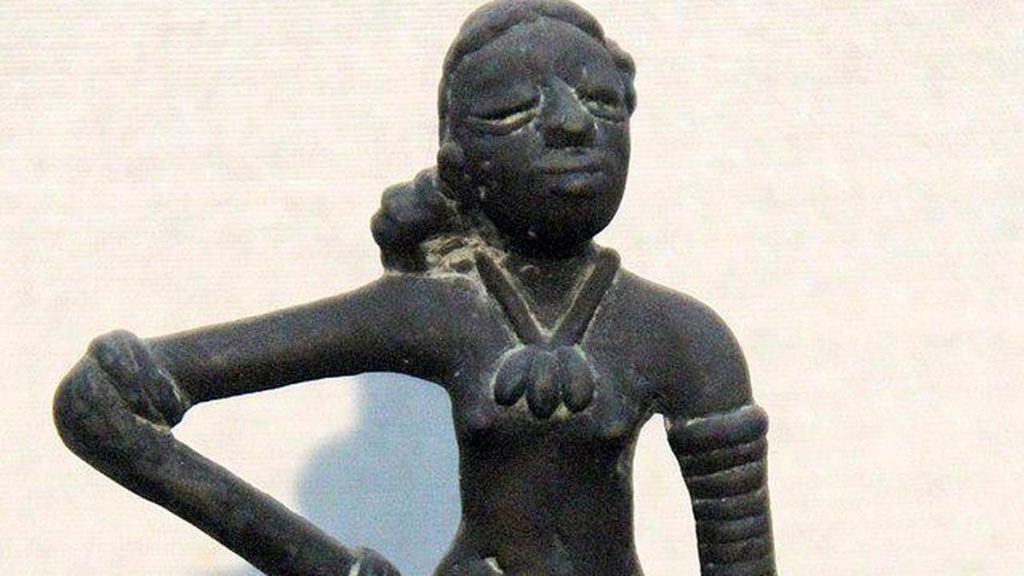
NCERT shades image of Indus Valley ‘dancing girl’ in new class 9 art textbook The National Council of Educational Research and Training (NCERT) has released a revised textbook for class 9 students, which includes a new depiction of the ancient Indus Valley Civilization’s iconic dancing girl statuette. This change has caught the attention of art historians and cultural commentators, who point out that the NCERT has altered the original image in a significant way. The original bronze statuette is a remarkably well-preserved artifact discovered at Mohenjo Daro, a UNESCO World Heritage site in modern-day Pakistan..
Its depiction of a nude woman, adorned with bangles on one arm and a necklace, has captivated art lovers for generations. However, the new textbook’s image shows the statuette with a significantly darker shade and parts of the torso covered, deviating from its original form. Art historians argue that the changes to the image undermine the significance of the dancing girl as a representation of ancient Indus Valley art and culture..
They stress that the original statuette is not merely a representation of a dancer, but an embodiment of the people and values of the Indus Valley Civilization. By altering the image, the NCERT appears to have sanitized the dancing girl, reducing its historical and cultural context to a generic, abstract concept. In a statement, the NCERT maintained that their intention was to avoid any potential controversy or discomfort..
They argued that the new image is still consistent with the original statuette and that the decision to darken the shade was made to make the image more suitable for the classroom environment. Nonetheless, many art historians remain unconvinced by these justifications. Critics of the revised textbook also point out that the NCERT has been inconsistent in their approach to depicting ancient artworks..
In other revisions, the NCERT has retained the original images of the artifacts, making the change to the dancing girl all the more puzzling. They question whether there was a deliberate attempt to suppress the sensuality and erotic appeal of the original image. Furthermore, the revision highlights the broader issue of censorship in education..
Many argue that such changes demonstrate a broader societal reluctance to engage with the complexities and nuances of history, including representations of the human body. They stress that education should facilitate critical thinking and open discussion, rather than stifling curiosity and imagination. The reaction to the revised textbook has been intense, with many art enthusiasts and historians expressing their dismay on social media..
They see the change as a blow to artistic and cultural literacy, particularly for students who are about to enter the world of higher education. However, some educators argue that the change is a minor tweak in a broader effort to make art education more accessible and inclusive. One art historian noted that art education should strive to challenge our assumptions and broaden our perspectives, not to avoid difficult conversations..
They argue that the dancing girl should be presented in its original form, with all its complexities and connotations, so that students may engage with it in a more meaningful and nuanced way. Others argue that the NCERT’s approach reflects a broader societal discomfort with the representation of female bodies in ancient cultures. They point out that art in ancient cultures, including the Indus Valley Civilization, often depicted women in highly stylized and sensual forms, reflecting their own values and understanding of the human form..
Historians also caution that such changes to historical artifacts can have long-lasting consequences. They highlight instances where the reinterpretation of cultural symbols has led to misrepresentation and distorted perception of historical events. The controversy over the revised textbook highlights the tension between artistic expression, cultural sensitivity, and the demands of a changing educational landscape..
As the debate continues, one thing is clear: the Indus Valley Civilization’s iconic dancing girl remains a powerful symbol of ancient art and culture, and its interpretation requires sensitivity, nuance, and a critical approach. In the end, it is essential to remember that the dancing girl, in all its forms, represents a piece of our collective cultural heritage. As such, it deserves to be presented accurately and sensitively, allowing future generations to engage with it in a rich and meaningful way..
Updated: June 15, 2026
A revised class 9 art textbook by the National Council of Educational Research and Training has sparked controversy with its altered depiction of the ancient Indus Valley Civilization’s iconic dancing girl statuette, with some arguing it sanitises the image and suppresses its cultural significance. The change has been met with strong reactions from art historians and educators, who believe it undermines the importance of presenting accurate and nuanced representations of history.
The subtle alterations made to the Indus Valley Civilization’s iconic dancing girl statuette in the NCERT textbook have exposed a broader societal discomfort with representing the human body in ancient cultures, revealing a deep-seated unease with the complexities and nuances of history. This censorship of the dancing girl’s representation underscores the need for educators and policymakers to prioritize critical thinking, artistic expression, and cultural sensitivity in the pursuit of a more inclusive and nuanced understanding of our collective heritage.