
 Tao Tokyo Spring 2027
  Karnataka SIR: Teaching on the back burner
  Trump administration offers mixed messages on limits to Ukraine’s Starshield access
  US Treasury proposes a rule to crack down on high-tech investments in China, other adversaries
  Calley Means, a key MAHA advocate, resigns as a top RFK Jr. adviser
 NEET-PG probe launched after technical glitches disrupt Jaipur exam
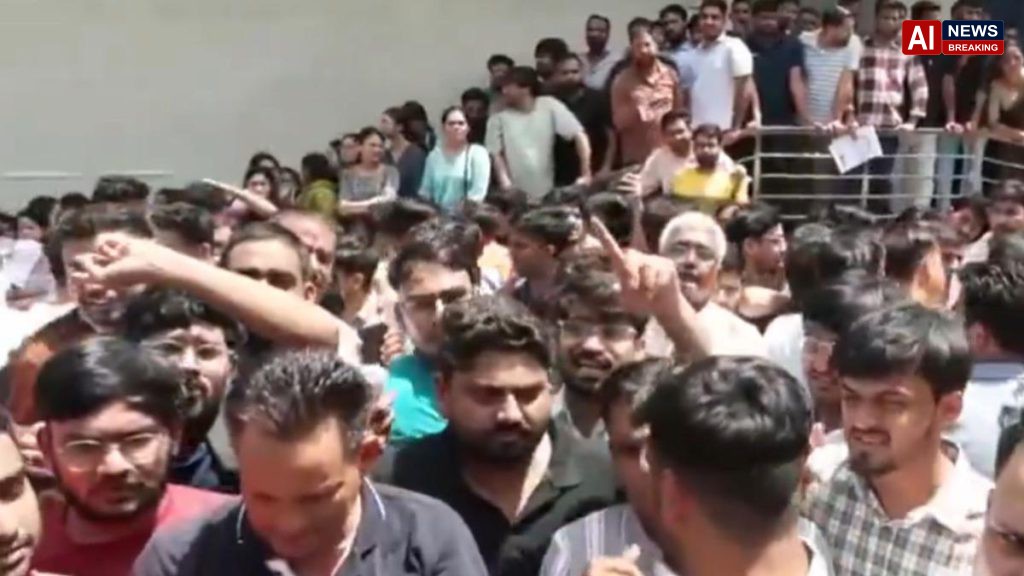
NEET-PG 2026: Technical glitches mar exam at two Jaipur centres; students protest - AI News Breaking
neetpg probe launched technical:
The National Eligibility cum Entrance Test for Postgraduate medical seats, widely regarded as one of the most critical milestones in the Indian medical education journey, witnessed significant disruption on Wednesday at two examination centres in Jaipur. Technical glitches marred the proceedings, leading to widespread confusion, anxiety, and subsequent protests among candidates who had travelled from across the country for the high-stakes assessment. The National Board of Examinations, which oversees the NEET-PG process, acknowledged the irregularities and has initiated a probe into the matter, promising to ensure that no student is disadvantaged by the technical failures..
However, the immediate aftermath saw scenes of distress and anger, with students questioning the reliability of the digital infrastructure chosen for such a pivotal national examination.Reports from the ground indicate that the issues were not isolated incidents but part of a broader systemic failure at the affected locations. Candidates at both centres described a chaotic scenario where computer systems repeatedly crashed or froze, disrupting their ability to complete the paper within the allotted time. Some students claimed their systems shut down six or seven times during the examination, forcing them to lose precious minutes while waiting for technical support to restore their sessions..
Others alleged that the disruption occurred even more frequently, creating an environment of immense stress that many felt compromised their ability to perform to their full potential. The sheer frequency of the breakdowns, according to those present, suggested a fundamental flaw in the software or hardware configuration used at these specific venues.The protest that followed was immediate and conspicuous. As the exams concluded, a large group of candidates gathered outside the examination halls, holding placards and chanting slogans demanding compensation for the lost time..
Many students had invested significant financial and emotional capital in their preparation, often moving to different cities to take the test. The unexpected technological failures sparked fears that their hard work might be negated by factors entirely beyond their control. Some candidates expressed their frustration on social media, tagging various authorities and sharing screenshots of error messages or videos of the empty screens, seeking public sympathy and administrative intervention to rectify the situation.In response to the mounting pressure, officials from the National Board of Examinations arrived at the scene to address the aggrieved students..
While initial statements were cautious, officials later confirmed that technical glitches had indeed occurred at the two Jaipur centres. They assured the candidates that a thorough investigation would be conducted to determine the exact cause of the system failures. The board representatives emphasized that they were committed to maintaining the integrity and fairness of the examination process, but they also acknowledged the distress caused to the aspirants..
This admission, while necessary, did little to immediately soothe the anxiety of the thousands of students affected by the disruption.The nature of the technical glitches varied slightly between the two centres, suggesting that the issue might not have been a single point of origin. At one centre, students reported that their screens went black intermittently, requiring manual reset by the invigilators. At the other, the problem was described as a lag in the system’s response time, where clicking on an answer would not register, or the system would freeze entirely..
In both cases, the resolution time was unpredictable, adding to the confusion. Students reported that invigilators were overwhelmed by the volume of issues and struggled to provide adequate support to every affected candidate, leading to a feeling of abandonment among the aspirants during their crucial examination window.The impact of such disruptions extends beyond the immediate inconvenience of lost time. For medical aspirants, every minute counts, and the pressure of the NEET-PG exam is already intense..
The unpredictability introduced by technical failures can lead to severe psychological distress, potentially affecting performance even after the system is restored. Many students expressed that they could not regain their concentration after the initial shock of the system crash, leading to mistakes in their answers. This psychological toll is a significant concern, as the competitive nature of the exam means that even a small drop in score can result in missing out on a desired specialization or college.Official statements released later in the day indicated that the board had recorded the specific time intervals during which the glitches occurred and identified the candidates who were affected..
They promised that these records would be used to assess whether any compensation in the form of extended time or score adjustment is warranted. However, the criteria for such compensation have historically been stringent, and students remain skeptical about whether adequate redressal will be provided. Previous instances of technical issues in national entrance exams have often seen limited restitution, leading to a lingering distrust among the student community towards the conducting bodies.The incident has reignited debates regarding the reliance on fully digital examination systems in India..
While digital formats offer advantages in terms of speed and ease of evaluation, they are also vulnerable to power outages, server crashes, and software bugs. Critics argue that hybrid models or better backup systems are essential safeguards. The Jaipur incident highlights the increasing risks associated with putting such a high-stakes examination entirely in the digital realm without robust contingency plans..
Educational experts have called for stricter protocols and better technical infrastructure to prevent such occurrences in the future, emphasizing that the fairness of the examination must be protected at all costs.Parents and guardians of the students also joined the protests, adding to the intensity of the situation. Many had accompanied their children to Jaipur, investing in travel and accommodation costs. Their presence added a layer of emotional weight to the demonstrations, as they voiced concerns about the declining standards of administrative management in large-scale examinations..
The collective anxiety of families, combined with the fury of the students, created a charged atmosphere that continued for hours after the exams ended. Local law enforcement was deployed to maintain order, ensuring that the protests remained peaceful but vocal.The National Board of Examinations has stated that the cause of the glitch is currently under technical review, with logs from the servers and local machines being analyzed. Preliminary reports suggest that a localized server failure might have been the primary culprit, though this has not been officially confirmed..
The board has also reiterated that all candidate data was backed up, meaning that the answers recorded before the crashes were likely saved. However, the loss of time remains a critical issue that the board must address transparently to maintain public trust in the examination system.As the dust settles, the focus now shifts to the investigation and the subsequent announcements from the authorities. Students are waiting with bated breath for a clear timeline regarding the probe and the potential remedies..
The incident serves as a stark reminder of the vulnerabilities in modern examination systems and the high stakes involved for medical aspirants. For the thousands who sat for the NEET-PG 2026, the experience was marred by uncertainty, but the outcome remains in the hands of the regulators. The ability of the National Board of Examinations to handle this crisis with transparency and fairness will likely define public perception of the examination for years to come.In the broader context, this event underscores the need for continuous improvement in the administrative and technical frameworks.
Updated: August 30, 2026
Insight: This chaos exposes the fragile social contract of digitizing high-stakes life events without bulletproof safety nets.
Trust isn’t just won by fair grading, but by proving the system respects the human cost of its own glitches.