 Legal action ordered against officials over irregularities in voter list in Pilibhit
  Floods force evacuations and rooftop rescues
  Revival Rugs Birthday Sale: 20 Percent Off Sitewide Through Sunday
  Ohio mayor says employee error caused chemical leak, lifts evacuation orders
  Nabi, Rashid and quicks lead Afghanistan to tri-series title
 Nepal battles severe flood aftermath with infrastructure and livelihoods devastated
**
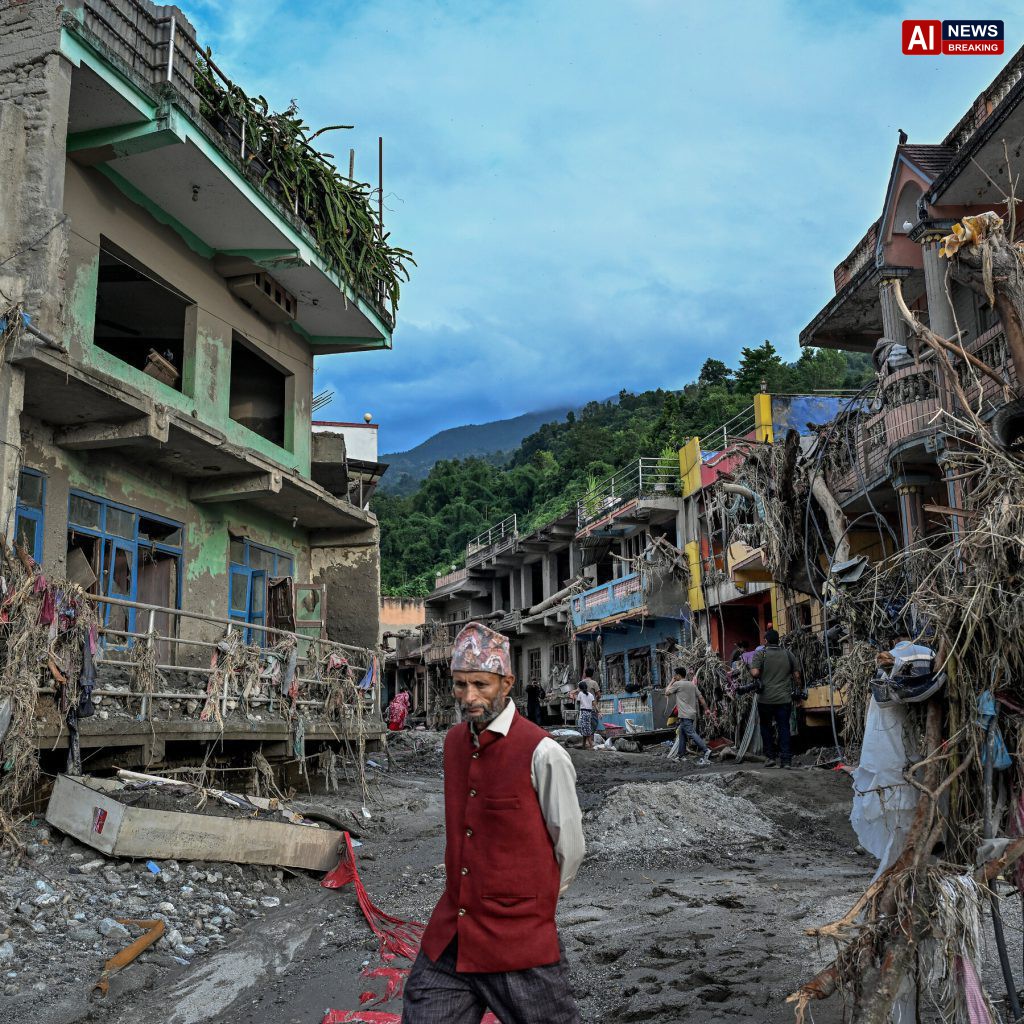
Nepali Flood Survivors Face Profound Loss, Pressing Needs and Murky Futures - AI News Breaking
Nepal, a nation accustomed to the rhythmic and often violent transformations of its mountainous terrain, finds itself grappling with the aftermath of a catastrophic flood event that has reshaped entire communities in a matter of hours. The monsoon rains, heavier than in any recorded memory for the affected districts, did not merely inundate the land but erased it, swallowing homes, harvests, and histories beneath a churning slurry of mud, rock, and debris. As the waters recede, leaving behind a landscape of profound desolation, the survivors are left to navigate a reality that is both physically uninhabitable and psychologically shattering..
The immediate relief efforts, while swift and numerous, begin to reveal the immense gap between emergency response and the long-term recovery required to restore lives that have been fundamentally severed. This is not a story of simple displacement, but of existential loss, where the very foundations of community, economy, and identity have been washed away, leaving residents in a state of suspended animation, waiting for signs of a future that remains dangerously uncertain.In the days immediately following the floods, the sheer scale of destruction became apparent as rescue teams traversed the devastated valleys. Entire villages, some dating back generations, have vanished, reduced to scattered remnants of brick and timber that barely protrude from the new topography..
The primary focus for the thousands of displaced individuals has been the most basic of human needs: shelter, clean water, and food. Many families now reside in temporary tents or crowded communal centers, sharing limited resources with relatives and strangers alike. The psychological toll of this displacement is immense, compounded by the sudden loss of personal possessions that held sentimental and practical value..
For many, the loss is total; they have returned to the site of former homes to find nothing but mud, a stark reminder that the lives they built have been physically obliterated. The trauma of witnessing such erasure is a burden that few support systems are currently equipped to handle, creating a silent crisis alongside the visible humanitarian one.The agricultural sector, the backbone of rural Nepal’s economy, has suffered a blow that may take years, if not a generation, to recover. Fields that were crucial for nutrition and income have been buried under layers of silt and rocks, rendering them unusable for immediate planting..
Farmers, who rely on the seasonal rhythms of the monsoon for their livelihood, now face a paradoxical situation where the rain that was supposed to nourish their crops has instead destroyed the soil’s fertility and structure. The loss of seed stocks and livestock, which often represent a family’s entire financial asset, means that even if the land recovers, the capital required to cultivate it is gone. This economic devastation threatens to push thousands of households below the poverty line, forcing them into a precarious cycle of debt and dependency..
The absence of a next harvest looms large, creating anxiety not just for the present, but for the coming winter months when food prices traditionally rise.Access to healthcare remains a significant concern in the affected regions, as many local health posts were either damaged or cut off by landslides that blocked vital mountain roads. The disruption of medical supply chains has left essential medicines, such as insulin and antibiotics, in short supply, while the fear of waterborne diseases grows with the presence of stagnant floodwater. Medical teams from the Nepali government and international organizations are working tirelessly to set up makeshift clinics, but the remoteness of many villages makes consistent care difficult to administer..
The elderly, who often require daily medication or assistance with mobility, have been particularly vulnerable to the chaos. Without continuous care, minor health issues can escalate into life-threatening conditions, adding another layer of urgency to the relief efforts. The mental health aspect of this crisis is further exacerbated by the lack of specialized trauma counseling, leaving survivors to process their grief in isolation or within the fragmented support of their communities.Education has also been severely disrupted, with schools serving as both victims of the disaster and sanctuaries for the displaced..
Many school buildings were damaged or destroyed, depriving children of safe learning environments. For those who have not lost their schools, the classrooms are now overcrowded with families seeking shelter, making it difficult to resume normal educational activities. The interruption of schooling poses a long-term risk to the development of the younger generation, who may fall behind in their studies or, in worse-case scenarios, drop out entirely to help their families with labor or care..
Child protection agencies are on high alert, as the breakdown of normal routines and the stress of displacement can make children particularly vulnerable to exploitation and abuse. Restoring a sense of normalcy through education is seen as crucial for the psychological recovery of the community, but the logistical challenges remain formidable.The infrastructure damage extends beyond homes and schools to the critical arteries of transportation and communication. Roads that connect remote communities to larger towns and markets have been washed out, isolating populations and hindering the delivery of aid..
Repairing these mountainous roads is a complex and expensive endeavor, often requiring heavy machinery that is difficult to transport into the rugged terrain. The lack of reliable communication networks further complicates rescue and relief operations, as it becomes harder to locate isolated survivors or assess the full extent of the damage in real-time. This isolation creates a bottleneck in the recovery process, as local authorities struggle to coordinate with central government agencies and international partners..
The fear that some communities might be left behind due to their geographic remoteness hangs over the region, creating a sense of inequality in the response efforts that mirrors broader socioeconomic disparities.Financial recovery is another pressing issue, with insurance penetration in rural Nepal being notoriously low. Most residents do not have access to insurance products that could cover property damage or loss of livelihood, leaving them entirely dependent on government subsidies and charitable donations. The cost of rebuilding is prohibitive for many families, even with state assistance, as the prices of construction materials have spiked due to increased demand and supply chain disruptions..
This financial strain forces many households to make difficult choices, such as pulling children out of school or selling remaining assets to survive. The lack of a robust social safety net means that the burden of recovery falls disproportionately on the most vulnerable, potentially reversing decades of progress made in poverty reduction. Experts warn that without significant and sustained financial intervention, the cycle of poverty will deepen, making it harder for these communities to withstand future shocks.The environmental impact of the floods is also a subject of growing concern, as the degradation of water sources poses long-term health risks..
Floodwaters have contaminated wells and springs with sewage, agricultural runoff, and industrial waste, requiring extensive testing and treatment before the water can be deemed safe for consumption. The disruption of natural ecosystems, including forests and wetlands that act as natural buffers against floods, highlights the fragility of the region’s environmental balance. Reforestation efforts and soil stabilization projects are necessary to prevent future disasters, but these require long-term investment and political will that often falters in the face of immediate.
Updated: August 28, 2026
The erosion of rural Nepal’s economic and social foundations signals a transition from immediate humanitarian crisis to chronic structural vulnerability. Without transforming emergency aid into systemic resilience, the nation risks cementing a new normal of fragility that outlasts the receding waters.