 France deploys patrol fleet to curb Channel migrant crossings
  From a Nepal in Pain, a Young Leader Makes a Case for Climate Reparations
  Ukraine transfers two North Korean POWs to South Korea.
  Australia probes AI‑driven breach of My Health Record portal
  Engineering student’s ‘suicide’ turns out to be murder two arrested
 NHAI implements road safety measures at ‘black spot’ near Ambur after school bus accident
**
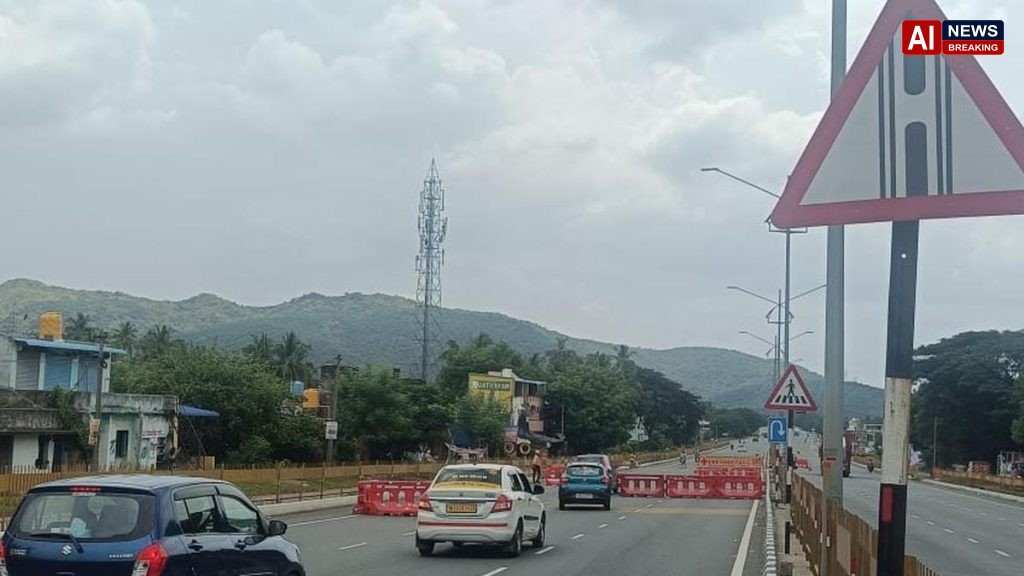
NHAI implements road safety measures at ‘black spot’ near Ambur after school bus accident - AI News Breaking
Four pupils from a private school in Ambur and the driver of their school bus were injured on Tuesday when a container lorry collided with the vehicle at a busy junction that locals have long regarded as a “black spot”. The incident, which occurred at approximately 08:30 local time, prompted an immediate response from the National Highways Authority of India (NHAI), which announced a series of road safety upgrades aimed at preventing further tragedies at the site. The crash, which left the bus with a crumpled front and the lorry with a dented cab, has reignited debate over infrastructure maintenance and traffic enforcement on highways that intersect with school routes.The accident happened at the intersection of National Highway 44 and the Ambur–Vellore link road, a crossing notorious for its confusing layout and inadequate signage..
Eyewitnesses reported that the lorry, travelling at high speed, failed to yield to the school bus that was turning left onto the link road. The bus, overloaded with twenty‑four students, was forced into the median before the driver managed to bring it to a stop. Emergency services arrived within minutes, transporting the three injured students and the driver to Government Hospital, where they are receiving treatment for fractures and minor head injuries.In the wake of the crash, NHAI officials visited the site within hours of the incident and conducted a rapid assessment of the junction’s safety deficiencies..
A senior engineer, Arvind Kumar, said the authority had identified “multiple points of failure”, including poor lane demarcation, inadequate lighting, and the absence of a dedicated bus lane or protective barriers. “The accident highlighted systemic gaps that we must address without delay,” Kumar told reporters, adding that the agency would allocate funds from its ongoing road improvement budget to implement corrective measures.The first phase of the response involves the installation of high‑visibility road markings and reflective signage to guide drivers through the complex turning movements at the junction. Work crews have begun laying a fresh coat of thermoplastic lane lines, with a contrasting colour scheme designed to differentiate the bus lane from general traffic..
In addition, new LED streetlights are being mounted on both sides of the intersection to improve visibility during low‑light conditions, a factor that investigators believe contributed to the driver’s misjudgment of the lorry’s speed.Beyond visual enhancements, NHAI is erecting a concrete median barrier along the main carriageway to prevent vehicles from crossing into oncoming traffic at the turn. The barrier, which will extend approximately 150 metres on either side of the junction, is intended to protect both the school bus and other road users from side‑impact collisions. Engineers have also proposed the construction of a dedicated bus pull‑out area, allowing school transport to wait safely while the traffic flow continues uninterrupted..
The design incorporates a raised platform with tactile paving to aid drivers in low‑visibility conditions.Traffic management plans are being revised to incorporate a temporary speed‑reduction zone of 30 kilometres per hour around the intersection, enforced by portable speed‑monitoring devices and increased police patrols. NHAI has coordinated with the Tamil Nadu Police Department to deploy additional traffic wardens during school start and end times, ensuring that the new speed limits are observed. The authority also plans to install automated speed cameras, which will issue instant fines to violators and serve as a deterrent against reckless driving.Community outreach forms a critical component of the safety overhaul..
NHAI officials have organized a series of awareness workshops for local schools, parents, and transport operators, emphasizing the importance of adhering to traffic rules and the proper use of school bus lanes. These sessions, conducted in collaboration with the State Road Safety Cell, aim to foster a culture of vigilance among all stakeholders. Parents of the injured students expressed cautious optimism, noting that “the quick response gives us hope that similar accidents will be avoided in the future”.The financial implications of the upgrades have been outlined in a preliminary budget of INR 2.3 crore, sourced from the central government’s Road Safety Fund and the agency’s own contingency reserves..
While the allocation covers immediate infrastructure works, long‑term maintenance costs will be shouldered by the state’s Public Works Department. Critics, however, argue that infrastructure alone cannot resolve the deeper issues of driver training and enforcement. Transport unions have called for stricter licensing standards and regular safety audits of commercial vehicles, pointing to the lorry’s alleged over‑speeding as a symptom of broader regulatory laxity.As the construction progresses, NHAI has pledged to keep the public informed through daily updates posted on its official website and local news outlets..
The authority expects the primary safety measures – lane markings, lighting, and the median barrier – to be completed within four weeks, with the bus pull‑out area and speed‑monitoring systems slated for installation by the end of the next quarter. Officials stress that these interventions are part of a larger, nationwide initiative to eliminate black‑spot accidents, a goal underscored by the recent launch of the “Zero Fatalities” campaign by the Ministry of Road Transport and Highways.The Ambur incident serves as a stark reminder of the vulnerability of schoolchildren commuting on busy highways. While the immediate aftermath saw a swift mobilisation of resources and a clear roadmap for infrastructural improvements, lasting safety will depend on sustained enforcement, community engagement, and continual assessment of road conditions..
As the new measures take shape, families, educators, and commuters alike will be watching closely, hopeful that the tragic collision will become a catalyst for enduring change on India’s roads..
Updated: September 20, 2026
The crash exposes how “black‑spot” fixes are merely band‑aid solutions; without rigorous driver discipline and consistent enforcement, even high‑tech barriers become cosmetic.
If Ambur’s upgraded junction proves effective, it could become a template that forces policymakers to treat school‑route safety as a systemic, not